
Rand() Mode: Driving, Music, and the Science
It started as a simple drive back home through Chennai. Windows Shut. Day air kettling in like an uninvited welcome for Agni Natchatram. A random old classic began to play. No announcement. No identity. Just sound.
And that’s when the conversation began.
“Feels like something by Ilaiyaraaja,” my friend said.
I smiled. “Let’s not name it… just listen.”
That one moment held the entire tension of modern experience.
From Listening to Labeling. The inner voice, why are we productized in a pipeline architecture to identity, risk/compliance and then to hear, listen and enjoy mode.
There’s a subtle shift that happens when we recognize something familiar. The brain moves from receiving to identifying. From being in the song to standing outside it, pointing at it.
Cognitive science calls this the shift from bottom-up processing to top-down processing.
Bottom-up: raw sensory experience, unfolding in real time
Top-down: memory, prediction, pattern recognition taking over
Both are essential. But they don’t feel the same.
When my friend said, “Wait till the second charanam,” something changed. The song was no longer a journey. It became a destination with a known highlight.
Most of our life is spent in the Hear stage—which is just a system-level notification that data is arriving. Listening, however, is an active process that requires the CPU to stop background tasks.
Because we spend so much energy on Identity and Risk, by the time the data reaches the “Enjoy” module, the buffer is full. We are exhausted by the processing and have no “compute” left for the actual experience.
I wasn’t listening anymore. I was waiting.
Driving as Meditation
As the car moved through traffic, something else became clear.
Driving, music, and awareness had merged into a single field.
The road wasn’t separate from me. The song wasn’t background. The steering wheel, the passing lights, the rhythm of the engine — all of it was one continuous experience.
It reminded me of Zen and the Art of Motorcycle Maintenance, not for its philosophy debates, but for its quiet insight:
When you are fully with the machine and the road, there is no division.
That day, it wasn’t a motorcycle. It was a car. And the machine extended into music.
The Brain That Predicts Too Well
Modern cognitive science describes the brain as a prediction engine.
It constantly tries to guess what comes next. This is efficient. It helps us survive, learn, and navigate complexity.
But there’s a cost.
When predictions become too strong:
- We stop exploring
- We start confirming
- Surprise disappears
That small comment — “wait for this part” — injected a strong prediction. It narrowed attention. It shaped experience before it could unfold naturally.
Scale that up, and you see it everywhere:
- curated playlists
- recommendation algorithms
- summarized learning
We no longer wander into knowledge. We arrive at pre-shaped conclusions.
“If you are okay with me sharing my learning from recent understanding of Maya Panchakam and the power of mind with bits of science? Will be interesting to hear.”
“Ok, anyways we have another hours time to reach home, lets start.”
Flow, Not Control
Maya panchakam says, the free mind can take places or take poles away just like that. Remember my previous blog “முடியாததையும் முடித்துக் காட்டும் மாயா”?
In a standard logic gate, 1 cannot be 0. In Maya’s architecture, however:
Reality = Non-Dual (1)User_Experience = Dual (0)
Maya functions as a Quantum Logic Gate where the system is simultaneously 1 and 0, but the observer is hard-coded to only perceive the 0.
Psychologist Mihaly Csikszentmihalyi described flow as a state where action and awareness merge.
On that drive, flow didn’t come from effort. It came from non-interference.
- No labeling.
- No anticipating.
- No optimizing.
Just participation.
Even interruptions — a passing horn, a sudden brake — could be absorbed into the field. But constant commentary? That turned the experience into a system to be managed.
Too many “if-else” conditions, and life starts feeling like code execution.
Rand() Mode
I told my friend:
“Let’s keep this one in rand() mode.”
Not because randomness is superior, but because it preserves something rare — first-hand experience.
In rand() mode:
- the next moment is unknown
- attention stays open
- meaning emerges, instead of being assigned
It’s not anti-pattern. It’s pre-pattern. The stage where the brain is still forming its own understanding.
The Real Question
This isn’t about music.
It’s about how we live, learn, and perceive.
Do we:
experience first, then interpret?
or
interpret first, then experience?
A Quiet Realization
As another song began — again, unannounced — my friend paused. No labels this time. No predictions.
The chorus arrived when it arrived.
And it hit differently.
Final Thought
The road doesn’t announce its turns.
The song doesn’t declare its peaks.
When you let them arrive without warning,
you don’t just hear them.
You meet them.
And somewhere between engine hum, passing lights, and an unnamed melody…
you realize:
Awareness, learning, and joy were never separate.
We just kept interrupting them.
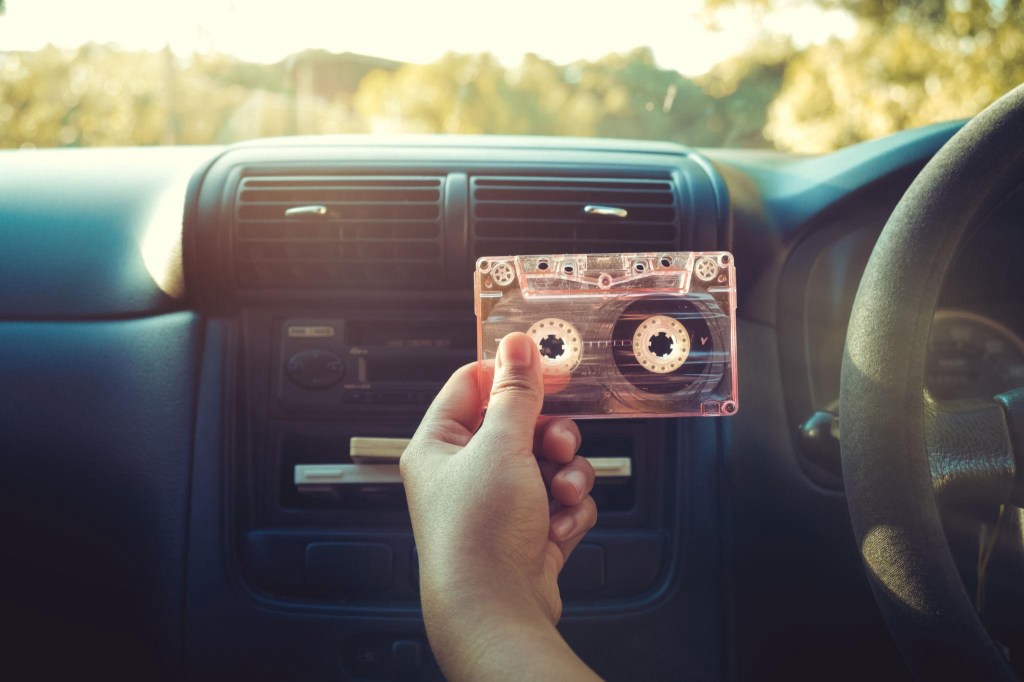
As we turned into our street, something stirred quietly. Not from the road, but from somewhere older. A memory of college days surfaced. Route 113. Crowded bus. Windows half-open, wind carrying dust, laughter, and fragments of conversations. And somewhere above all that, an Ilaiyaraaja song playing from a worn-out tape.
There were no playlists then. No skipping. No choosing.
The tape decided.
We listened.
That old, accidental rand() mode where life played… and we received.
Is obsession with “Identity” a bug in our biological firmware, or a feature we’ve over-clocked in the Materialistic world?
 Arambhin
Leave a comment