
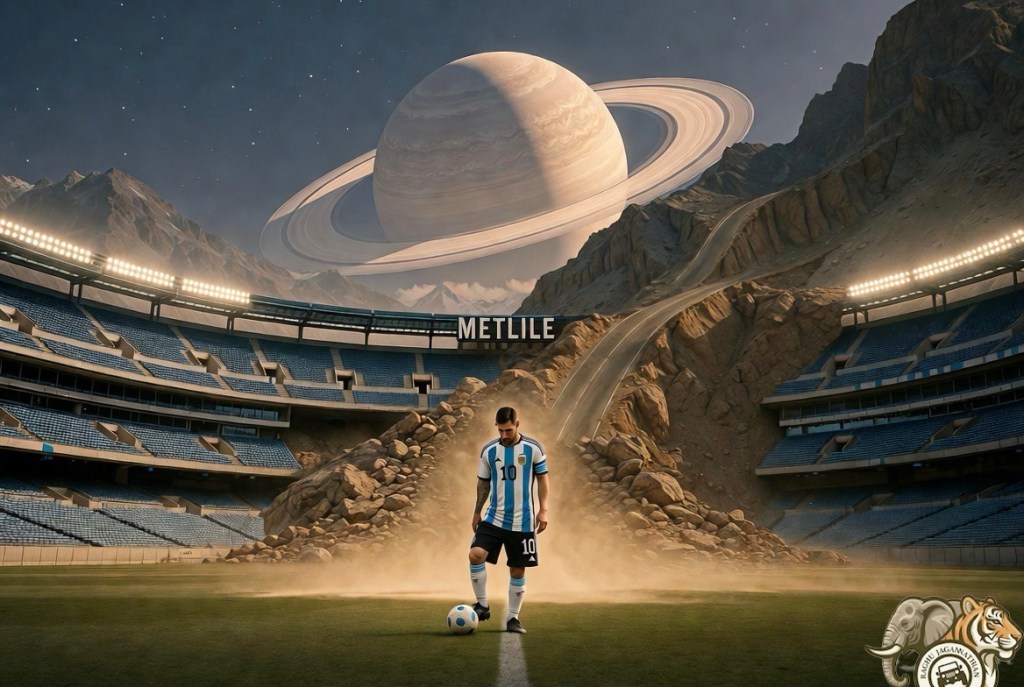
If you spent any time watching the 2026 FIFA World Cup, you witnessed something close to alchemy. Even in the twilight of his career, Lionel Messi could still bend reality with a single touch. A desperate clearance became a perfectly weighted pass. A crowded midfield dissolved into sudden, breathable space. Every possession carried that electric hum: something extraordinary was about to happen.
Argentina’s tournament ran on that magic—dramatic late winners, impossible comebacks, moments where momentum seemed to lean their way long before the final whistle. It wasn’t merely football; it felt like destiny gathering speed.
And then came the final.
Under the glaring lights of MetLife Stadium, destiny collided with discipline. Spain did not simply defeat Argentina. They suffocated them.
For the third time in World Cup history, Argentina failed to register a single shot on target during regular time of a World Cup final. It happened against West Germany in 1990. Again against Germany in 2014. And once more in 2026.
Three generations. One deafening silence.
The Recurring Void
In 1990, Diego Maradona arrived injured, carrying a diminished squad on weary shoulders. West Germany compressed every passing lane, reducing the beautiful game to a brutal war of survival. Argentina never truly threatened the goalkeeper. A late penalty settled it.
In 2014, Messi produced one of the finest tournaments of his career, dragging an industrious side to the precipice of glory. Germany’s structure, patience, and relentless organization gradually drained Argentina’s attacking rhythm. Extra time arrived before Mario Götze decided the contest.
Now came 2026.
This version of Argentina had looked untouchable. They danced through adversity, rescued impossible matches, and played with the unfiltered freedom of children in the street. Yet against Spain, that freedom vanished.
Spain deserves enormous credit. Their pressing was synchronized, their positioning immaculate. Every passing lane that had been wide open throughout the tournament suddenly snapped shut. Argentina’s greatest strength—their flowing improvisation—found no oxygen.
Whether one explains it through tactics, psychology, or symbolism, the result felt strangely familiar.
The Saturnian Moment
For those who view history through the symbolic language of astrology—or simply recognize recurring patterns in struggle—moments like these resemble Saturn at work.
Jupiter expands. Mars attacks. Mercury adapts. Saturn restricts.
Saturn is not punishment. It is resistance. The invisible weight that suddenly makes effortless movement feel like wading through wet concrete.
This can happen in any final, to anyone. One generation’s flowing improvisation meets another’s iron discipline. A champion side that danced through the tournament suddenly finds every lane closed, every rhythm half a second late. The same gifts that created magic now meet a wall.
Psychologically, we know these moments intimately. You are operating in complete flow. Everything works. Decisions arrive naturally, and confidence builds upon itself. Then, almost overnight, nothing fits. The same skills that solved yesterday’s problems refuse to solve today’s. Momentum flatlines. You begin pushing harder, only to discover that raw force cannot reopen a locked door.
When Flow Meets a Wall
Perhaps that is why Argentina’s three silent finals feel connected. Not because the teams were identical, nor because fate wrote identical scripts. But because extraordinary talent eventually meets extraordinary resistance.
Against Spain, every familiar rhythm arrived half a second too late. The passing triangles dissolved. The spaces evaporated. The confidence that had fueled miraculous comebacks slowly warped into hesitation.
Football often celebrates genius, but finals frequently reward structure. Spain earned their victory by creating an environment where Argentina’s creativity could not breathe. Sometimes excellence loses, not because it fades, but because another excellence successfully contains it.
Yet the deeper lesson is not to blame Saturn. It is to keep moving—accompanied by Saturn. To let the restriction become part of the rhythm rather than the end of it.
The Beauty of the Detour
Life offers similar intersections. I learned this the hard way on a 2010 road trip.
You plan the perfect journey to Leh. The superbike is tuned, the throttle responsive, and the weather is a crisp promise against your visor. Your destination feels inevitable.
Then you arrive at Keylong and discover a landslide has wiped out the road for three days. The mountain offers no explanation. It simply says: “Not today.”
You have two choices. You can remain beside the barricade, exhausting your spirit wishing reality were different. Or you can let go of the itinerary. You can strip away the burden of the destination and embrace the ultimate minimalism: living entirely in the present moment, right now, with what is in front of you.
You turn the handlebars, ride toward Punjab, and discover landscapes you never intended to see. The roadblock becomes the journey.
Saturn does not close every road as punishment. Some are quiet invitations to travel lighter. Enjoy the journey accompanied by Saturn. The resistance itself becomes the teacher—sharpening presence, stripping expectation, returning you to the simple joy of the next touch, the next breath, the next mile.
Lost Art
We often ask why defeat happened. Why Maradona. Why Messi. Why this generation. Why now.
Perhaps those questions are heavier than the answers they seek. Messi has often spoken about football’s deepest joy. Not the medals, the accolades, or the records, but the simple, unadulterated happiness of playing as though he were still a child kicking a ball in the dust.
The trophy is temporary. The touch is eternal.
Argentina’s road has now closed three times on football’s grandest stage. History will undoubtedly catalog the defeats. But perhaps the greater lesson lies elsewhere.
When momentum disappears, when the road ends without warning, and when the art appears lost, life quietly asks us to become artists once again. Not by forcing the mountain to move, but by finding another road—accompanied by Saturn.
The destination can wait. The joy has always lived in the journey
 Arambhin
Leave a comment