
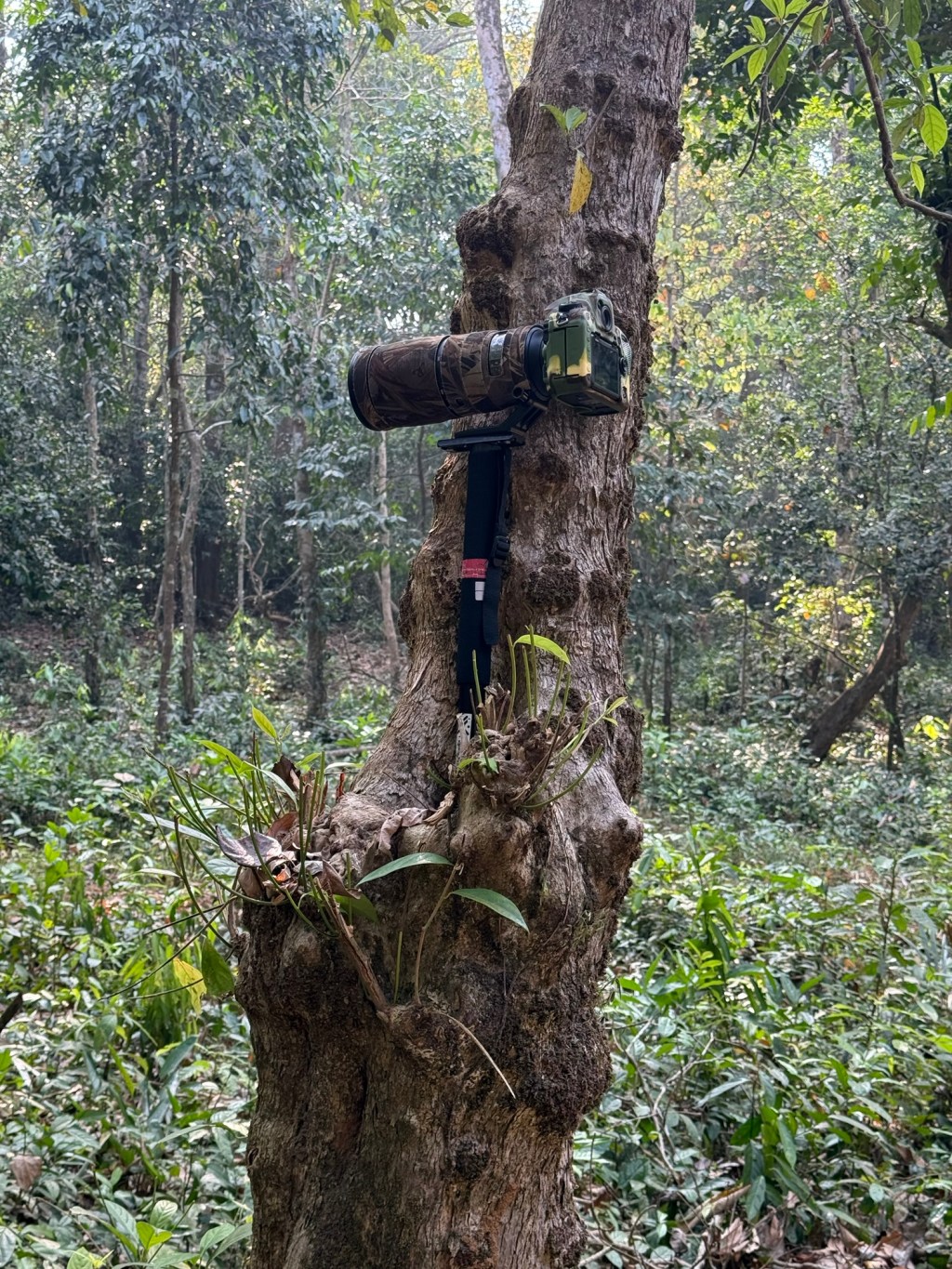
This morning, Vikram stood on the edge of the Kabini river, thumb hovering over the warm glass screen of his phone. The device vibrated with its endless “Ring-Pings”—a digital symphony demanding attention but rarely presence. In his drafts sat the neat chain he had just read on X:
Strong father = Confident daughter Feminine mother = Masculine son Loving parents = Secure children Healthy marriage = Peaceful home Peaceful home = Strong society
At first glance, it felt complete. Structured. Almost like a formula for stability.
But something about it stayed with him. Not because it was entirely wrong. But because it was incomplete.
He had seen both sides—and the reverse. Strong fathers raising insecure children. Gentle mothers raising grounded sons. Homes perfect on the outside, fractured within.
What were we really measuring? Strength? Roles? Outcomes? Or the deeper alignment we so often miss?
As someone shaped by Vedanta and time spent observing nature, what stood out to Vikram was not dominance, but oneness. Not rigid roles, but balance. Not endless performance, but alignment.
In the Vedic view, existence unfolds through complementary energies: Shiva—stillness, awareness, grounding; Shakti—movement, expression, life. Neither dominates. Both are essential. Both dwell within each of us.
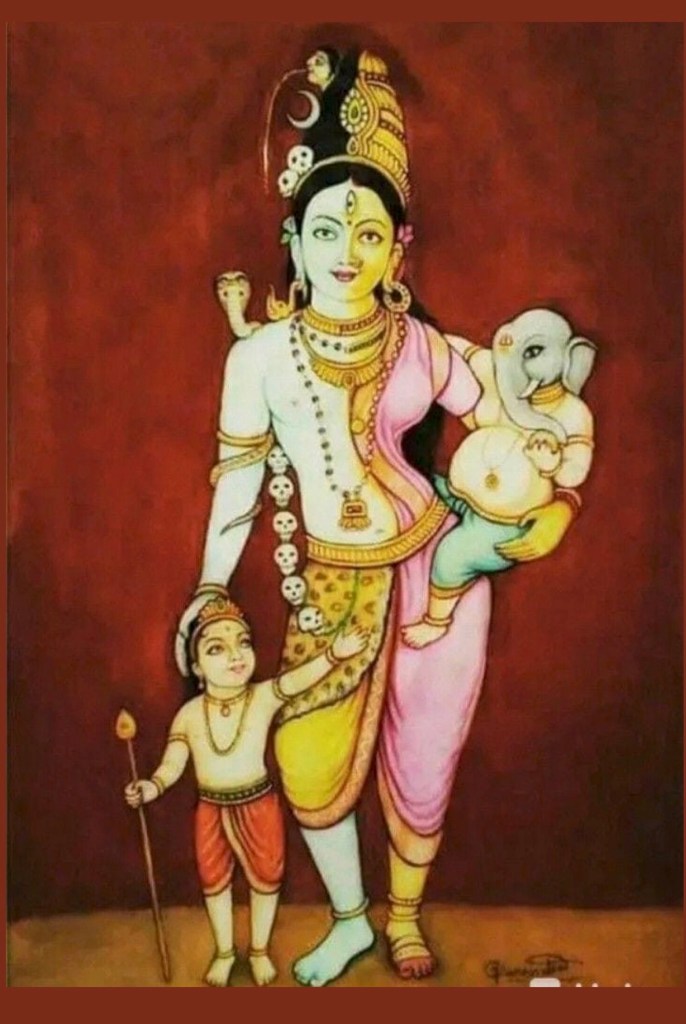
What we witness today is not the collapse of masculinity or the myth of “feminine men.” It is a confusion about wholeness itself.
We reduce the human to binaries: Masculine vs. feminine. Strong vs. soft. Leader vs. nurturer.
Life—and nature—never operate that way.
The Silence of the Signal
Vikram swiped. He remembered the Arambhin philosophy: Tech நீக்கல் (Tech Removal). The silhouette of a plane appeared. In an instant, the signal bars—those frantic ladders to nowhere—vanished. The Wi-Fi ghosted. The “Ring-Ping Symphony” died in mid-measure.
The silence that followed wasn’t just auditory; it was tectonic. Without the digital tether, the world rushed back in. He saw the “Seat of the Mind” (Irukkai) in the way the shadows of the teak trees rested on the red earth. For years, he had been a “crowded railway station,” his thoughts arriving and departing so fast that he had forgotten to notice the platform itself.
The old tusker emerged from the brush, as silent as a mountain. Vikram looked at the dead screen in his hand and then at the living power before him. In Airplane Mode, the phone hadn’t lost its purpose; it had reclaimed its peace. And in his own #MicroVanaprasthan, Vikram felt the same. He wasn’t withdrawing from the world; he was removing the noise so he could finally hear it.

He sat on a fallen log—his own Irukkai—and watched the “colors painted by silence” (Mounam Theettiya Vannam) as the sun dipped behind the forest. He didn’t need a signal to know he was alive.
🐾 Nature as Teacher: The Quiet Shape of Power
Power in the wild moves with precision, not noise. The male tiger walks as a secret the forest keeps—selective, not absent. The lone tusker commands presence without theatrics. In Kabini, two tuskers blocked the track: stillness for twenty-five minutes. No charge. No display. Their being was enough. Power is what others feel in your presence.

The matriarchal herd brought the other face: trumpeting, coordination, fierce protection of the young. Not chaos—alive care.
The peacock displays rarely, timed, earned.

Here is the grammar of strength: tiger teaches restraint, tusker presence, matriarch protection, peacock expression. Precision, not aggression or passivity.
🌌 Where We Are Getting It Wrong
We train men for constant performance instead of knowing when to hold and when to express. Loudness passes for strength; sensitivity for weakness. Nature never confuses this.
Shiva does not announce—He holds. Shakti does not apologize—She moves and protects. Life thrives only when both are honored.
Yet a deeper fraying is visible. Men lose clear direction and purpose. Women lose reliable support. Families lose alignment. Individuals lose integration.
We see it in declining male labor participation (especially among younger and prime-age men), rising male suicides (vast majority in many societies), patterns in homicide, growing male loneliness, and falling marriage and birth rates worldwide—including India’s fertility rate nearing or below replacement. This is not caused by “feminine men.” It flows from a broader loss of purpose, competence, and mutual complementarity.
When culture frames men’s protective instincts as suspect or “toxic,” and women’s relational, life-affirming ones as oppression, integration fractures. Secure children and peaceful homes become harder to sustain.
The path forward is not 1950s scripts nor dissolving all distinctions. It is recovering mature polarity: men cultivating decisive, responsible strength; women cultivating resilient, life-affirming energy—each with full access to the spectrum of stillness and dynamism.
Here, #MicroVanaprasthan becomes essential—especially for men.
In the traditional ashram system, Vanaprastha is the third stage: after Grihastha (householder duties), one gradually hands responsibilities to the next generation and turns inward toward reflection, detachment, and spiritual deepening. In our fast-paced world, the #MicroVanaprasthan is its intimate, repeatable modern form. It is not waiting for old age or full retirement. It is deliberate seasons or pockets of stepping back from constant doing—fewer performances, less noise, more grounded presence.
For men especially, #MicroVanaprasthan is key. It counters the drift into purposelessness by reclaiming Shiva’s stillness amid Shakti’s flow. A man in #MicroVanaprasthan might:
- Release the need to prove himself constantly and step into quiet, advisory presence.
- Cultivate the restraint of the tusker—competence that rearranges the space without force.
- Mentor without dominating, reflect without escaping responsibility.
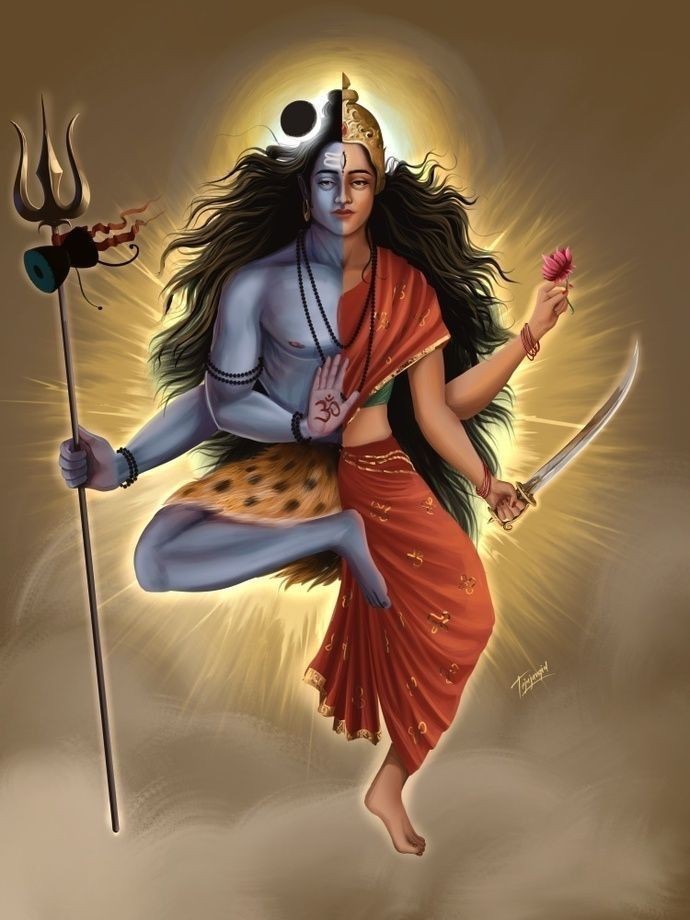
- Integrate his inner Ardhanarishvara—honoring both holding stillness and protective expression.
This is not retreat into passivity. It is precision: knowing when the moment calls for mountain-moving silence, and when it asks for rhythmic care. When men practice #MicroVanaprasthan, they return with clearer direction and mature polarity. Complementarity deepens. Families realign. Society regains its quiet strength.
🌿 The Breath Between Silence and Sound
Some forces rise like silent mountains. Others move with the rhythm of life. Nature asks only: What does this moment require?
Men may move mountains in stillness. Women may move the world in expressive rhythm. Life sustains itself in the shared breath—between holding and releasing, silence and sound.
The Final Beat: The Integrated Return
Vikram stood up from his log, the sun now a thin line of vermillion on the horizon. He swiped his thumb across the screen. The signal bars returned—the world rushing back in with a frantic ping of missed notifications.
But he didn’t jump.
The “Ring-Ping Symphony” played, but Vikram was no longer the instrument. He was the listener. He looked at the draft he had scrolled through that morning—the neat, rigid formulas of X. He didn’t post it. Instead, he typed a single line:
“Strength is not a volume knob you turn up; it is the frequency you hold when the world goes silent.”
As he walked back toward the camp, his gait was different. It wasn’t the hurried stride of a man chasing a deadline; it was the measured, rhythmic pace of the tusker. He had integrated his inner Ardhanarishvara. He was ready to protect the rhythm of his home, not by being a wall, but by being the stillness that allows the music to matter.
 Arambhin
Leave a comment