
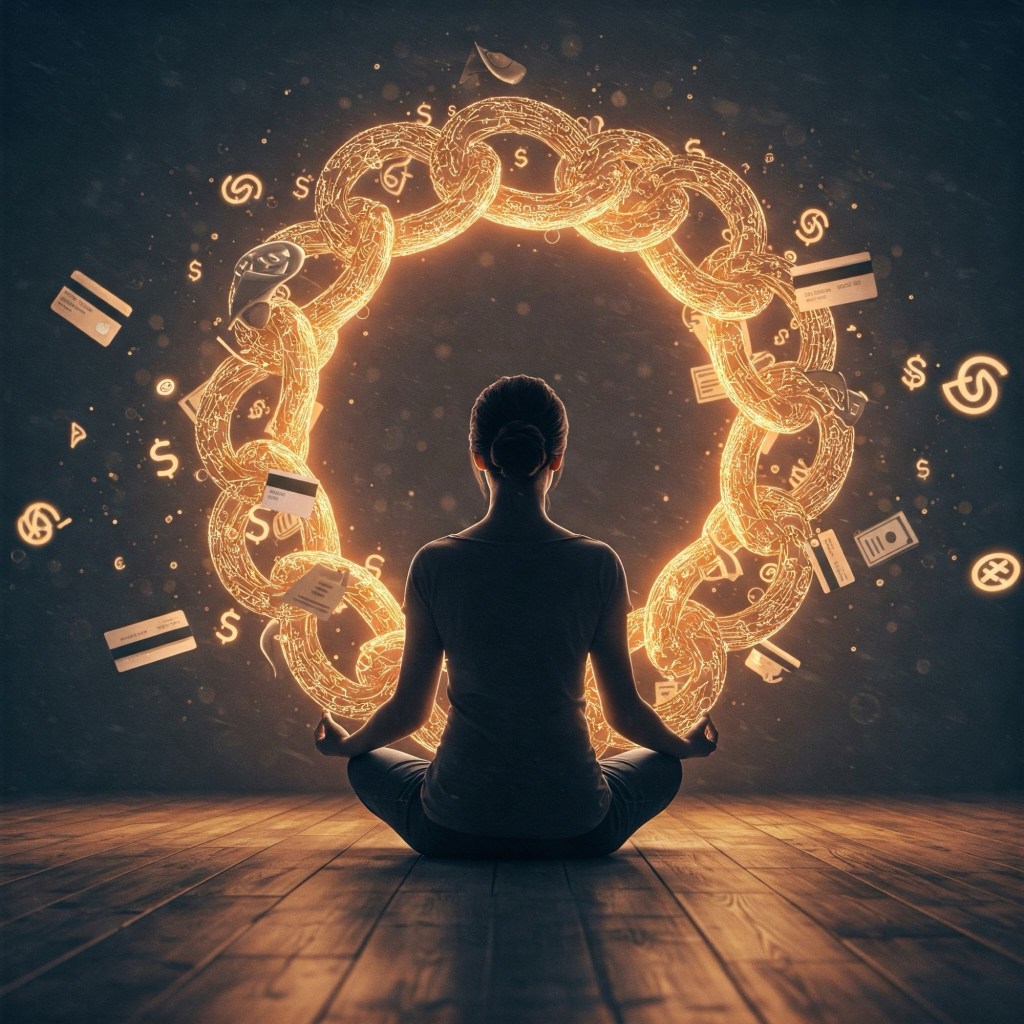
What Does Blockchain Have to Do with Life?
Think of blockchain as a digital ledger that records every transaction permanently. Once a block is added, it can’t be changed or erased. The system runs on decentralization, meaning no single authority owns or controls it—it just keeps going, block by block.
Now, what if we looked at life the same way?
Every action, decision, and experience becomes a block in your personal chain—permanent, uneditable. Some blocks add credits (achievements, relationships, success), while others bring debits (failures, losses, setbacks). The problem? Most people let this ledger define them.
Some chase endless credits, believing that more success, wealth, or recognition will bring happiness. Others live in fear of debits, avoiding risks, clinging to security, and never fully engaging with life. But here’s the reality—neither credits nor debits truly belong to us.
So, if life is a blockchain, how do we interact with it without being controlled by it?
Credits and Debits: The Illusion of Ownership
The biggest mistake people make is thinking they own their credits and must avoid debits at all costs.
• Credits as Attachments – You build a career, gain wealth, earn respect. But the moment you attach your identity to these things, they become burdens. You don’t own them—they own you.
• Debits as Fear of Loss – You fail a test, lose a job, or go through a breakup. Instead of seeing these as temporary blocks in your chain, you panic, thinking they define you forever.
The Bhagavad Gita teaches Karma Yoga—act with full effort, but detach from the outcome. The ledger keeps recording, but you are not your balance sheet.
Smart Contracts of Life: Conscious Investments
In blockchain, smart contracts automatically execute actions when conditions are met. Imagine applying that to life:
• Workout consistently = better health (guaranteed return)
• Invest time in learning = smarter choices (compounding interest)
• Surround yourself with good people = stronger support system (secure network)
The difference? Unlike financial contracts, life’s smart contracts work best when we stop obsessing over immediate rewards.
Schopenhauer once said, “Avoiding meaningless reading is as important as choosing valuable knowledge.” The same applies to life—what you invest in determines what you get back.
Decentralization: Freedom from the Ledger
A blockchain is decentralized—no single authority owns it. Likewise, the moment you let society, social media, or someone else dictate your worth, you’ve given away your autonomy.
Akka Mahadevi put it best:
“When ‘I’ is one with the Divine, where is loneliness?”
Translation? If you’re truly at peace with yourself, you don’t need external validation.
This is what the Bhagavad Gita calls Sthitaprajna—someone who engages with life but remains steady, neither chasing credits nor fearing debits.
Final Block: The Ultimate Investment
So, if life is a blockchain, what’s the goal?
Not hoarding credits.
Not avoiding debits.
But learning to live without being weighed down by either.
At the end of the chain, your ledger resets. No wealth, no status, no failures—just the experiences you lived through and the wisdom you gained.
So, invest wisely, detach freely, and don’t let the ledger own you.
By A.I.R
 Arambhin
Leave a comment