
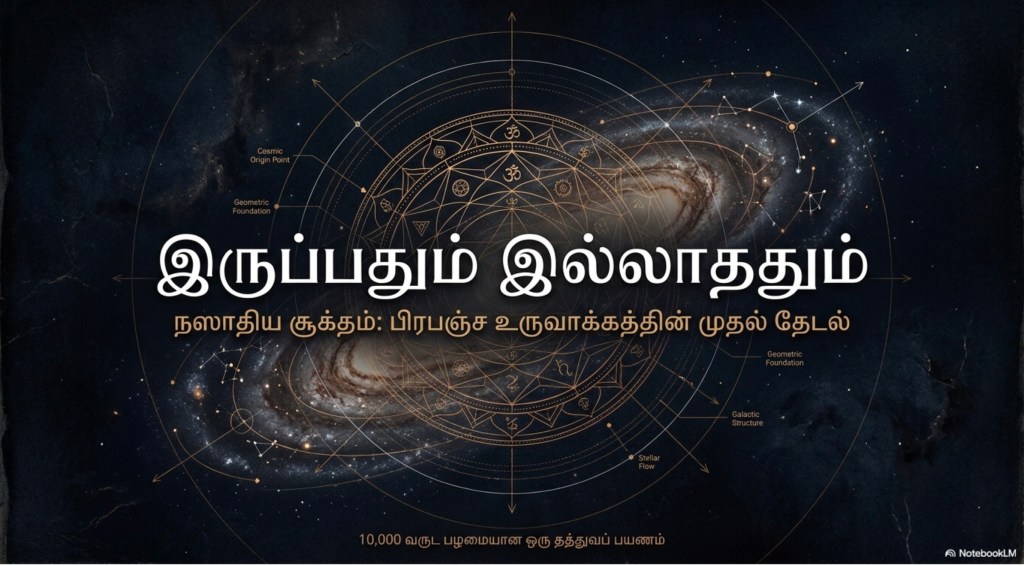
The famous nāsadīya sūkta the 129th sukta of the 10th mandala of the Rigveda is possibly the first hymn of creationism.
The Rig Veda manuscripts have been selected for inscription in UNESCO’s “Memory of the World” Register.
Neither Nasadiya Sukta nor Big Bang Theory claims to have solved the mystery of the creation of the Universe. Nasadiya Sukta expresses doubts if we would ever be able to solve the mystery of creationism. It expresses “perhaps even He knows not the truth (verse 7)”, the quest will be on.
But what is really interesting is the convergence of thoughts of Rig Vedic rishis and modern scientist in this quest, despite adopting radically different methodologies and despite being separated by a time span of 10,000 years.
The Primordial Ocean: Existence and Non-Existence
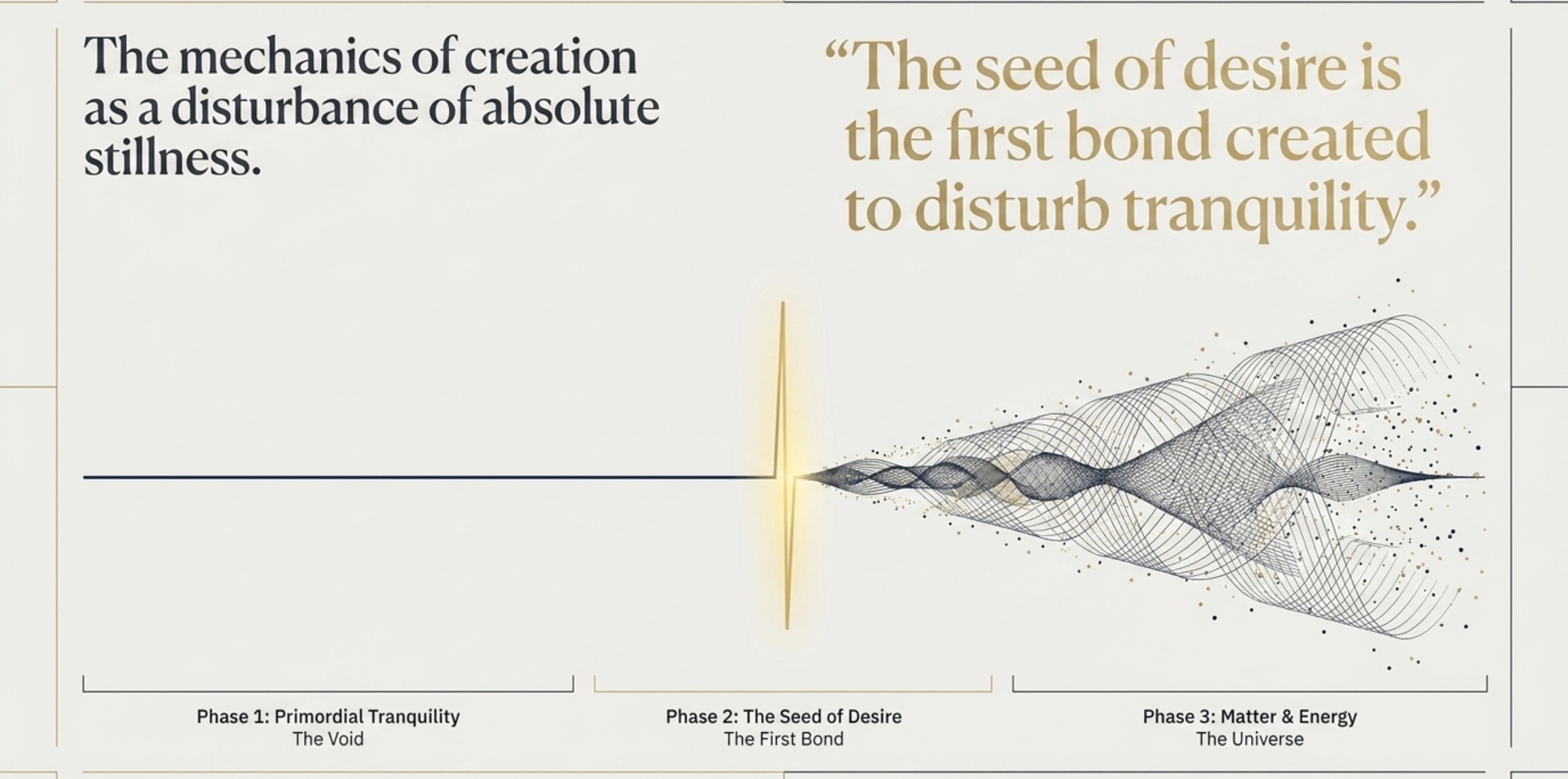
In the Nasadiya Suktam, the inception of the universe is not framed as a chronological “start” from a void, but as a transition from a state where the binaries of existence (Sat) and non-existence (Asat) were entirely inapplicable. The rishis utilize the imagery of a “cosmic ocean”—an undifferentiated, tranquil depth where even the distinction between light and dark was absent. This is a strategic philosophical positioning; by defining the origin as Nāsadīya (not-non-existent), the text avoids the logical trap of creation ex nihilo. Instead, it posits a primordial equilibrium where “waves” of manifestation had not yet disturbed the absolute silence of the deep.
nāsad āsīn no sad āsīt tadānīṁ nāsīd rajo no vyomā paro yat
kim āvarīvaḥ kuha kasya śarmann ambhaḥ kim āsīd gahanaṁ gabhīram
Then even nothingness was not, nor existence,
There was no air then, nor the heavens beyond it. What covered it? Where was it? In whose keeping Was there then cosmic water, in depths unfathomed?
அப்பொழுது இல்லாமையும் இல்லை இருப்பதும் இல்லை
அங்கே காற்றும் இல்லை ஆகாசமூம் இல்லை
எது மறைத்தது அது ஏங்கே உள்ளது இது யாரால்?.
அன்றிருந்த அனுபவம் ஏதுவோ? அதை அறியுமோ மனம்?.
na mṛtyur āsīd amṛtaṁ na tarhi na rātryā ahna āsīt praketaḥ |
ānīd avātaṁ svadhayā tad ekaṁ tasmād dhānyan na paraḥ kiṁ canāsa || 2 ||
Then there was neither death nor immortality
Nor was there then the torch of night and day.
The One breathed windlessly and self-sustaining.
அப்பொழுது பிறப்பும் இல்லை இறவாமையும் இல்லை
அங்கு ஒளி அறிய இரவும் இல்லை பகலும் இல்லை
காற்றில்லா சுவாசமும் தன்னிறைவில் அவன் இருந்தான்
அப்பொழுது அங்கிருந்ததோ ஒருமை அதுவன்றி வேறு இல்லை
tama āsīt tamasā gūlh̥ am agre ‘praketaṁ salilaṁ sarvam ā idam | tucchyenābhv apihitaṁ yad āsīt tapasas tan mahinājāyataikam || 3 ||
At first there was only darkness wrapped in darkness.
All this was only unillumined water.
That One which came to be, enclosed in
முதலில் அங்கு இருந்ததோ இருள் சூழ்ந்த இருள்
அங்கிருந்தனைத்தும் ஒளியிழந்த பேரூழி பெருவெள்ளம்
அப்பொழுது தோன்றிய ஒன்று எதுமின்றி இருந்ததன்று
கடைசியில் உதயமான ஒன்று தியானக்கதிர்களால் பிறந்ததன்று
kāmas tad agre sam avartatādhi manaso retaḥ prathamaṁ yad āsīt | sato bandhum asati nir avindan hṛdi pratīṣyā kavayo manīṣā || 4 ||
In the beginning desire descended on it.
That was the primal seed, born of the mind.
அவ்வொன்றிலிருந்து முதன் முதலில் தோன்றியது ஆசை
அதுவே மனதில் தோன்றிய முதல் விதை
அறிஞர்கள் மனதின் புத்தி கொணர்ந்து அறிந்தனர்
எது அதிலிருந்து பிறந்ததோ அது அதுவல்ல
The Catalyst of Creation: Desire and the Cosmic Spark
The transition from the tranquility of the pre-cosmic ocean to the complexity of the material world is attributed to a singular internal mechanism: the “seed of desire.” In the Sanskrit of the Suktam, this is Kama—not merely emotional longing, but the primordial “first bond” (bandhu) of the mind. This internal state of intelligence acts as the necessary disturbance to break the cosmic equilibrium. It is the bridge between the unmanifested potentiality and the manifested reality, suggesting that the drive toward life was present at the very inception of the physical laws.
This transition can be envisioned as a “spark through the black hole,” a metaphor for the singularity where the known laws of physics emerge from a state that defies them. In this moment, the “spark” represents the first movement from the unknown (the dense, unmanifested dark) to the known (light and matter). To understand this transition, the source suggests that the scientific community may need to consider factors beyond simple mechanics:
- The presence of an initial “seed” or impetus that binds potentiality into material reality.
- The role of “another state of intelligence” that serves as the catalyst for the cosmic disturbance.
- The fundamental link between a primordial “desire” and the subsequent behavior of matter and energy.
By identifying Kama as the first bond, the hymn bridges biological drive and physical creation. This suggests that the evolutionary impulse is not a late addition to the universe, but an inherent quality of the “spark” itself. Such a perspective challenges modern science to integrate the concept of intelligence as an essential factor in the theory of matter and energy, acting as the igniting force that transforms potential into being.
tiraścīno vitato raśmir eṣām adhaḥ svid āsīd upari svid āsīt | retodhā āsan mahimāna āsan svadhā avastāt prayatiḥ parastāt || 5 ||
And they have stretched their cord across the void, and know what was above, and what below. Seminal powers made fertile mighty forces.
Below was strength, and over it was impulse.
அவ்வொன்றிலிருந்து ஓளிர்கதிர்கள் நாற்புறமும் சென்றன
அங்கு எது கிழ்யிருந்ததோ எது மேலிருந்ததோ
அங்கு அவை விதை விதைத்தன உயிர் கொணர்ந்தன
அவற்றின் கிழே ஆற்றலும் மேலே வேகமும் இருந்தன
ko addhā veda ka iha pra vocat kuta ājātā kuta iyaṁ visṛṣṭiḥ | arvāg devā asya visarjanenāthā ko veda yata ābab || 6 ||
But, after all, who knows, and who can say Whence it all came, and how creation happened?
யாருக்குத் தெரியும் இது யாருடைய படைப்பென்று
எங்கிருந்து தோன்றியது யார் இதை படைத்தவர்
தேவர்களும் இப்படைப்பின் பிறகே தோன்றினர்
யாருக்கு தெரியும் இப்படைப்பு எங்கே தோன்றியதென்று
iyaṁ visṛṣṭir yata ābabhūva yadi vā dadhe yadi vā na |
yo asyādhyakṣaḥ parame vyoman so aṅga veda yadi vā na veda || 7 ||
Whence all creation had its origin,
he, whether he fashioned it or whether he did
எங்கிருந்து தோன்றியது இந்த படைப்பு
யார் இதை ஆக்குவித்தனர் இல்லை யாருமில்லையோ?
மேலிருந்து இப்படைப்பை படைத்தவர் அறிவாரோ?
இல்லை இப்படைப்பின் ரகசியம் அவரும் அறியாரோ?.
The Convergence: Vedic Insights and Modern Astrophysics
There exists a profound “convergence of thoughts” between the Rig Vedic rishis and modern scientists, specifically in their shared intellectual humility. While their methodologies are “radically different”—the rishis utilizing meditative introspection and the scientists relying on empirical observation and mathematical modeling—their ultimate conclusions regarding the “mystery of creationism” are strikingly aligned. Both frameworks encounter a boundary where current logic fails to explain the transition from the “before” to the “after.”
Conclusion: A Question for the Modern Mind
The “great quest” initiated by the Nasadiya Suktam remains an open-ended journey. By tracing the arc from the primordial cosmic ocean to the spark of Kama, and finally to the light emerging from the darkness, the hymn provides a narrative that celebrates the limits of human knowledge. Its most profound contribution is the elevation of “doubt” over “dogma.” By suggesting that even the highest intelligence may not possess the absolute truth, it ensures that the search for understanding remains an eternal, ongoing endeavor.
If “Desire” or intent was the first bond to disturb the tranquility of the void, is it time to include a “state of intelligence” as a fundamental factor in our theories of physics? Are scientists listening? As we refine our maps of the physical world, we may find that the missing variable in our equations was identified ten millennia ago. Perhaps intelligence is not a late byproduct of matter, but its very catalyst—the primordial disturbance that started it all.
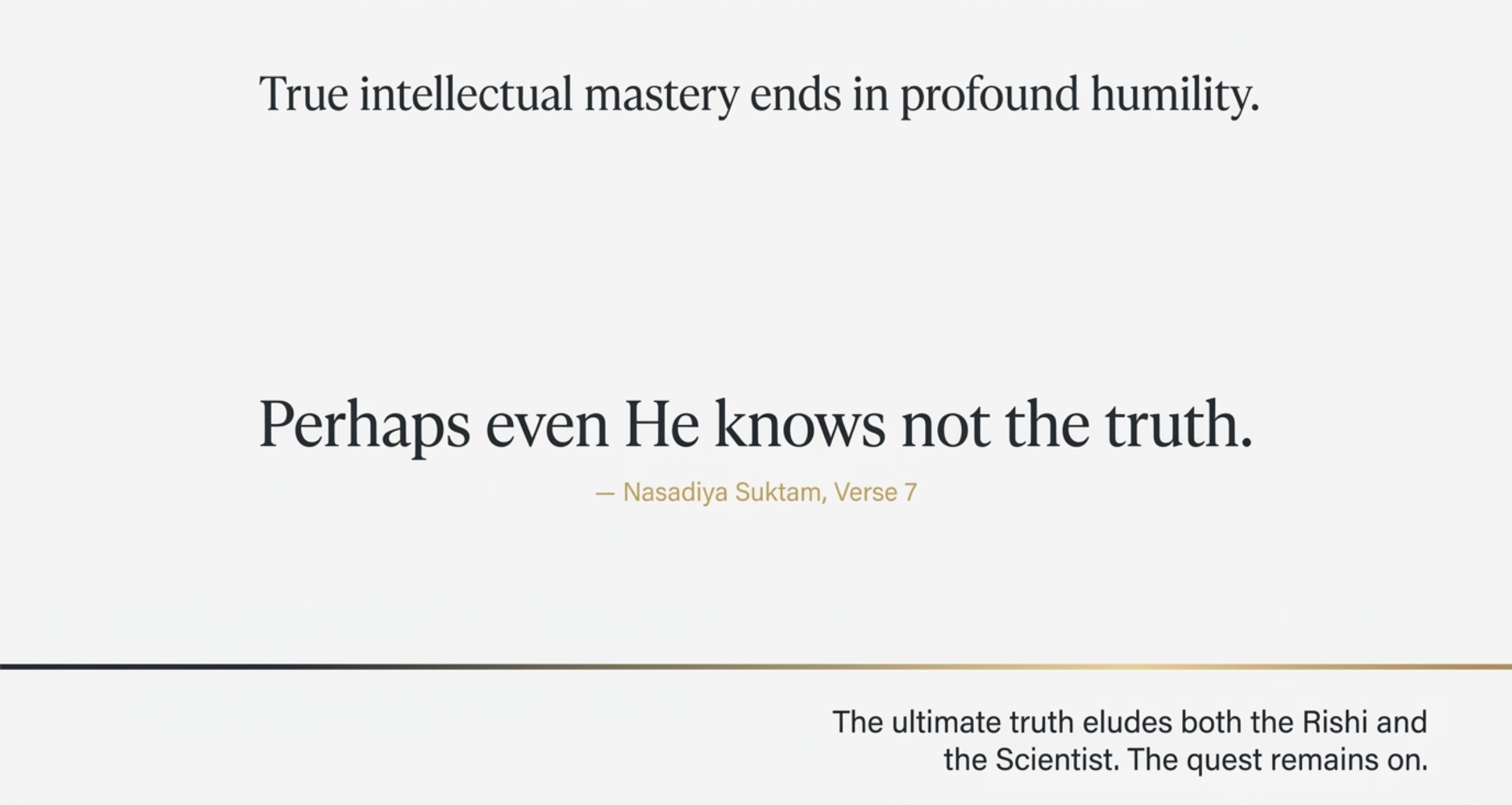
By embracing the possibility that the truth may be elusive, the Nasadiya Suktam allows the human spirit to continue its exploration of the cosmic mystery indefinitely, forever seeking the spark of intelligence that lies at the heart of existence.
 Arambhin
Leave a comment