
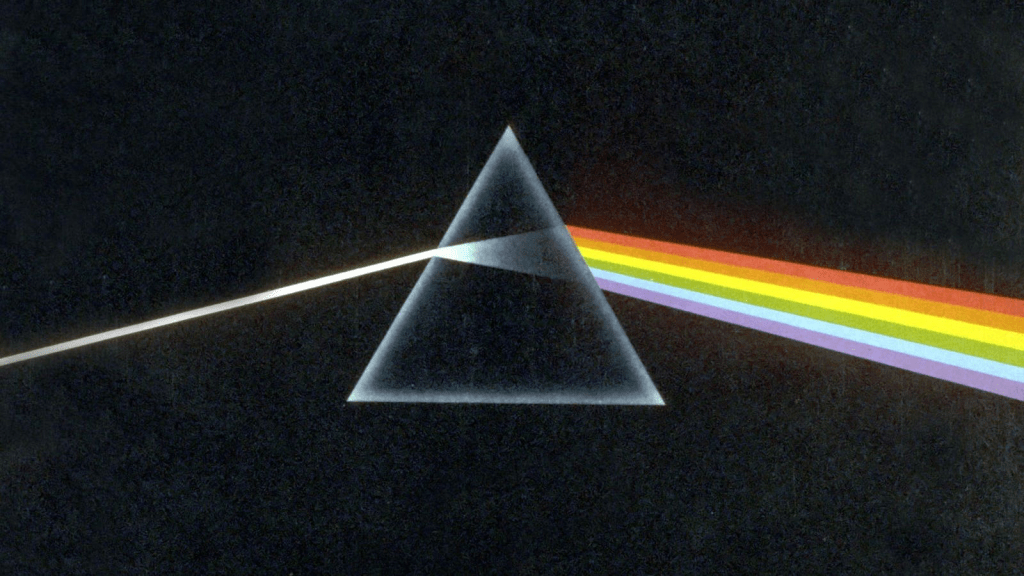
I was sitting on the floor, the kind of sitting that suggests you’ve given up on the afternoon and started negotiating with the evening. To my left, The Vivekacūḍāmaṇi the significant work of Advaita—ancient, smelling of vanilla and sun-bleached dust. On the YouTube, the playlist found the groove of The Dark Side of the Moon.
Then the voices started. It wasn’t a haunting; it was just… me. Two versions of me, colliding in the quiet.
The first voice was The Sage: old as a mountain, patient, wearing the silence of a Himalayan cave like a comfortable shawl.
The second was The Floyd: nineteen years old forever, smelling of clove cigarettes and record-store basement air, convinced that a Fender Stratocaster is a holy relic.
The record hissed. The heartbeat started. Thump-thump.
“Prana,” the Sage whispered. “The breath of the universe before the first word was spoken.”
“It’s a kick drum, man,” the Floyd snapped back. “Nick Mason. Dead-simple. Don’t make it weird.”
But then the scream faded and the slide guitar washed in like a warm tide. Breathe, breathe in the air.
“The Chandogya says the senses had a fight,” the Sage murmured, unbothered. “They argued over who was the boss. The Eyes said, ‘We see the world.’ The Ears said, ‘We hear the truth.’ But then the Breath started to leave, and the whole house started to collapse. They realized then. It’s all just breath.”
In my mind a new background thread started “The Sage and The Floyd” didn’t bother as its out of context for them – In the vision of the Chandogya Upanishad, the human being is a miniature universe. Inside the body, the sustaining life-force is Prāṇa, the subtle breath that keeps the senses, mind, and organs functioning. At the cosmic level, the same principle appears as Vayu, the universal wind that sustains all living beings. The Upanishadic story of the senses collapsing when prāṇa prepares to leave mirrors the myth where Vayu withdraws air after Hanuman is struck by Indra, causing the whole world to suffocate. Together they express a core idea of Indian philosophy: the microcosm and macrocosm reflect each other. What breath (prāṇa) is to the body, the cosmic wind (vāyu) is to the universe. 🌬️
The Floyd didn’t argue this time. He just leaned back against the speakers. “Fine. Breath is cool. But wait for the clocks.”
When the alarms went off at the start of Time, I actually jumped.
“Kala,” the Sage said, and his voice sounded like heavy stones shifting. “The Great Destroyer. You think you’re listening to a song about being bored in a suburb, but you’re listening to the wheel of the cosmos grinding your bones to powder.”
“The sun is the same in a relative way, but you’re older,” the Floyd quoted, his voice dropping an octave. “Shorter of breath and one day closer to death. It’s brutal, isn’t it? Waters didn’t need a Sanskrit degree to know we’re running out of sand in the glass.”
“He didn’t need the degree because he has the pulse,” the Sage replied.
Then came the Great Gig. Clare Torry’s voice went up into the rafters, breaking against the ceiling, wailing without a single word.
“Is she dying?” the Fan asked, his voice small now.
“She’s expanding,” the Sage corrected. “In the Katha, the God of Death tells a boy that the Self isn’t born and doesn’t die. It just changes its clothes. That voice? That’s what it sounds like when the soul realizes the room it’s been living in has no walls.”
Then the coins clinked. Money. That swaggering, uneven 7/4 rhythm that feels like walking with one shoe missing.
“Maya,” the Sage sighed. “The glitter on the veil. You chase the coin, forgetting that the hand grabbing the gold and the gold itself are made of the same stardust. It’s a dance of shadows.”
“It’s a catchy bassline, actually,” the Floyd grumbled, though he sounded less certain now. “But yeah… it’s a bit of a trap, isn’t it? Us and them. Black and blue.”
“Duality,” the Sage said. “The Big Lie. We spend our lives building fences, then we wonder why we feel lonely inside them. The Upanishads have been shouting for three thousand years that there is no ‘Them.’ There’s just the Light, hitting the Prism.”
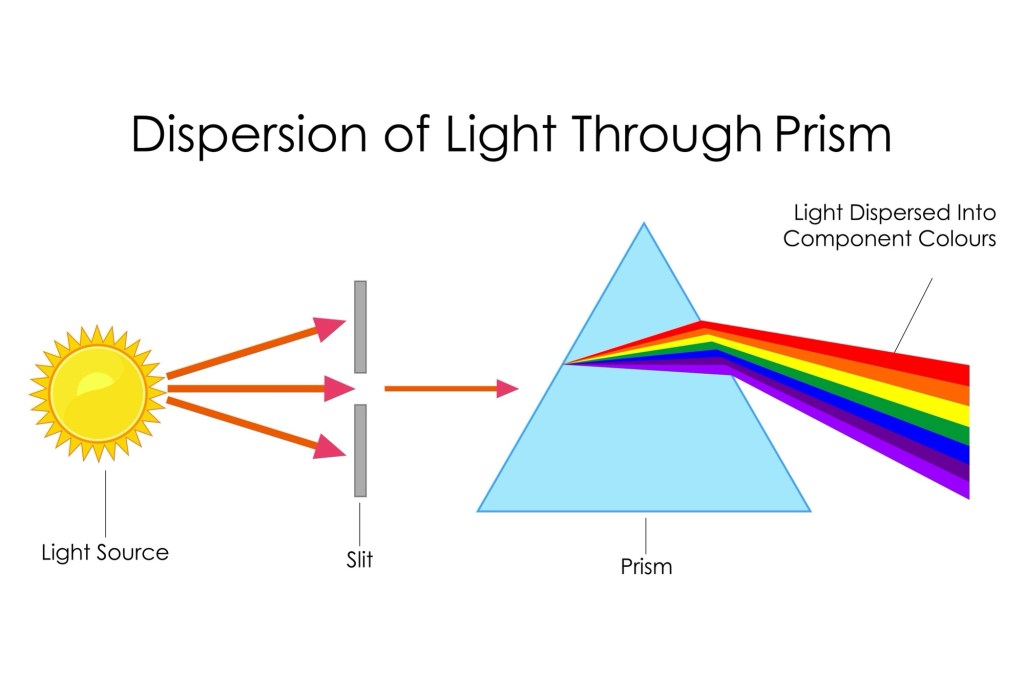
I looked at the album cover. The white beam entering the glass. The rainbow shattering out the other side.
“The Prism is the Mind,” the Sage said softly. “The White Light is the Truth. We live in the rainbow—the colors, the drama, the noise—and we forget the White Light was ever there.”
The album reached the end. Eclipse. The cosmic tally of everything you touch and everything you see.
And everything under the sun is in tune…
“But the sun is eclipsed by the moon,” the Floyd finished. He sounded tired. Peaceful, but tired. “The mind gets in the way of the soul. Is that it?”
“Exactly,” the Sage said. “The eclipse isn’t the end of the sun. It’s just a shadow we cast ourselves. When the record stops, the silence that’s left? That’s who you really are.”
The needle hit the run-out groove. Click. Click. Click.
The Sage and the Floyd sat together in my head, finally quiet. One smelled of incense; the other of vinyl. And for a second, in the dark, they looked exactly like the same person.
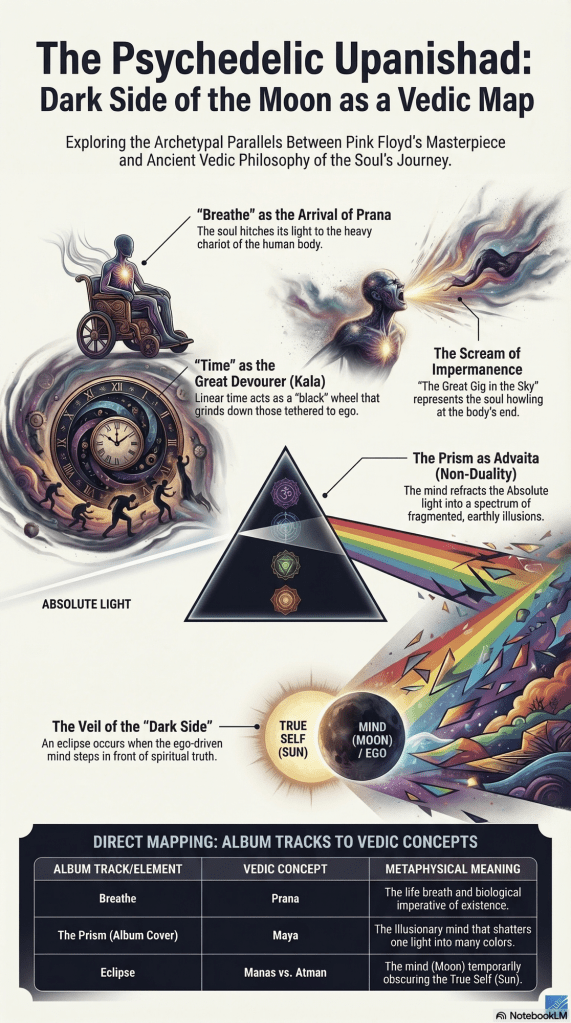
“The Floydian Upanishad” ends as sonic theology. The Sage gives the Sūtra, the slender thread of insight. Floyd provides the Bhāṣya, an exegesis in echoes and pulse. Where the rishi speaks, the music breathes. Where the mantra points, the sound walks.
Why this pairing works because it mirrors a classical structure:
| Tradition | Role |
|---|---|
| Sūtra | compressed truth |
| Bhāṣya | expanded explanation |
| Music | experiential commentary |
So the Upanishad becomes the seed, and the album becomes the resonance. 🎧📜
 Arambhin
Leave a comment