
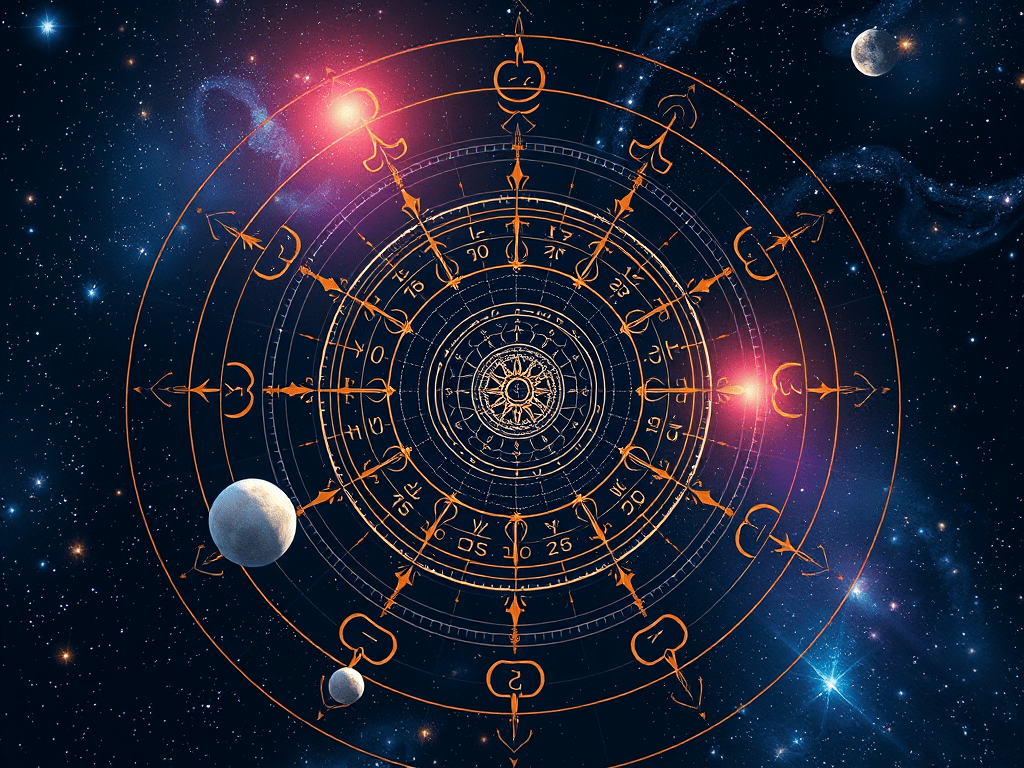
Slokam
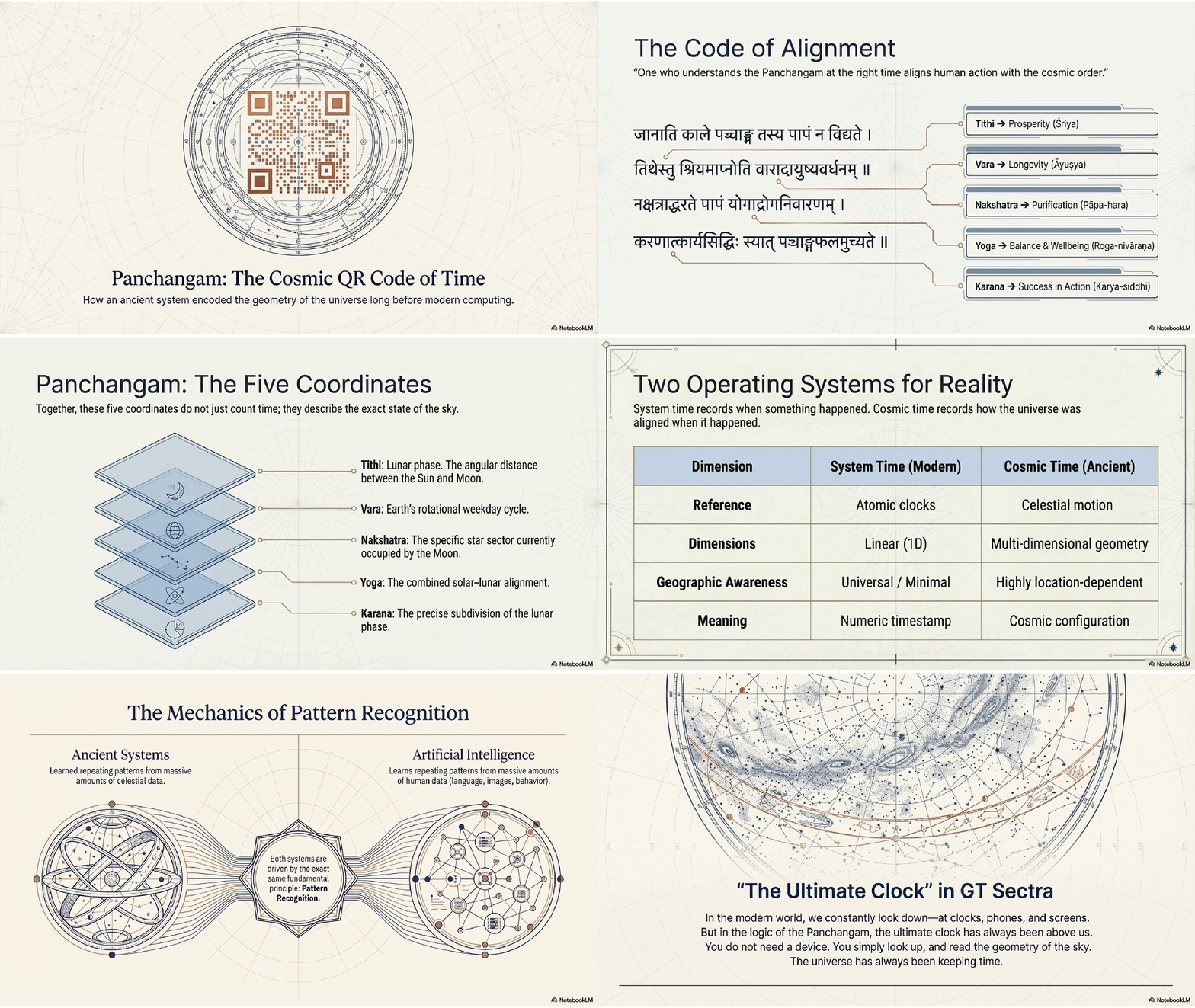
जानाति काले पञ्चाङ्ग तस्य पापं न विद्यते ।
तिथेस्तु श्रियमाप्नोति वारादायुष्यवर्धनम् ॥
नक्षत्राद्धरते पापं योगाद्रोगनिवारणम् ।
करणात्कार्यसिद्धिः स्यात् पञ्चाङ्गफलमुच्यते ॥
Jānāti kāle pañcāṅga tasya pāpaṁ na vidyate
Tithestu śriyam āpnoti vārād āyuṣya vardhanam
Nakṣatrād dharate pāpaṁ yogād roga nivāraṇam
Karaṇāt kārya siddhiḥ syāt pañcāṅga phalam uchyate
Meaning:
One who understands the Panchangam at the right time aligns with the cosmic order.
From Tithi comes prosperity,
From Vara longevity.
From Nakshatra purification,
From Yoga balance and wellbeing.
From Karana comes success in action.
These together are said to be the fruits of understanding the Panchangam.
Calendar Time vs Cosmic Coordinates
Modern calendars answer a simple question:
“What date is it?”
For example:
19 March 2026
The Gregorian calendar gives us a linear reference within the solar year. It is clean, universal, and extremely practical.
But fundamentally, it describes time as a single dimension.
Ancient systems like the Panchangam approach time differently.
Instead of giving a simple number for a day, Panchangam describes the cosmic configuration of the sky at a particular moment and place.
If the Gregorian calendar is like a serial number, Panchangam behaves more like a cosmic QR code.
Panchangam: The Five Coordinates of Time
The word Panchanga literally means five limbs.
Each limb represents a celestial parameter describing the geometry between the Sun, Moon, Earth, and stars.
| Panchanga Element | What It Encodes |
|---|---|
| Tithi | Angular distance between Sun and Moon (lunar phase) |
| Vara | Earth’s rotational weekday cycle |
| Nakshatra | Star sector occupied by the Moon |
| Yoga | Combined solar–lunar alignment |
| Karana | Subdivision of the lunar phase |
Together these five parameters describe the state of the sky.
Time here is not merely counted.
It is observed within a cosmic coordinate system.
A Geo-Sensitive Time System
Unlike a universal calendar date, Panchangam depends on where you stand on Earth.
Traditional almanacs calculate the Panchanga using:
• latitude
• longitude
• local sunrise
This makes Panchangam location-sensitive.
Two people standing in different places may read slightly different Panchanga values because the sky appears from different coordinates.
In modern terms, Panchangam behaves like a geo-aware timestamp.
The QR Code of Time
A printed number carries limited information.
A QR code compresses many layers of information into a single scannable structure.
Similarly:
The Gregorian calendar provides a date and time.
Panchangam provides the metadata of time.
A single Panchanga reading includes:
• lunar phase
• solar position
• stellar alignment
• rotational cycle
• geographic observation point
Each moment becomes a unique cosmic signature.
No two such cosmic “QR codes” are ever identical, because the geometry of the sky is always changing.
Humanity’s First Dataset
Long before computers and artificial intelligence, human beings carefully observed the sky.
The Moon waxed and waned.
Stars returned to the same seasonal positions.
Planets moved through repeating paths.
These observations became humanity’s first dataset.
Systems like Panchangam encoded those patterns so societies could align life with natural rhythms.
Agriculture, travel, festivals, and social life often followed celestial cycles.
From Celestial Data to Artificial Intelligence
Modern AI learns patterns from human data.
Language patterns.
Image patterns.
Behavior patterns.
Ancient observers did something similar with the sky.
AI learns patterns from human data.
Ancient observers learned patterns from celestial data.
Both rely on the same idea:
pattern recognition.
System Time vs Cosmic Time
Modern computing systems represent time as a linear counter.
A timestamp simply counts seconds from a fixed reference.
It answers one question:
When did the event occur?
Ancient systems like Panchangam describe something richer.
Instead of a number, they describe the configuration of the universe at that moment.
| Aspect | System Time | Cosmic Time |
|---|---|---|
| Reference | Atomic clocks | Celestial motion |
| Dimensions | Linear | Multi-dimensional |
| Geographic awareness | Minimal | Location dependent |
| Meaning | Numeric timestamp | Cosmic configuration |
System time records when something happened.
Cosmic time records how the universe was aligned when it happened.
Reading Time Through the Geometry of the Sky
In a way, Panchangam was an early attempt to read time through the geometry of the sky.
Each day became a small astronomical snapshot describing the relationship between Earth, Moon, Sun, and stars.
Because celestial configurations can be mathematically reconstructed, such descriptions allow later generations to interpret ancient astronomical references.
This is why scholars attempt to study celestial descriptions connected with figures such as Rama and Krishna even centuries later.
When time is recorded through celestial geometry, the sky itself becomes a historical archive.
Looking Up for the Time
And perhaps the most beautiful part of this system is its simplicity.
In the modern world we constantly check clocks, phones, and watches.
But in the logic of Panchangam, the ultimate clock has always been above us.
You do not need a clock.
You simply look up — and read the sky.
The Sun, the Moon, and the stars quietly tell the time.
The universe has always been keeping it.
 Arambhin
Leave a comment