
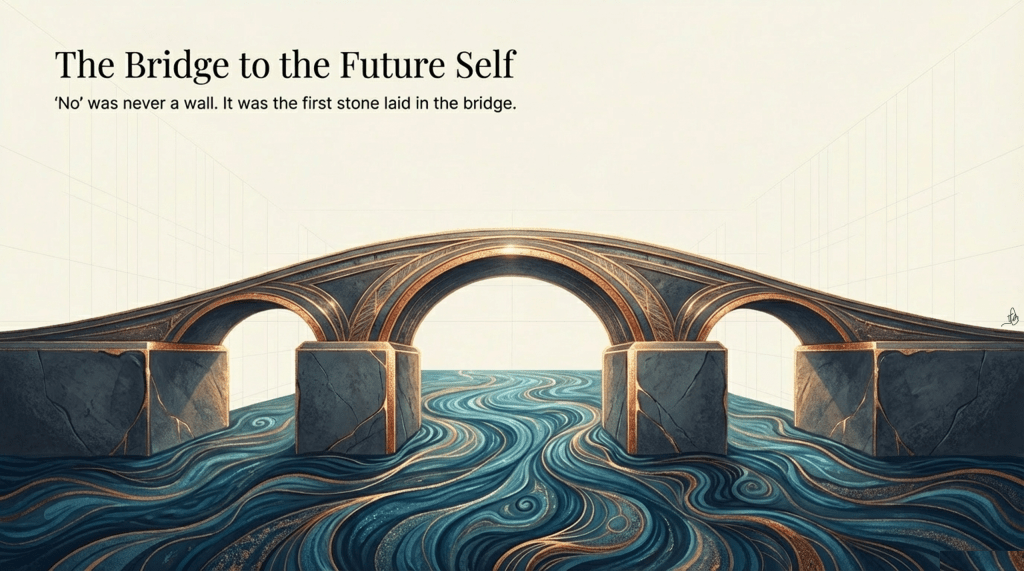
What ancient systems knew about memory, discipline, and true understanding. When we are young, “No means no” feels like a door slamming shut.
A child asks why. A parent answers firmly.
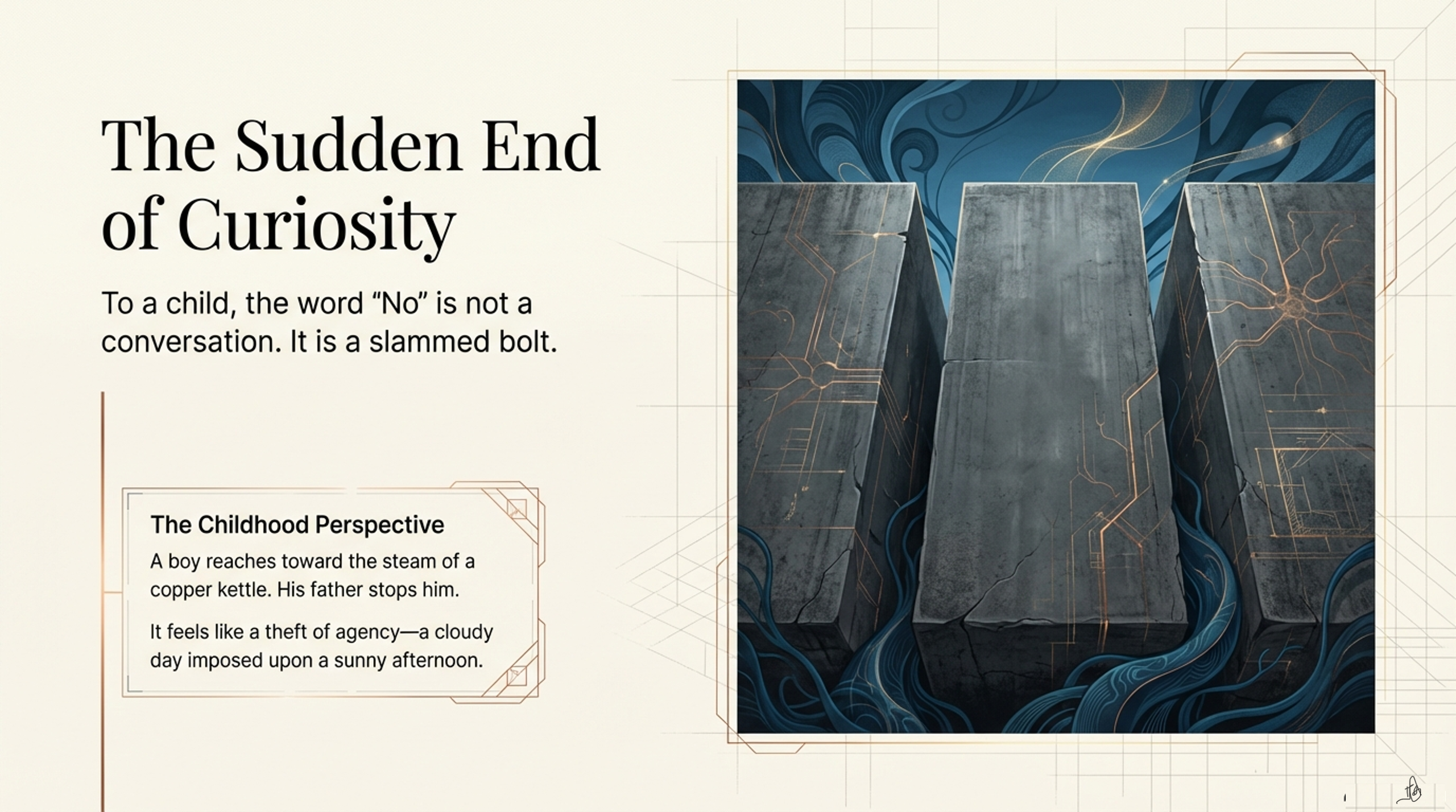
The conversation ends.
At that moment it feels like control—curiosity denied. Years later, the meaning shifts. What felt restrictive was often quiet guidance. The mind, like the body, grows through structure, repetition, and discipline long before it grasps their purpose.
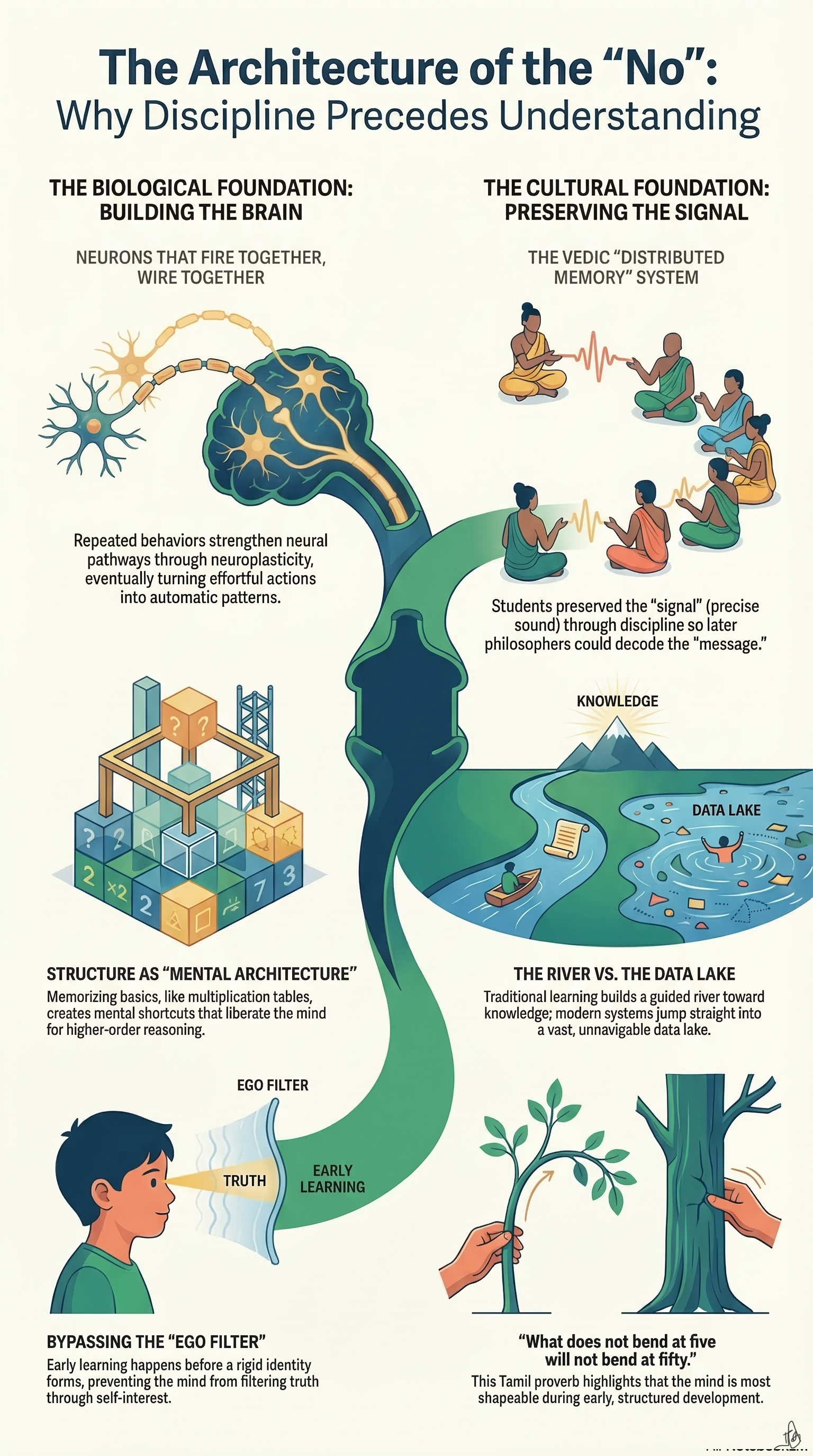
The Brain Learns Before It Understands Neuroscience confirms this: repetition drives neuroplasticity. “Neurons that fire together wire together.”
Each rehearsal strengthens pathways until effort becomes automatic: riding a bicycle, typing fluently, playing scales without thought.
Understanding arrives after the pattern forms.
Consider childhood multiplication tables. At first, 7 × 8 demands slow calculation. After repetition, 56 simply appears—recognized, not computed.
Memorization, dismissed as rote, actually constructs the mental scaffolding for deeper reasoning. Without it, even basic problems drain attention. Structure liberates the mind to think freely.
The Architecture of Traditional Learning
Ancient systems grasped this intuitively.
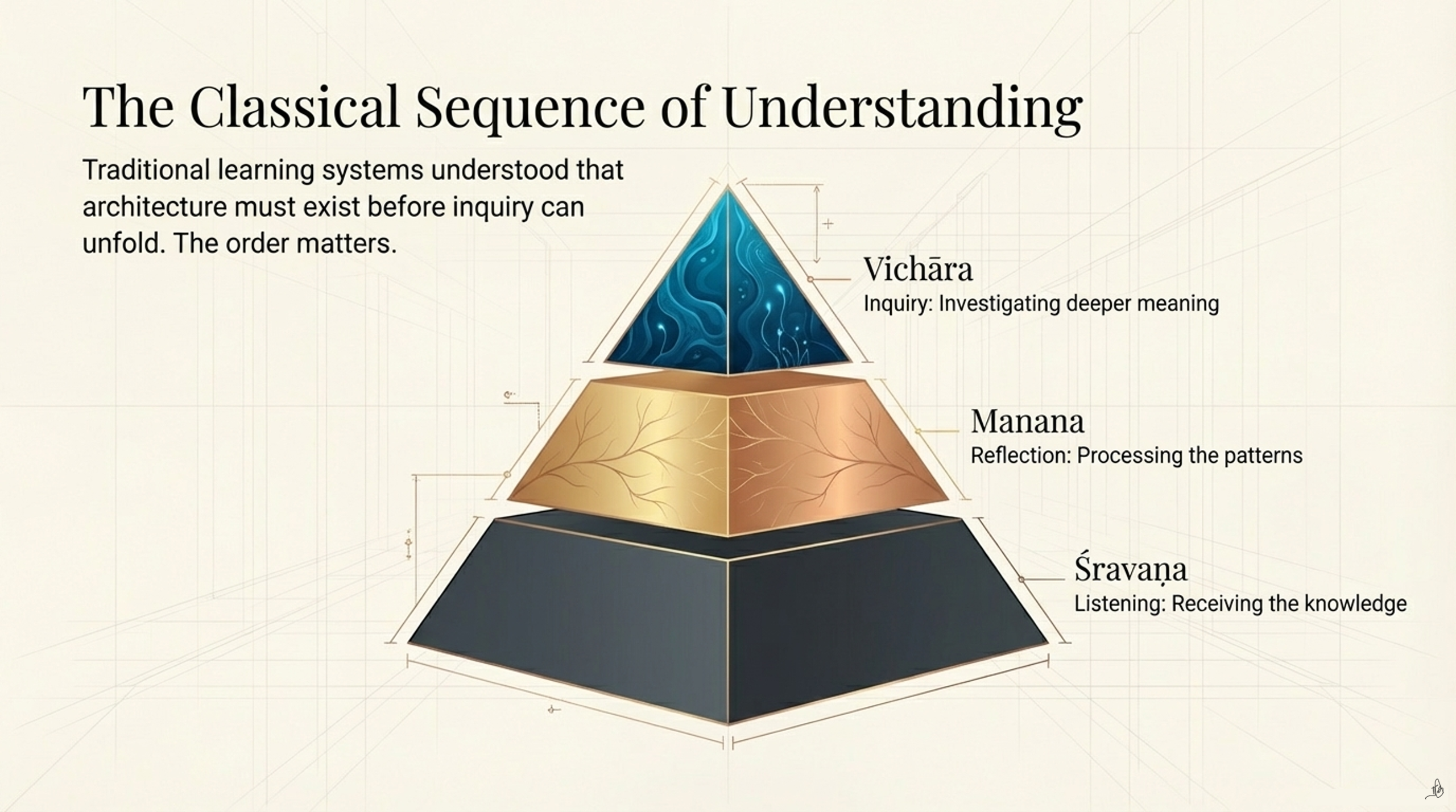
In Vedantic tradition, knowledge unfolds in three deliberate stages: Śravaṇa (attentive listening) → Manana (reflection) → Vichara (contemplative meditation).
The student first receives and holds the teaching. Only then does reflection clarify it. Finally, sustained inquiry reveals its depth.
Order matters: the mind must internalize form before exploring meaning.
The oral preservation of the Vedas illustrates this beautifully. Rather than depending solely on script, generations memorized sound, meter, and structure with uncanny precision. Their task was fidelity—preserving the vessel intact.
Later teachers and philosophers returned to those preserved verses, reflecting and inquiring to uncover layers of insight. One generation safeguarded the form; the next discovered its meaning. The chain ensured wisdom endured long enough to be rediscovered.
Before the Ego Becomes Gatekeeper
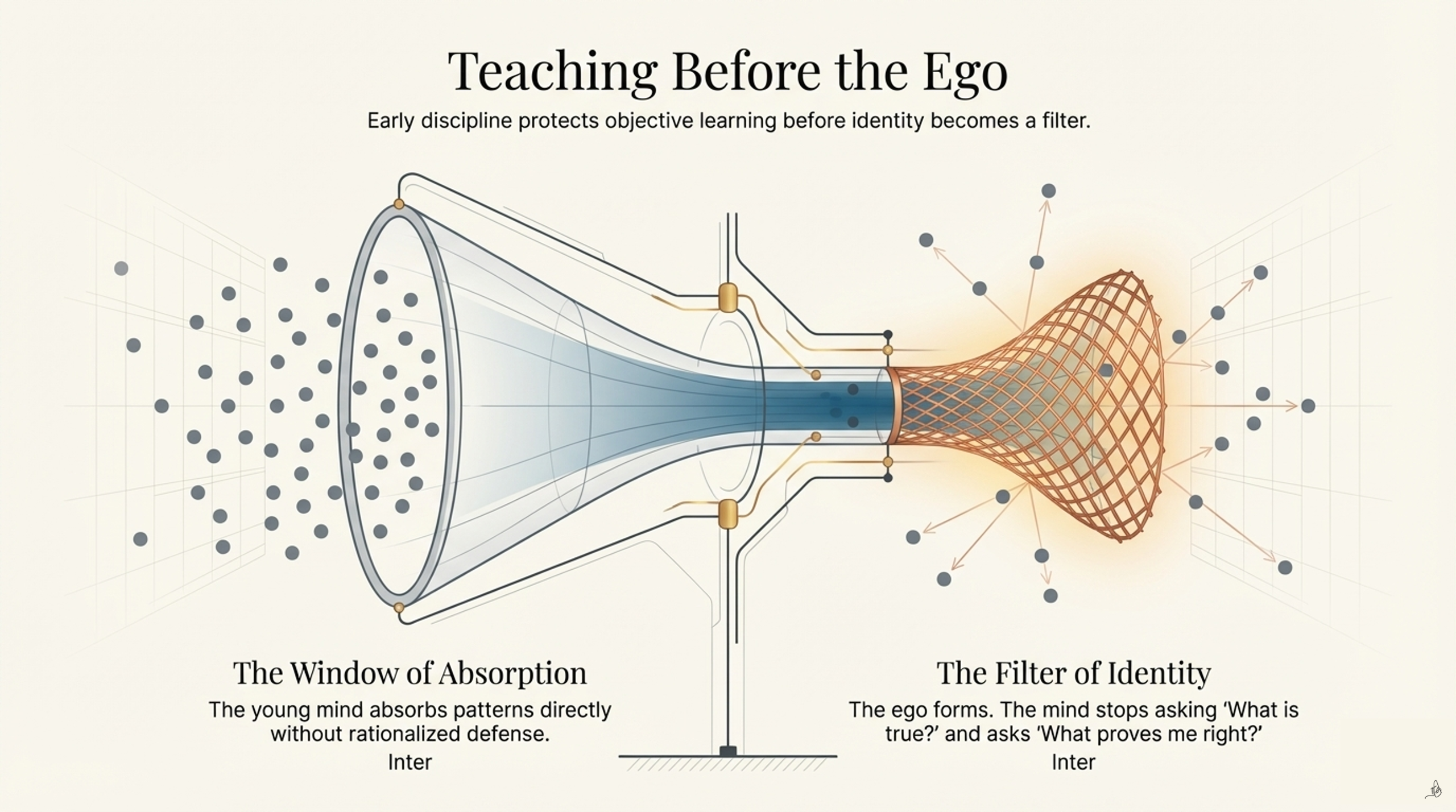
Early discipline works partly because young minds absorb patterns without heavy filtering. As ego strengthens with age, knowledge passes through new screens: Does this fit my beliefs? My identity? My need to be right?
Truth-seeking can quietly become identity-defense. Early training builds intellectual architecture before the ego takes charge.
The Modern Reversal
Today the sequence often flips. We begin with questions, search instantly, and consume answers. Digital tools make it effortless: Question → Search → Retrieve.
Knowledge migrates outside the mind—into devices, clouds, bookmarks. Without internal frameworks, insights arrive fragmented, disconnected. We gain instant access but risk losing the capacity to hold and weave knowledge ourselves.
In this lookup world, we excel at finding but grow weaker at remembering. Memory atrophies; retrieval becomes habit. Knowledge turns into something we consult rather than carry.
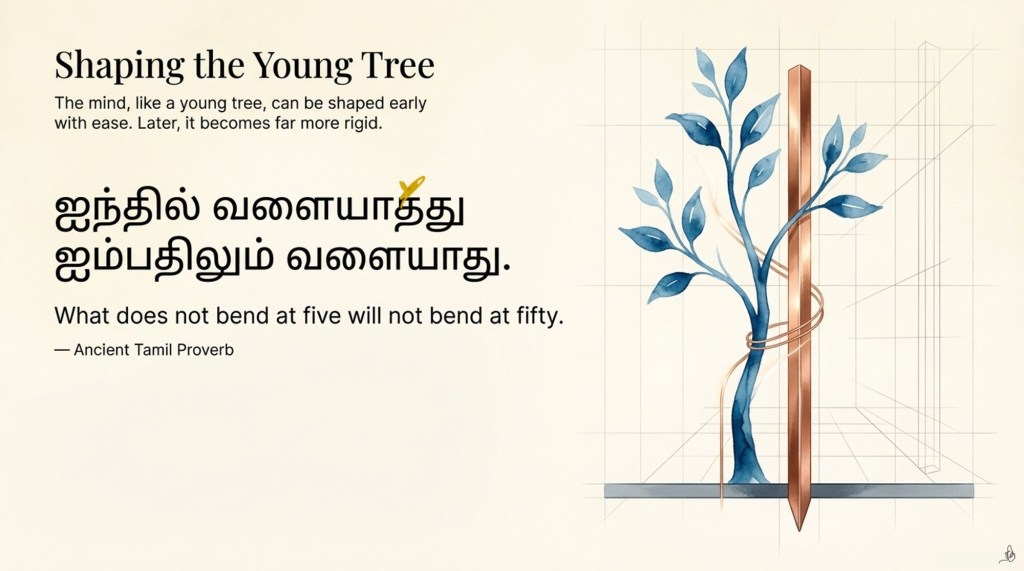
Early-formed habits and structures shape the mind for decades. Change remains possible, but foundation matters most.
Structure Before Freedom
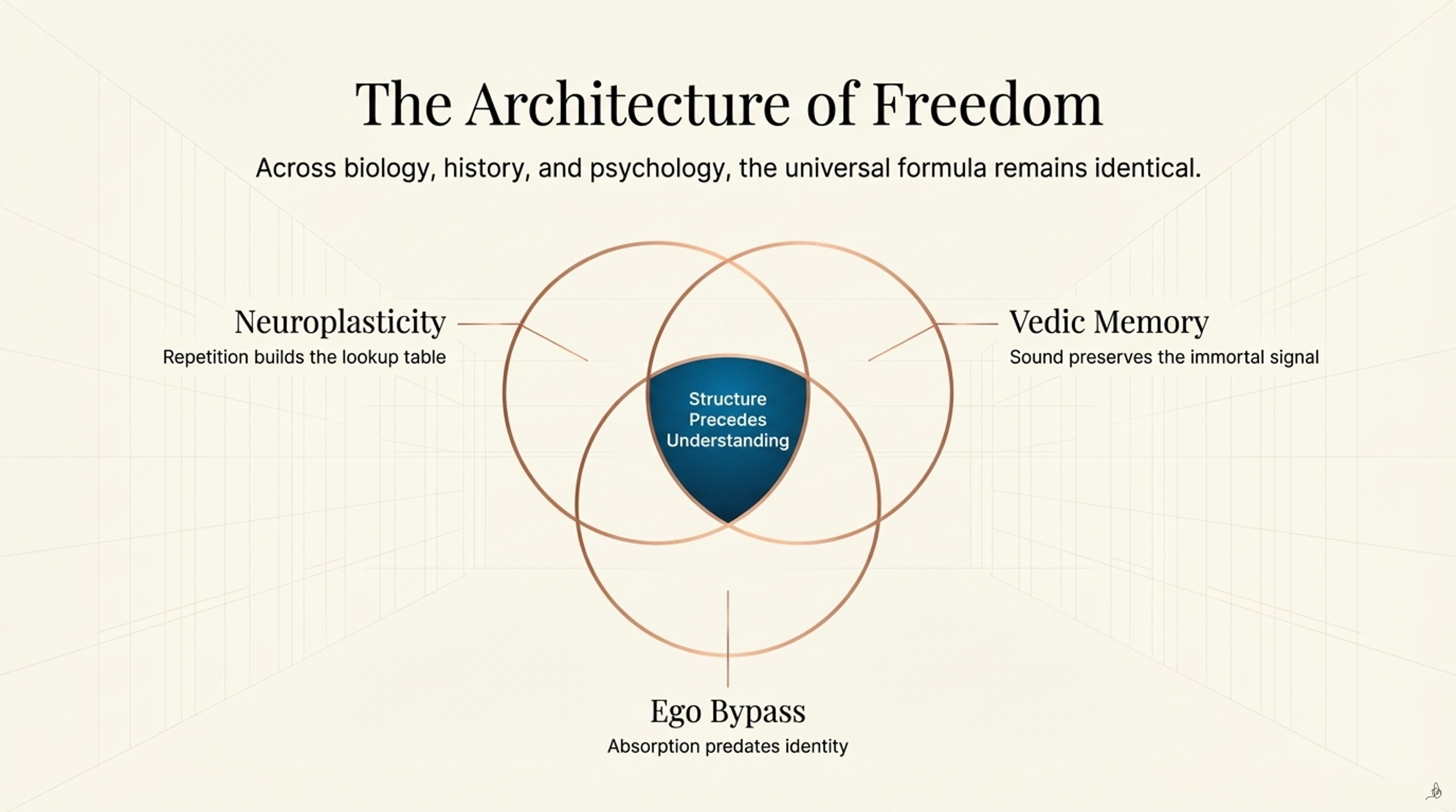
From neuroscience to ancient traditions to daily experience, the pattern repeats: the mind flourishes not through unchecked freedom alone, but through disciplined repetition and guided form.
Children master patterns before purpose. Students build frameworks before complex inquiry. Civilizations preserve before interpreting.
Structure first. Understanding follows.
Remembering in the Age of Lookup
Technology grants us infinite information at a fingertip. Yet access is not understanding.
Knowledge stored only in devices enlightens for a moment. Knowledge carried in memory shapes thought for a lifetime.
Perhaps that is why the childhood lessons we once resisted now feel profound. Those once-restrictive structures were quietly forging the very mind that could later comprehend them.
The more we rely on lookup, the less we learn to remember. And remembering, in the end, is where real understanding begins.
Memory, Patterns, and the Age of Lookup
Pattern recognition requires something simple but increasingly rare: exposure and memory.
The brain must encounter many examples before it can recognize structure. It must hold patterns long enough for relationships to emerge.
Traditional learning systems were designed with this in mind. Repetition was not merely discipline; it was the mechanism through which the mind learned to detect patterns.
When students memorized verses, practiced calculations, or studied recurring cycles in nature, they were training the brain’s ability to recognize deeper structures.
In contrast, modern knowledge systems often encourage a different habit. When a question appears, we immediately search for an answer. Information arrives quickly, but it often arrives as isolated fragments.
Without repeated exposure and internal memory, the mind sees individual answers rather than underlying patterns.
Technology gives us unprecedented access to knowledge. Artificial intelligence and search systems can analyze patterns across enormous datasets.
But the human mind still learns the same way it always has: through memory, repetition, and reflection.
Access to information can accelerate discovery, but pattern recognition still depends on what the mind has seen and remembered.
And that brings us back to a simple but uncomfortable truth.
The more we rely on lookup, the less we learn to remember.
 Arambhin
Leave a comment