
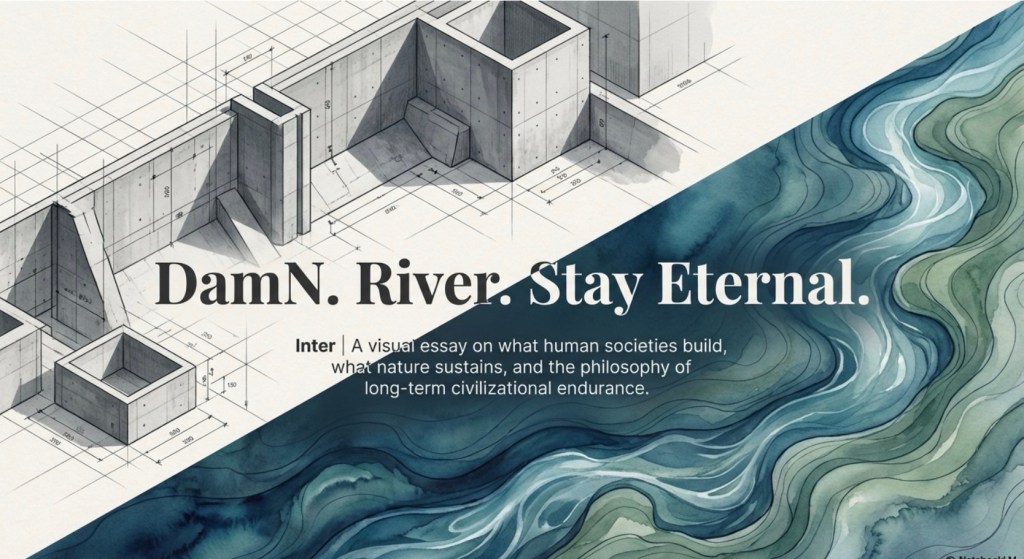
There is a quiet difference between what humans build and what nature sustains.
Human societies often operate through movements. Movements gather energy quickly. They mobilize people, slogans, policies, and projects to solve problems. They promise change. They create structures.
But nature operates differently. Nature works through flow.
The tension between these two ideas can be captured in a simple metaphor:
the dam and the river.
The Dam Mindset
A dam represents a powerful human instinct: control.
When we see a problem, we try to contain it, redirect it, or fix it through a large intervention. A dam gathers water in one place. A flyover gathers traffic above a road. A policy gathers authority within institutions.
Movements work the same way.
They concentrate attention, resources, and emotion around a single objective.
At first, they appear transformative.
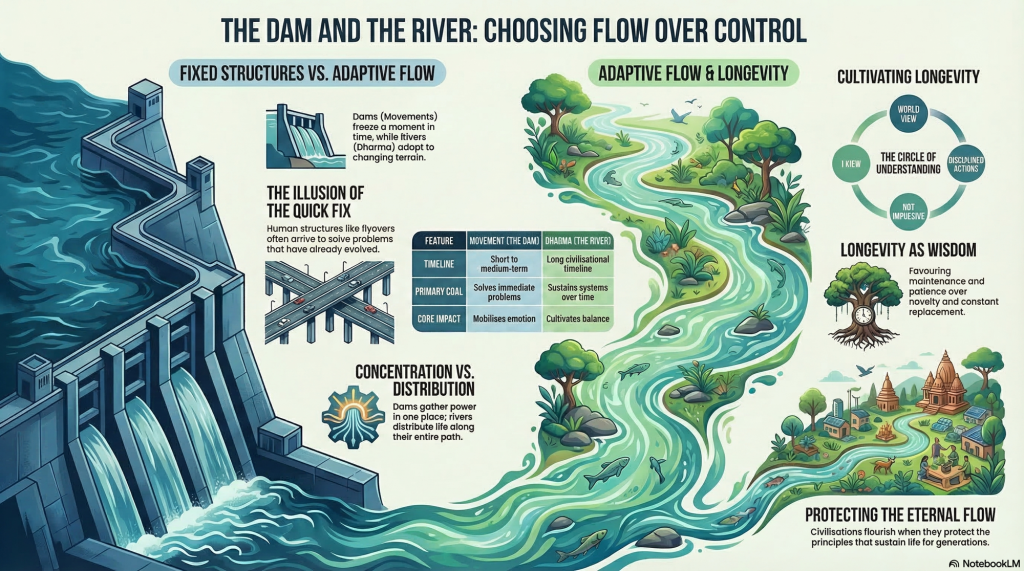
But large interventions often carry a hidden flaw: they freeze a moment in time.
By the time the structure is completed, the world has already changed.
A flyover planned to reduce congestion may take ten years to build. When it finally opens, the city has grown, travel patterns have shifted, and traffic has multiplied. The solution arrives for a problem that no longer exists in the same form.
The structure remains.
But the system has already moved on.
The River Principle
A river operates on a different philosophy.
It flows continuously.
It adapts to terrain, weather, seasons, and obstacles. It nourishes ecosystems along its path. It changes course slowly over time without losing its essence.
The river represents something deeper: dharma.
Dharma is not a movement. It is not a campaign. It is not a short-term fix.
Dharma is the sustaining order that allows life, society, and knowledge to remain in balance across long stretches of time.
Where a dam gathers water in one place, a river distributes life along its entire course.
Movements vs Dharma
The difference between the two becomes clear when we compare them.
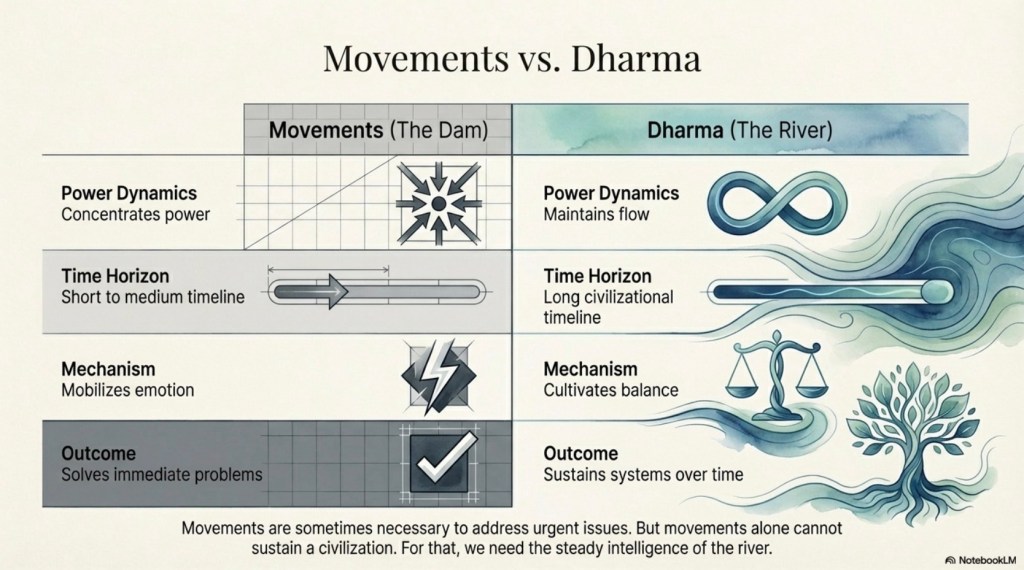
Movement (Dam)Dharma (River)Concentrates powerMaintains flowShort to medium timelineLong civilizational timelineMobilizes emotionCultivates balanceSolves immediate problemsSustains systems over time
Movements are sometimes necessary. They can address urgent issues or mobilize society toward change.
But movements alone cannot sustain a civilization.
For that, we need the steady intelligence of the river.
The Illusion of Immediate Solutions
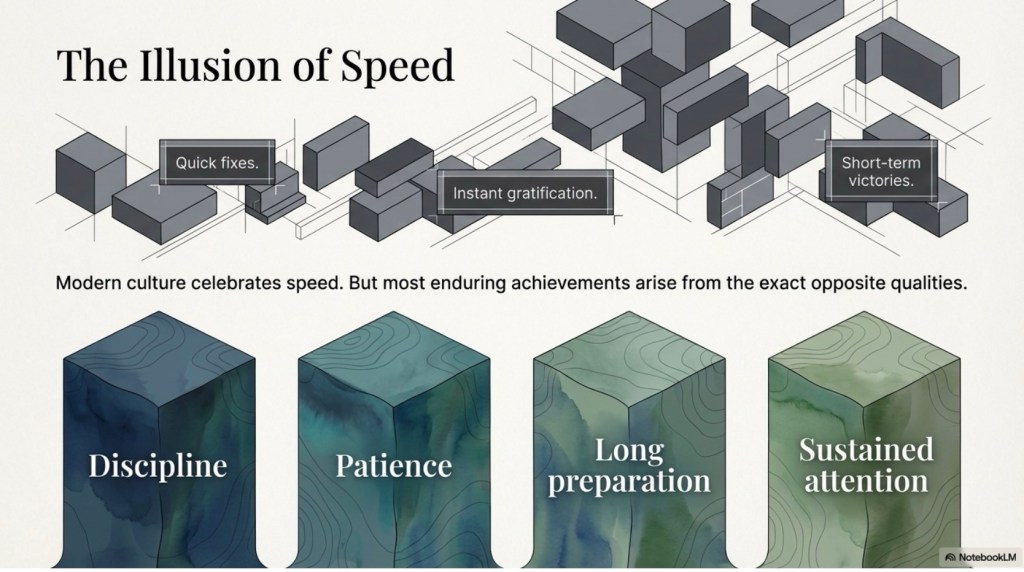
Modern culture often celebrates speed.
Quick fixes.
Instant gratification.
Short-term victories.
But most enduring achievements arise from the opposite qualities:
- discipline
- patience
- long preparation
- sustained attention
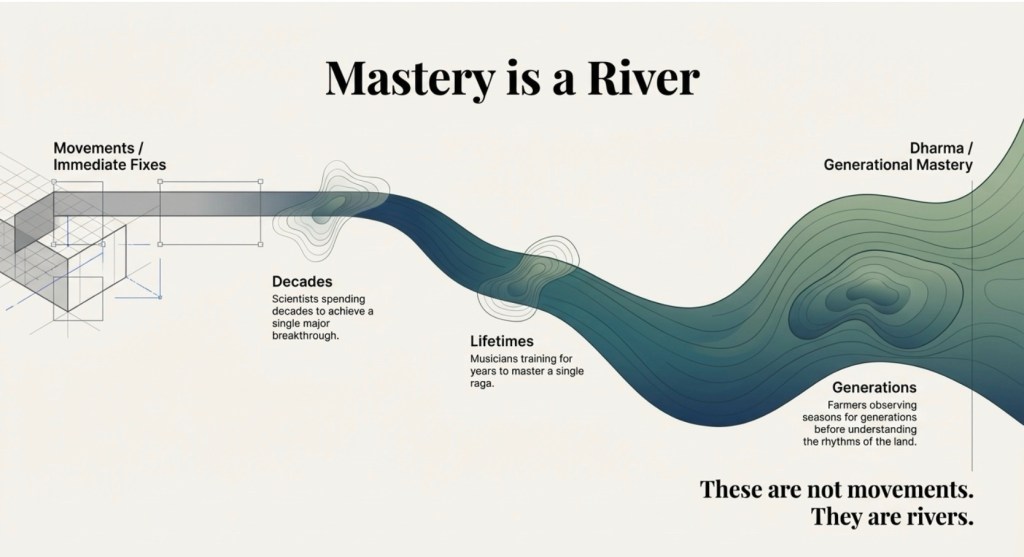
Scientists who receive major breakthroughs often spend decades on a single question. Musicians train for years to master a single raga. Farmers observe seasons for generations before understanding the rhythms of the land.
These are not movements.
They are rivers.
Longevity as Wisdom
Consider something simple: driving.
A person who changes ten cars in thirty years participates in a cycle of replacement and novelty. Another person who drives two or three cars carefully over the same period practices maintenance, patience, and sustainability.
The difference is not about cars.
It is about time horizon.
Short-term thinking consumes.
Long-term thinking sustains.
Civilizations built on longevity become stable. Civilizations built only on movement become restless.
Seeing the World in Layers
Before making decisions, it helps to look at reality through multiple lenses.
When we encounter a place—a temple, a forest, an ancestral home, or the Himalayas—we should not immediately jump to personal reaction.
Instead, we can move through a circle of understanding:
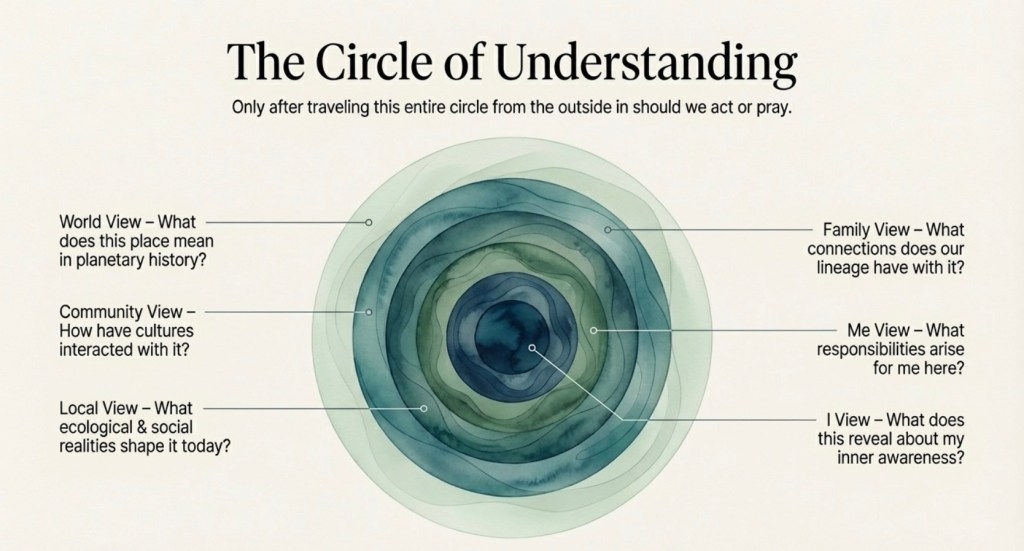
- World View – What does this place mean in the larger history of the planet?
- Community View – How have cultures interacted with it?
- Local View – What ecological and social realities shape it today?
- Family View – What connections does our lineage have with it?
- Me View – What responsibilities arise for me here?
- I View – What does this reveal about my inner awareness?
Only after traveling this circle should we act or pray.
This discipline prevents impulsive reactions and restores clarity.
The Flow That Endures
Human structures rise and fall.
Policies change.
Movements fade.
Projects age.
But the deeper forces of life continue to move.
A river may be slowed, diverted, or contained for a while. Yet over centuries it reshapes mountains, nourishes valleys, and finds new paths.
The flow persists.
That is why traditions often describe dharma as eternal.
Not because every custom lasts forever, but because the underlying principles of balance, responsibility, and continuity remain relevant across ages.
DamN. River. Stay Eternal
The phrase may sound playful, but it carries a quiet warning.
We may build dams.
We may construct movements.
We may attempt to control the course of events.
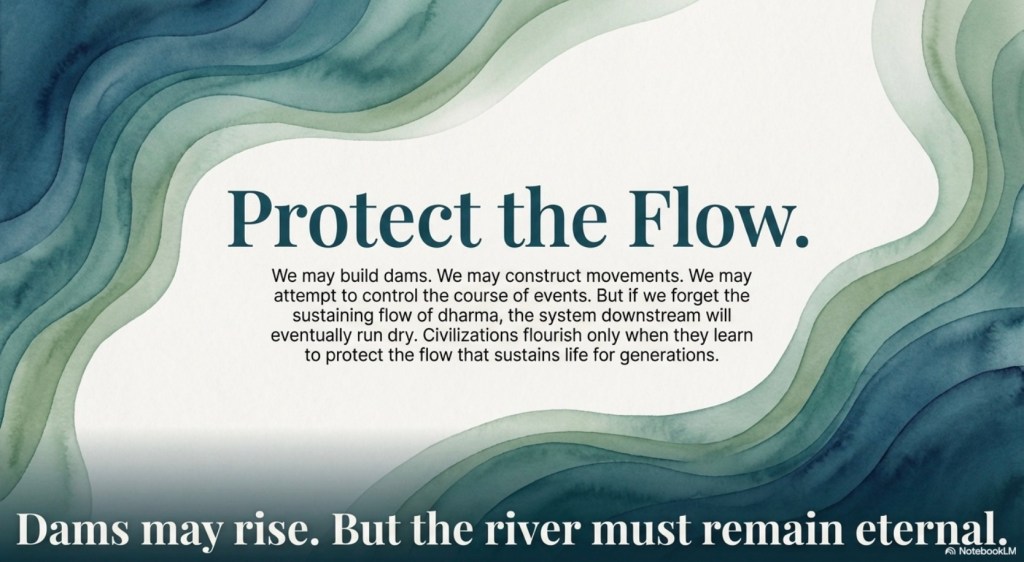
But if we forget the river—if we forget the sustaining flow of dharma—the system downstream will eventually run dry.
Civilizations flourish not when they only build structures, but when they learn to protect the flow that sustains life for generations.
Dams may rise.
But the river must remain eternal.
 Arambhin
Leave a comment