

The Caste of Biology
There is a question that quietly follows many of us in society.
“Which caste do you belong to?”
Sometimes it is asked directly. Sometimes it hides behind polite curiosity. Sometimes it appears through assumptions about language, background, or surname.
For centuries, caste has been treated as a fixed social identity. It has shaped power, opportunity, and the way people relate to one another. Yet the more I observe the world around me, the more I realize that many of these identities are not rooted in the deeper truths of life.
What we see today is often the result of layered interpretations. Some came from internal power structures that learned to use identity as a tool for control. Others were reinforced by colonial frameworks that tried to categorize a complex civilization into rigid administrative boxes.
Over time, these interpretations hardened into social realities.
What may once have been fluid markers of occupation, culture, or community gradually turned into instruments of hierarchy. In many cases, caste stopped being a description of society and became a mechanism for profit, propaganda, and division.
The result is a strange paradox: a system treated as ancient and natural, even though much of its present rigidity is the outcome of historical manipulation, misinterpretation, and the human tendency to turn identity into power.
Which raises a deeper question.
If social labels can be shaped by history and politics, then perhaps the truest identity lies somewhere deeper than society itself, closer to the simple and universal logic of life. 🧬🌿
Nature does create differences. Flowers bloom in different colors. Trees grow in different forms. Species evolve with different traits. Diversity is everywhere.
Yet these differences do not exist to build hierarchies. They exist simply to announce presence. They are signals of arrival, expressions of life’s variety.
Biology itself tells the story clearly. Genetic diversity exists so life can adapt, survive, and evolve. It was never meant to construct social walls between human beings.
Rurukshus Note – So when the world asks for a category, my answer is simple.
Who Am I?
Not the cause,
Not the cost.
Not the caste.
I belong to the caste of being.
ஜாதியின் நீதி
கடவுளுக்கு உண்டு இங்கு ஜாதி
கலப்படத்திற்கு இங்கு இல்லை ஜாதி
காதலுக்கு உண்டு இங்கு ஜாதி
கலவிக்கு இங்கு இல்லை ஜாதி
கல்விக்கு உண்டு இங்கு ஜாதி
தகுதித் திறனுக்கு இங்கு இல்லை ஜாதி
வாகனங்களுக்கு உண்டு இங்கு ஜாதி
சாலை பாதை ஒழுங்கில் இங்கு இல்லை ஜாதி
பயன்பாட்டுக்கு உண்டு இங்கு ஜாதி
பண்புக்கு இங்கு இல்லை ஜாதி
முன்னேற்றத்திற்கு உண்டு இங்கு ஜாதி
மூளைச் சலவைக்கு இங்கு இல்லை ஜாதி
ஆண் பெண்ணுக்கு ஓர் ஜாதி
அன்பிற்கு ஓர் ஜாதி
ஆத்மாவிற்கு இங்கு இல்லை ஜாதி
ஓட்டுக்கு உண்டு இங்கு ஜாதி
லஞ்ச ரூபாயில் இங்கு இல்லை ஜாதி
அரசியலின் தேவை இந்த ஜாதி
ஆதாயத்தில் இங்கு இல்லை ஜாதி
ஆட்சியில் அமர தேவை இந்த ஜாதி
சமூக நீதி வீச்சில் இங்கு இல்லை ஜாதி
பொய்க்கு இங்கு உண்டு ஜாதி
உண்மையில் இங்கு இல்லை ஜாதி
பாரதி சொன்னார்: “பாப்பா, இங்கு இல்லை ஜாதி”
இன்று இங்கு இல்லை பாப்பா; உண்மை கவிஞர் ஜாதி
I come from a land where democracy promises equality, yet politics quietly divides people into categories. Here, votes are often organized by caste, but when corruption flows, the money does not ask anyone’s caste. Division is useful when gathering votes, but unity appears when sharing profits.

I grew up observing this contradiction.

When power is needed, caste identities are amplified through vote banks, social labels, and political arithmetic. But when power becomes profitable through contracts, bribes, and influence, those same divisions suddenly disappear.
This taught me something early in life.
Sometimes caste is not a belief system. It is a political tool.

I also noticed another irony in our society. Opportunities are often restricted by caste barriers, yet propaganda and manipulation reach everyone equally. Progress is filtered, but brainwashing is distributed democratically.
We speak proudly about equality, justice, and reform. Yet the machinery that delivers power often relies on the very divisions those words claim to erase.

Over time I realized something deeper.

Falsehood needs categories to survive.
Truth does not.
Lies depend on division.
Truth dissolves it.

Our culture celebrates poets like Bharathi who dreamt of a casteless society. But in everyday life we still practice the very divisions those poets fought against.

So if you ask me my caste, I can only answer this way:
I belong to a caste of Being
ஜாதியின் பார்வை
லாபத்தை கூட்டும் ஜாதி நான் இல்லை
பொய்களை பாடும் ஜாதி நான் இல்லை
தேவைக்கு மனிதரை பிரிக்கும் ஜாதி நான் இல்லைகூட்டத்தின் குரல் ஆக நான் இல்லை
முகமூடியின் பின்னால் மறையும் மனிதன் நான் இல்லை
இயற்கையின் மொழியை கேட்க நான் இருக்கிறேன்
உயிரின் வடிவத்தை காட்ட நான் இருக்கிறேன்
இயற்கையில் வேறுபாடுகள் உண்டு —
பிரிக்க அல்ல, வருகையை அறிவிக்க
உயிரியலின் நீதியை கூறும் ஜாதி நான் இருக்கிறேன்
ஜாதிகளின் சங்கம் அல்ல நான்
உயிரியலின் சங்கமம் நான்
5 Surprising Truths About the “Caste of Being”
1. Introduction: The Question That Follows You
In our society, a specific question follows the individual like a silent, predatory shadow: “Which caste do you belong to?” It is rarely a matter of idle curiosity. Whether it hides behind inquiries about your surname, your ancestral village, or your mother tongue, it is an attempt to locate you within a grid. We are taught to view this identity as a fixed, primordial truth, yet history reveals a far more cynical origin. Much of what we call “caste” today is the residue of colonial frameworks—administrative “boxes” designed to categorize a complex, fluid civilization into rigid, manageable units for the purpose of easier governance. We have inherited a mechanism of control and mistaken it for our soul. The paradox is as sharp as it is hypocritical: caste is an inescapable reality when it serves the architecture of power, but it becomes a ghost the moment it inconveniences profit.
2. Takeaway 1: The Selective Blindness of Corruption and Profit
Observe the “Political Arithmetic” of our era and you will see the ultimate performance of hypocrisy. Caste is treated as an essential, non-negotiable category when “sitting in power” or “gathering votes.” Politicians spend careers convincing the masses that their survival depends on these divisions. Yet, the moment the curtain falls and the “sharing of profits” begins, these rigid boundaries dissolve into a seamless, golden unity.
In the pursuit of wealth, the “fixed” identity is revealed to be a total fabrication. When it comes to “bribe money” and “lucrative contracts,” the hands that refuse to touch in public are indistinguishable as they clutch the same spoils. As the poet notes:
“Division is useful when gathering votes, but unity appears when sharing profits.”
The unity found in corruption is not just a coincidence; it is a calculated betrayal of the very divisions sold to the public. If caste can disappear so easily in the presence of a bribe, was it ever a “sacred” truth to begin with?
3. Takeaway 2: The Democracy of Brainwashing vs. The Hierarchy of Progress
We live in a system that is meticulously efficient at distributing poison but remarkably stingy with the cure. This is the “Democracy of Deception.” While education, upward mobility, and genuine progress are gatekept by ancient hierarchies and filtered through social barriers, “brainwashing” and “propaganda” are distributed with perfect, democratic equality.
The machinery of the state and the media ensures that manipulation reaches the lowest rung as effectively as the highest. This is the ultimate paradox of our progress: the system is designed to be restrictive with tools for actual growth, yet it is flawlessly “equal” when it comes to spreading lies. Why is it that the path to a classroom is blocked by a thousand categories, but the path to a hateful rumor is open to all?
4. Takeaway 3: Nature Announces Presence, Not Hierarchy
To understand the “Caste of Being,” one must look to the biological reality that preceded the social lie. Nature is a master of diversity—flowers bloom in a riot of colors, and trees take a thousand different forms. But nature’s diversity is a tool for survival, not a blueprint for oppression. In the natural world, differences exist to announce presence, not to establish rank.
Genetic diversity is the engine of evolution; it allows life to adapt and endure. It was never intended to construct the “social walls” that humans have built. As the source reflects:
“Nature does create differences… They exist simply to announce presence.”
When we interpret biological variety as a ladder of human value, we aren’t following “Nature’s Law”—we are perverting it to justify a man-made hierarchy.
4. Takeaway 4: The Hypocrisy of the Sacred and the Secular
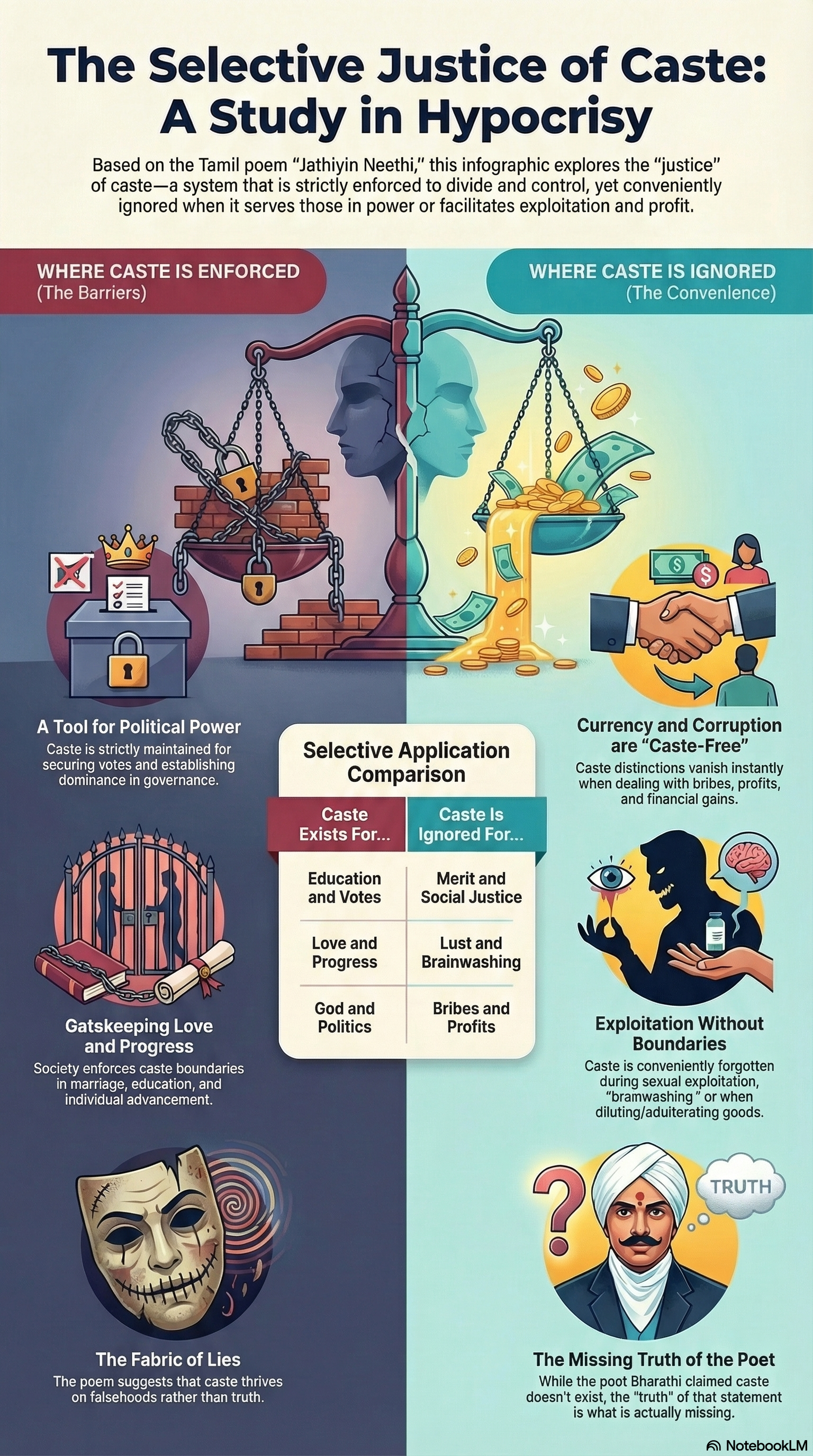
The application of caste is a masterpiece of selective convenience. It is a tool used for “usage” rather than a reflection of character. Consider the provocative juxtapositions found in the poem Jathiyin Needhi, which expose the rot at the heart of our social logic:
- Caste exists for God, but disappears for adulteration.
- Caste exists for Love, but disappears for Intercourse (கலவி).
- Caste exists for Gender, but disappears for the Soul.
- Caste exists for Vehicles, but disappears for the Road.
- Caste exists for Education, but disappears for Talent.
- Caste exists for Lies, but disappears for Truth.
These are not merely contradictions; they are evidence of a system that uses identity as a mask. If caste is “sacred” enough to block a marriage but “irrelevant” during a casual sexual encounter or a financial fraud, then caste is not a conviction—it is a convenience.
5. Takeaway 5: Reclaiming the “Caste of Being”
To reject these political categories is the only revolutionary act left. This is the transition to the “Caste of Being” or the “Caste of Biology” (உயிரியலின் நீதி). It is a refusal to be a variable in someone else’s political arithmetic. Falsehood requires categories to survive; truth naturally dissolves them.
The “Caste of Being” is not an association of social groups; it is a “confluence of biology” (உயிரியலின் சங்கமம்). It is the realization that you are not a tool for profit-seekers or a vessel for mass-distributed propaganda. By aligning with the biological truth of existence, you reclaim your identity from those who would use it as a weapon.
“Who Am I? Not the cause, Not the cost. Not the caste. I belong to the caste of being.”
6. Conclusion: The Ghost of the Poet
We are a culture that loves to celebrate the poet Bharathi while actively maintaining the very walls he sought to tear down. We teach children his words—”There is no caste, little one”—while simultaneously filling out their school forms with the very categories he loathed.
The tragedy of our modern reality is that the “truth-telling poet” has become a rare, perhaps extinct, breed. We have built a democracy that promises equality but thrives on the “caste of lies.” We are left with a haunting indictment: we claim to love the vision of a casteless society, yet we protect the divisions that keep us comfortable and the profit-seekers powerful.
This leads us to a final, diagnostic question: If your identity is a tool used by those seeking power and profit, who are you when the profit-seekers are no longer looking?
 Arambhin
Leave a comment