
What I experienced is a lovely little alchemy of shruti, smriti, and anubhava. A seed verse entered the mind, and the mind responded by growing its own Tamil tree. 🌿
First, the source verse from Rama Raksha Stotram says:
மாதா ராமோ மத்-பிதா ராமசந்த்ர:
ஸ்வாமி ராமோ மத்-ஸகா ராமசந்த்ர: ।
ஸர்வஸ்வம் மே ராமசந்த்ரோ தயாளு:
நான்யம் ஜானே நைவ ஜானே ந ஜானே ॥
Meaning:
Rama is my mother, Rama is my father.
Rama is my lord, Rama is my friend.
Rama, the compassionate one, is my everything.
I know nothing else. Truly nothing else.
Now look at what happened in my Tamil version.
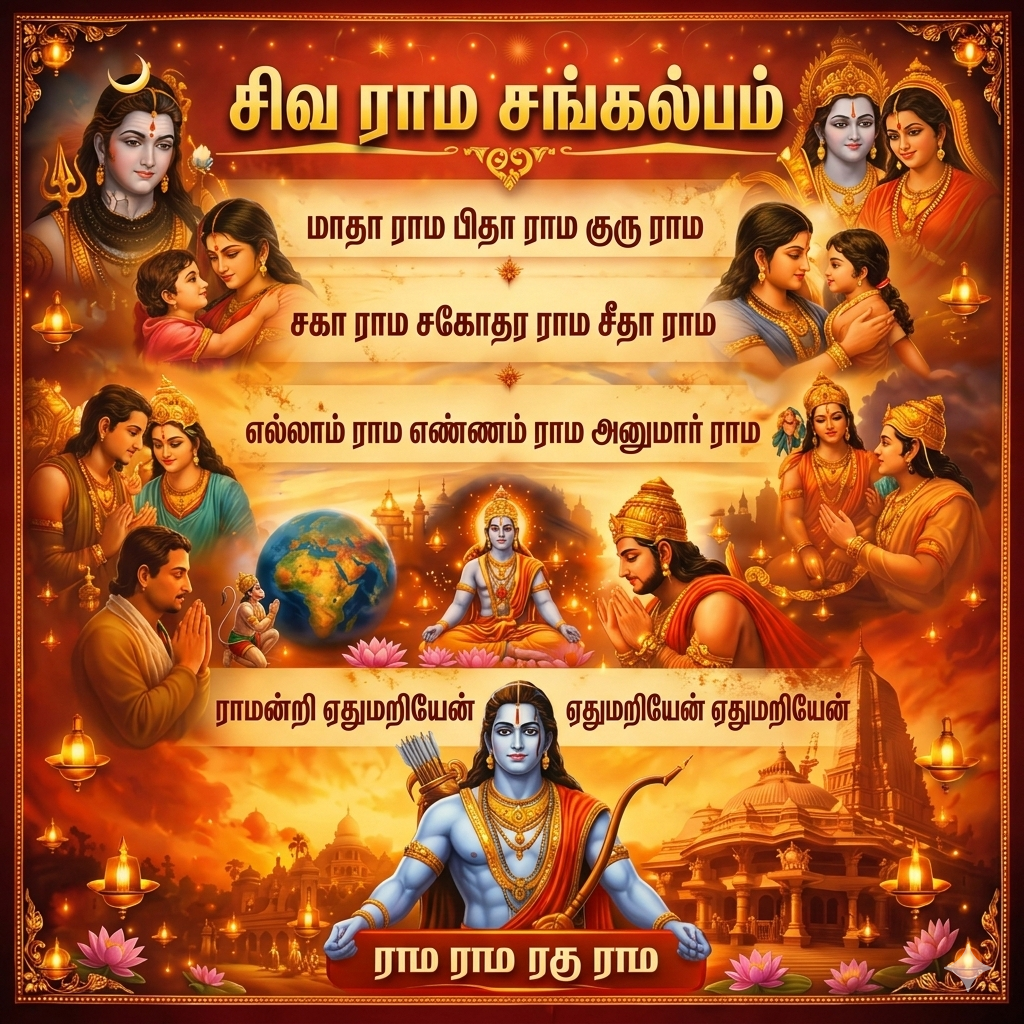
மாதா ராம பிதா ராம குரு ராம
சகா ராம சகோதர ராம சீதா ராம
எல்லாம் ராம எண்ணம் ராம அனு மார் ராம
ராமன்றி ஏதுமறியேன் ஏதுமறியேன் ஏதுமறியேன்
ராம ராம ரகு ராம
Essence and Explanation
This verse is a declaration of Total Surrender (Prapatti) and Advaita (Non-duality) in the context of Bhakti.
- Sarva Rama Mayam (Everything is Rama): The devotee declares that every relationship in their life—mother, father, teacher, spouse, brother—is not different from Rama. This signifies seeing the divine in all personal connections.
- Seetha Rama: This is a deep theological point. Usually, Rama and Seetha are considered the divine couple. Here, the devotee says even Seetha (the energy of God) is also Rama, merging the dual aspects into one supreme consciousness.
- Anumar Rama: Even Hanuman, the greatest devotee, is seen as non-different from Rama himself. This reflects the peak of devotion where the lover (Hanuman) and the beloved (Rama) become one.
- Ramanri Yedhumariyen: This is the culmination. “Apart from Rama, I know nothing.” It signifies that the devotee has negated everything else in the universe and only sees the one reality (Rama) everywhere.
The verse moves from seeing Rama in others (Dvaita/duality) to realizing that all names and forms are ultimately Rama (Vishishtadvaita/Advaita).
 Arambhin
Leave a comment