
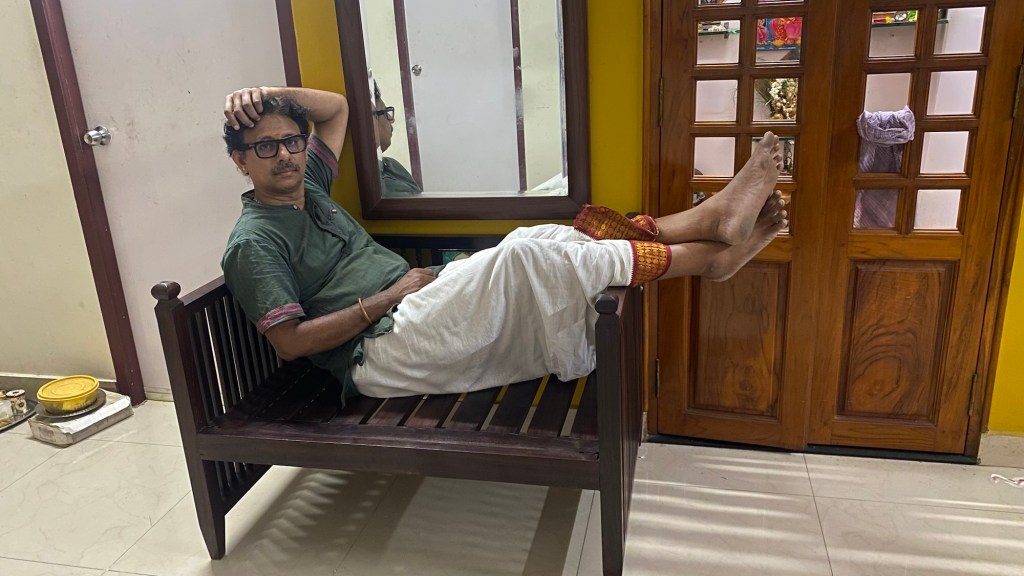
How an Old Frame Became My Work Chair
There is a particular corner in every house where old furniture goes to wait for judgment.
Not quite broken enough to throw away.
Not useful enough to keep inside.
It sits there quietly, leaning against a wall, holding the memory of another life.
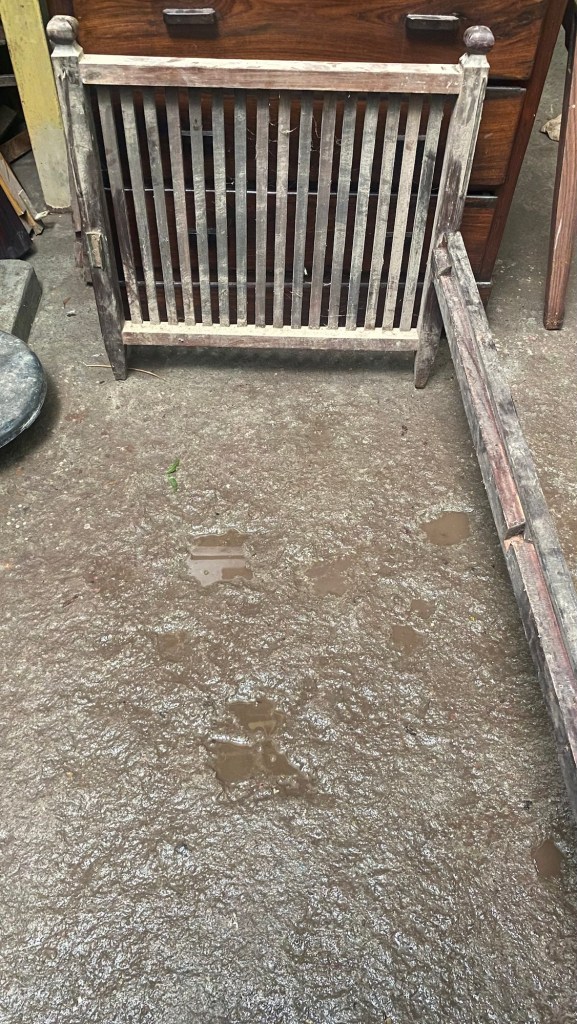
One afternoon, in Manis old furniture shop, I noticed a wooden frame. It had once been part of a sofa. The seat had disappeared, the polish had faded, and the wood carried the dusty silence of neglect.
But wood has a way of speaking to those who grew up around it.
And I did.
Growing Up with Trees Inside the House
From a young age, wood was never just furniture to me.
Our home had rosewood furniture, teak doors, and heavy wooden roof beams. The grain patterns moved like rivers frozen in time. Each table, door, and chair carried the quiet dignity of the tree it once was.
In many homes, furniture is simply bought.
In ours, it was chosen one, designed and respected.
Carpenters were not just workers who built things. They were craftsmen who understood wood the way a musician understands sound.
That early exposure quietly shaped my taste.
Learning from Masters of Wood
As I grew older and travelled, my fascination with wood only deepened.
Whenever I visited a new place, I would end up wandering through antique stores, old houses, or furniture markets. I studied joints, carvings, and grain patterns the way some people study paintings.
Along the way I began watching countless woodworking videos and reading about craftsmen who treated wood not as material, but as a living partner.
Two names stood out to me.
George Nakashima, who believed every slab of wood had a spirit and should be shaped to reveal its natural character rather than hide it.
Sam Maloof, whose chairs flowed like sculpture, where structure and comfort became one continuous line.
Their work carried a philosophy:
let the wood speak.
But inspiration was not only distant and famous.
Closer to home, there was someone who quietly shaped my understanding of craftsmanship even more.
The Carpenter Who Taught by Example
Our family friend and home carpenter, Thiyagaraya Achari, was a man who could read wood and mind the way a farmer reads soil.
He would run his hand along a plank and instantly know where it wanted to bend, where it might crack, and how it should be cut.
There were no diagrams.
No elaborate explanations.
Just experience, patience, and intuition.
Watching him work was like watching a conversation between a craftsman and the material in his hands.
Many of the things I learned about furniture were not taught formally. They were absorbed quietly over the years.
Choosing Rosewood for My Home
When it came time to build my own home, the choice was natural.
I settled on rosewood furniture. Not mass-produced pieces from showrooms, but carefully selected and repurposed wood.
Every piece in the house was handpicked, designed, or adapted to match my taste.
Rosewood has a certain gravity. It is dense, rich, and patient. Its grain carries deep waves of color, and when polished well, it reflects light softly rather than loudly.
More than anything, it carries time.
The Forgotten Frame
That is why the old sofa frame caught my attention.
Most people might have seen broken unused furniture with limited use, I visualised comfortably seating on it.
I saw good rosewood still alive and ready to care and stand for another century..
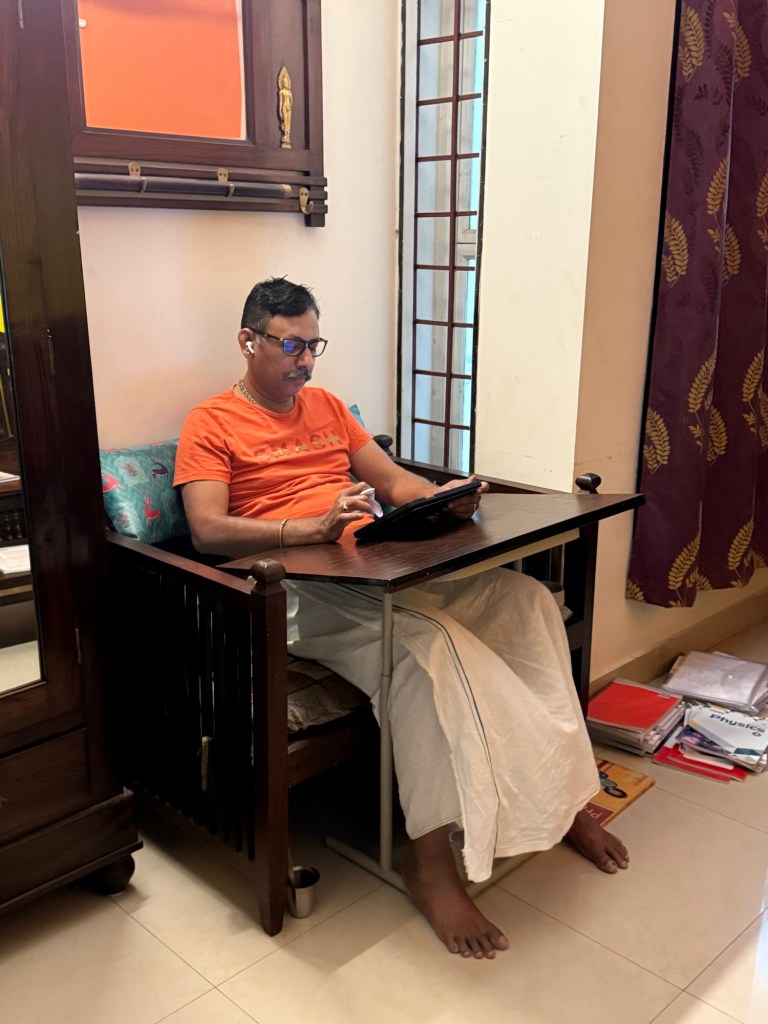
The backrest with its vertical slats was intact. The side arms were strong. The structure had survived years of use.
It did not need replacement.
It needed reinvention.
Rebuilding the Structure
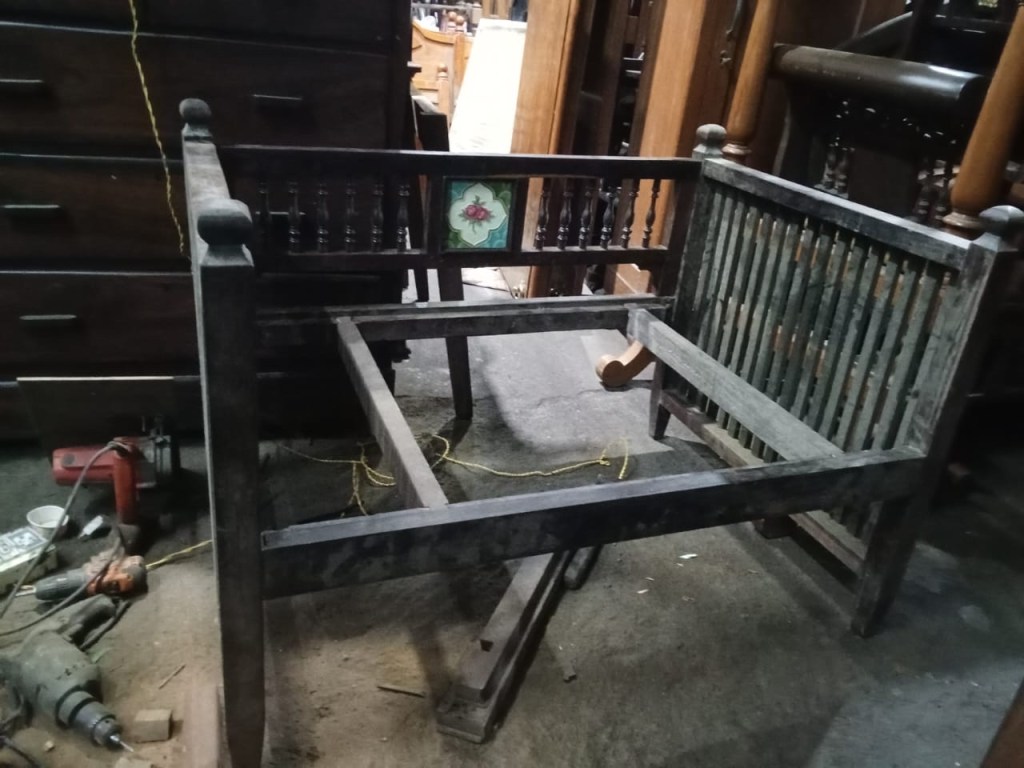
The frame was carefully dismantled.
The back panel came apart first. Then the side arms. Each piece was cleaned and examined like parts of an old machine waiting to be rebuilt.
A new base frame was constructed to support the structure again. Strong legs were aligned with the backrest. The side arms returned to their positions like old companions reunited.
Slowly, the fragments began to form something new.
A chair. New place to meditate and mediate workloads.
The Quiet Revival of Wood
Old wood rewards patience.
Once sanded and polished, the grain began to glow again. The rosewood regained its warmth, almost as if it had been waiting for a second life.
No artificial shine.
No factory gloss.
Just the natural depth of aged wood.
A Chair for Work and Thought
The final step was simple.
Working from home had made the typical office chair redundant. The spinning wheels, stiff posture, and fixed angles suddenly felt unnecessary.
What I wanted instead was freedom of posture.
A chair where I could sit cross-legged, fold my legs in a yogic pose, lean sideways, or simply relax while reading.
When I looked at the frame again, I remembered how many teachers and gurus traditionally sat—simple wooden platforms or benches, minimal but strong, leaving space rather than restricting it.
So that became the idea.
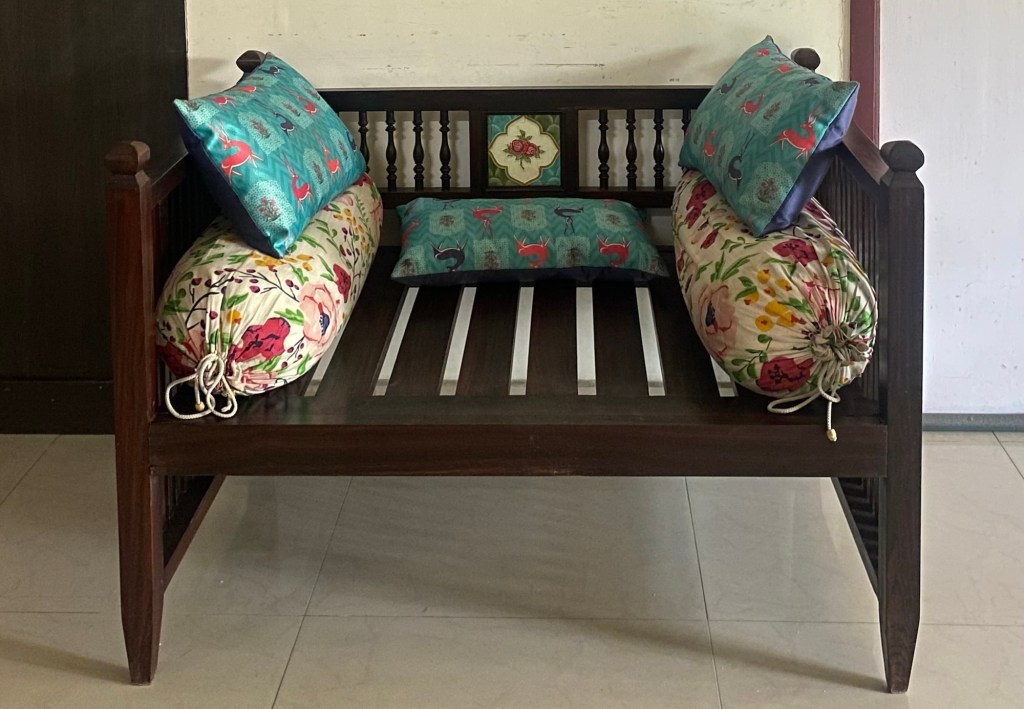
A minimalist chair with maximum space and strength.
The wooden slats allowed ventilation. Cushions added softness without crowding the structure. The wide seat made it possible to shift postures easily during long hours of reading or working.
Laptop on the desk.
Books within reach.
A quiet lamp leaning over the workspace.
And the old frame began its second life.
The Philosophy of Repurposing
Modern life encourages replacement.
Craftsmanship encourages understanding.
Old furniture often carries stronger wood and deeper character than many modern pieces. With imagination and patience, it can easily find a new purpose.
This chair is not just furniture.
It is a reminder.
A reminder that materials deserve respect, that craftsmanship deserves patience, and that sometimes the most meaningful things in our homes are not the newest ones, but the ones that have quietly survived long enough to be rediscovered.
What once waited in a forgotten corner now sits at the center of my workspace.
Not broken.
Just reborn.
 Arambhin
Leave a comment