
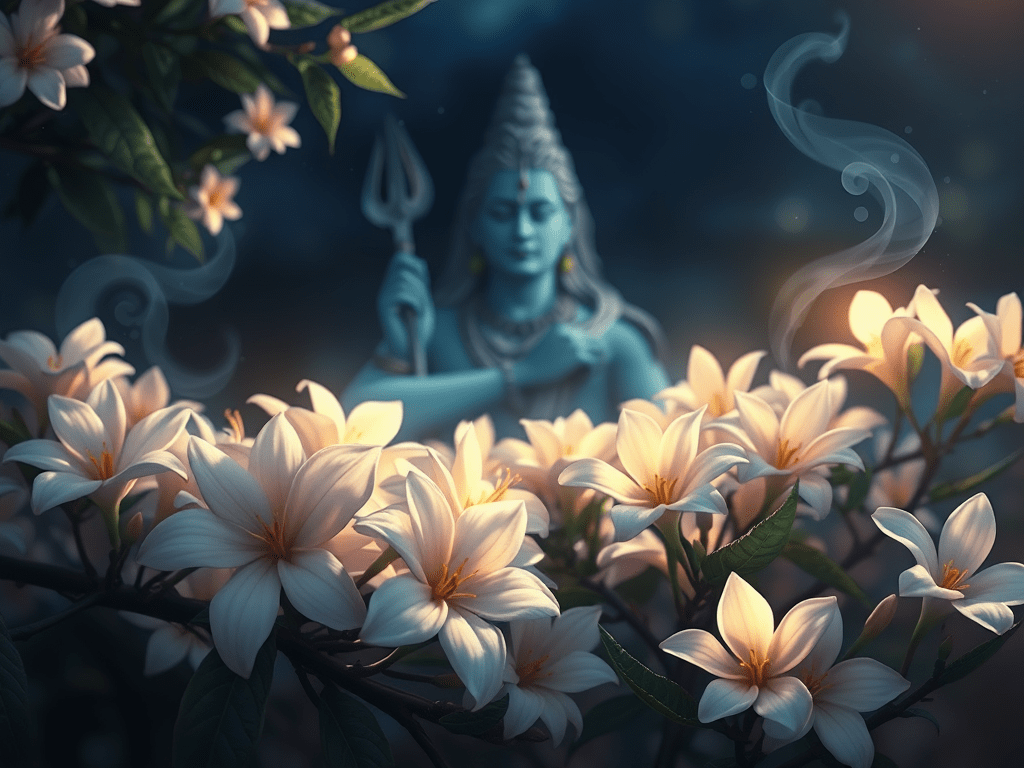
வெண்மல்லிகை கோமான் – Some books are written, Some are assembled. And then, there are books that slowly gather themselves — like jasmine fragrance collecting in the night air without anyone noticing when it began.
வெண்மல்லிகை கோமான் was never planned as a book, its writing in progress. It began as scattered lines. Fragments that appeared in pauses between daily routines. Verses that arrived without announcement — sometimes in longing, sometimes in stillness, sometimes in a strange inward sweetness that had no visible cause.
At first, they appeared to be love poems.
Intimate, direct, addressed to a mysterious beloved — the White Jasmine King. But as the verses accumulated, the beloved began to change form.
He was not merely someone loved.
He was someone sensed.
Then someone discovered within.
And finally, the very presence in which the poems themselves were arising.
Fragrance Before Form
The early verses carried a quiet inversion of necessity:
“மணம் இருக்க மலர் எதற்கு
சாந்தம் இருக்க தியானம் எதற்கு
ஒருமை இருக்க தனிமை எதற்கு”
If fragrance is present, what need is there for the flower?
If peace is already here, what need is there for meditation?
If oneness is felt, what meaning does loneliness hold?
These lines did not reject practice. They simply pointed to a moment when practice dissolves naturally — like an umbrella folded after the rain has passed.
Essence replacing method.
Presence replacing ritual.
Love as Fever
Then the tone shifted.
Love was no longer fragrant — it became physiological.
“நாட்காலம் பகலில் உன்னால் வருந்திநின்றேன்
நாட்காலம் இரவில் உன்னால் பித்தனானேன்
பசித்தாகம் தூக்கம் மறந்தேன்”
Day brought restlessness. Night brought madness. Hunger, thirst, sleep — all began dissolving.
This was no decorative romance.
It was devotion entering the bloodstream.
The kind of love sung by Bhakti saints — where longing disturbs biology itself.
The Loss of Self
A single line marked a turning point:
“உன்னால் என்னை இழந்தேன்.”
I did not gain you. I lost myself.
Here, identity began thinning.
The lover became porous.
The boundary between seeker and sought loosened.
Discovery Within
Then came the reversal.
Search direction changed.
“பொன் தன் நிறத்தில் இருக்க
நீ என்னுள் இருந்தாய்
உன்னுள் கண்டேன்.”
Gold does not borrow its color.
The Divine does not arrive from outside.
It is discovered embedded within awareness itself.
Seeking outward ended.
Seeing inward began.
Hidden Treasure Cosmology
Reality itself became layered metaphor:
Treasure in earth.
Taste in fruit.
Oil in seed.
Truth in heart.
The poems began mapping existence as a series of concealed interiors — each layer pointing deeper inward.
Mining the world slowly became mining the self.
Two Worlds Trembling, but realization did not erase human tension.
One set of verses stood trembling between worlds:
“கணவர் உள்ளே காதலர் வெளியே
இவ்வுலகம் மற்றும் அவ்வுலகம்…”
Worldly roles on one side. Soul’s pull on the other.
Duty holding one hand. Liberation pulling the other.
This was not rejection of life — but the honest tremor of holding both.
Puppet & Engineer.
Then came surrender.
The imagery turned theatrical:
Monkey bound within its orbit.
Puppet moving by unseen strings.
“உன் வார்த்தையை நான் பேச…
இவ்வுலகின் பொறியாளனே…”
Agency dissolved.
The realization emerged:
I was moving — but the movement was not mine.
The closing recognition:
“நான் ஓடிக்கொண்டிருந்தேன்
நீ நிறுத்தம் வரை.”
I ran until You stopped me.
Effort belonged to the seeker.
Termination belonged to the unseen Engineer.
Transmission of Living Light
At this stage, knowledge itself changed meaning.
“அறிவை உயிர் உயிரிடம் பெறுகிறது
புத்தகத்தில் அல்ல…”
Wisdom was no longer informational.
It was transmissional.
A lit lamp lighting another.
Clarity appearing when the mind fell silent:
“மனமடங்கி தோன்றும் தெளிவு
இது இதயத்தின் ஒளிர்வு.”
Knowledge as heart-light.
Not learned — revealed.
Stillness After Motion
And then, the lullaby ended.
“வானத்தின் தாலாட்டில் காற்று கண்ணுறங்க…
தாலாட்டு நிறைவுற்றது
இல்லாமல் இருக்கிறான் ஈசன்.”
Movement slept.
Creation’s song subsided.
God did not appear in form.
He remained as formless presence — “absent yet all-pervading.”
The journey that began in love ended in silence.
Fragrance dissolved into sky.
Who is the White Jasmine King?
Across the poems, this figure transformed:
- Beloved.
- Inner presence.
- Obsession.
- Self-essence.
- Cosmic mover.
- Silent witness.
He was never fixed — because the journey itself was unfolding.
Why Jasmine?
Jasmine became the central metaphor for a reason.
Fragrance cannot be possessed.
It cannot be contained.
It often arrives before the flower is seen.
So too with inner realization.
Presence precedes recognition.
A Book Meant to Be Inhaled
This collection does not demand analysis.
It invites absorption.
It belongs equally to Bhakti and Advaita — devotion ripening into non-duality without losing tenderness.
If the reader finds echoes of personal experience within these verses, it is because the journey described here is not singular.
Love disturbing routine…
Longing refining identity…
Silence revealing light…
These are ancient movements of consciousness.
This book is merely one more garland placed upon that timeless current.
If fragrance remains after the flower is set down, let it remain.
For the final movement of வெண்மல்லிகை கோமான் is not poetic.
It is experiential.
He arrives as love.
He burns as longing.
He dissolves as self-loss.
He reveals as inner light.
And finally —
He remains as silence.
🌼
 Arambhin
Leave a comment