
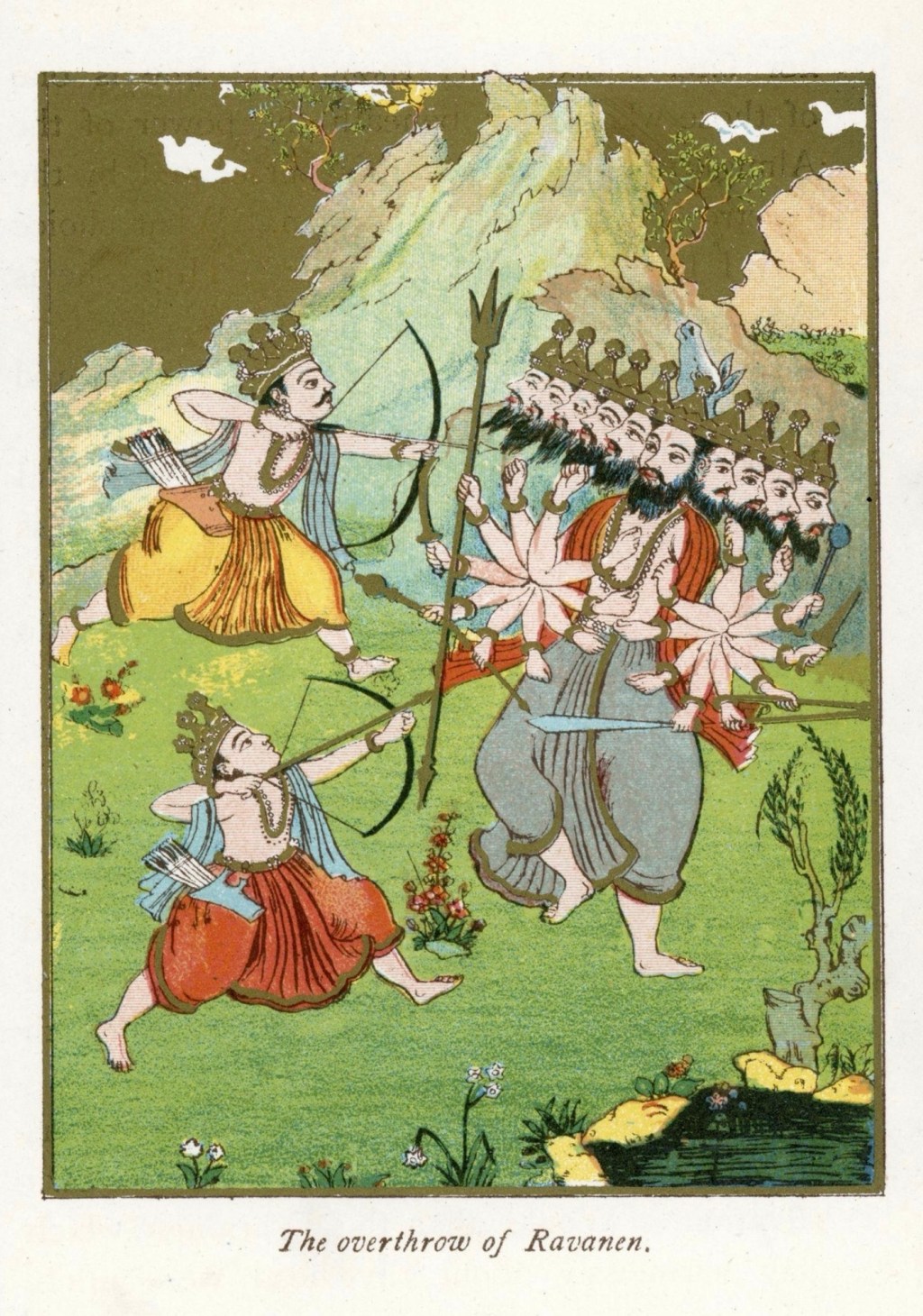
The ego offered to the light.
ஸ்வஸ்தி ஸ்ரீ
ராமன் —
உதய பிழம்பாக அவதிரித்த
மனுஷ்ய ரூப தேஜஸ்.அவனுக்கு பின்னே —
ஹிரண்யகர்ப்ப ஆதித்த பிரகாசம்.சப்தாஶ்வ ரத சாரதி —
காலசக்கர நாயகன்.சர்வலோக தீபனாய் நிலைத்த
சனாதன தர்ம சூரியன்அஸ்தமனமில்லா சாட்சி —
கர்ம பல தாதா.ராமன் —
அந்த ஆதித்த ஹ்ருதய ஜ்யோதியின்
பிரத்யக்ஷ கதிர்.எதிர்த்த ராவணனாகிய நான் —
அகந்தி அந்தகார மூடன்.வீழ்ச்சி பெற்ற காலம் —
அர்க்ய ஆக்னி பூர்ண சமர்ப்பணம்.சூர்ய நாராயணாய இதம்.
இப்போது கவிதை சொல்லும் முழுமையான பயணம்:
- தரிசனம்: ராமனை உதய சூரியனாக, பிரபஞ்ச ஒளியாக தரிசிக்கிறேன். அவன் மனித வடிவில் தோன்றிய தேஜஸ்.
- உணர்தல்: அவனுக்குப் பின்னால் இருப்பது ஹிரண்யகர்ப்ப பிரகாசம். அவனே காலத்தையும், உலகையும் இயக்கும் நாயகன். அவனே அனைத்துக்கும் சாட்சி.
- அடையாளம் காணல்: அவன், சூரியனின் இதயத்தில் இருக்கும் ஒளி. அது நேரில் காணக்கூடிய ஒளிக்கதிர்.
- உண்மை உணர்தல்: அவனுக்கு எதிராக நின்றது நானே — என் அகங்காரம், என் அறியாமை இருள்.
- சரணாகதி: நான் முழுவதுமாக வீழ்ந்த அந்தக் காலக்கணமே, அக்னியில் முழுமையான சமர்ப்பணம் செய்த புனிதத் தருணம்.
- பலன்: அந்த சூரிய நாராயணனுக்கு இது சமர்ப்பணம்.
Salutations! Glory!
Rama —
The incandescent mass of dawn,
The embodied solar effulgence in human form.Behind him —
The radiant light of Hiranyagarbha (the Cosmic Womb) and the sun.The Charioteer of the seven-horsed chariot —
The Master of the Wheel of Time (Kalachakra).The Eternal Solar Dharma (Sanatana Surya Dharma),
Established as the lamp of all worlds.The Witness who knows no setting,
The bestower of the fruits of all actions (Karma Phala Data).Rama —
That light which dwells in the heart of the sun (Aditya Hridaya),
The manifest ray of light.Ravana, who stood opposed —
The ignorant one enveloped in the darkness of ego.The era (or moment) of his downfall —
The sacred offering (Arghya) filled with the fire of complete surrender.To Surya Narayana, this is offered.
Key Symbolism
· Rama as the Embodied Sun: The poem doesn’t just compare Rama to the sun; it states he is the sun’s essence (“Aditya Hridaya Jyoti”) in a human form (“Manushya Roopa Tejas”). His very being is described as the light of dawn, fresh and powerful.
· The Cosmic Order (Rita): By calling Rama the “Sanatana Surya Dharma” (Eternal Solar Law) and the “Saptashva Ratha Saradhi” (Charioteer of the seven-horsed chariot, a classic description of Surya), the poem positions him as the upholder of cosmic order. He is not just a king but the very principle of light, time, and righteousness that governs the universe.
· The Nature of Evil: Ravana is defined not just as a demon, but as “Agandhi Andhakara Moodan”—the ignorant fool enveloped in the darkness of ego (“ahamkara”). This frames the battle not merely as a war between good and evil, but as the inevitable confrontation between Light (knowledge, dharma, selflessness) and Darkness (ignorance, adharma, ego).
· The Battle as a Sacred Offering: The climax is re-imagined in a beautiful ritualistic way. Ravana’s fall (“Veezhchi”) is not just a defeat; it is a “Poorna Samarpana”—a complete and total offering. The battlefield becomes a sacrificial ground where the fire of righteousness (“Argya Agni”) accepts the dissolution of evil. This transforms the event from a killing into a sacred act that restores cosmic balance.
· The Closing Verse: “Soorya Narayanaya Idam” (To Surya Narayana, this is offered) serves as the final dedication. It confirms that the entire poem, and the story it encapsulates, is an offering to the Supreme Light, which is both the sun in the sky and the divine consciousness within Rama.
The Last Altar of Lanka
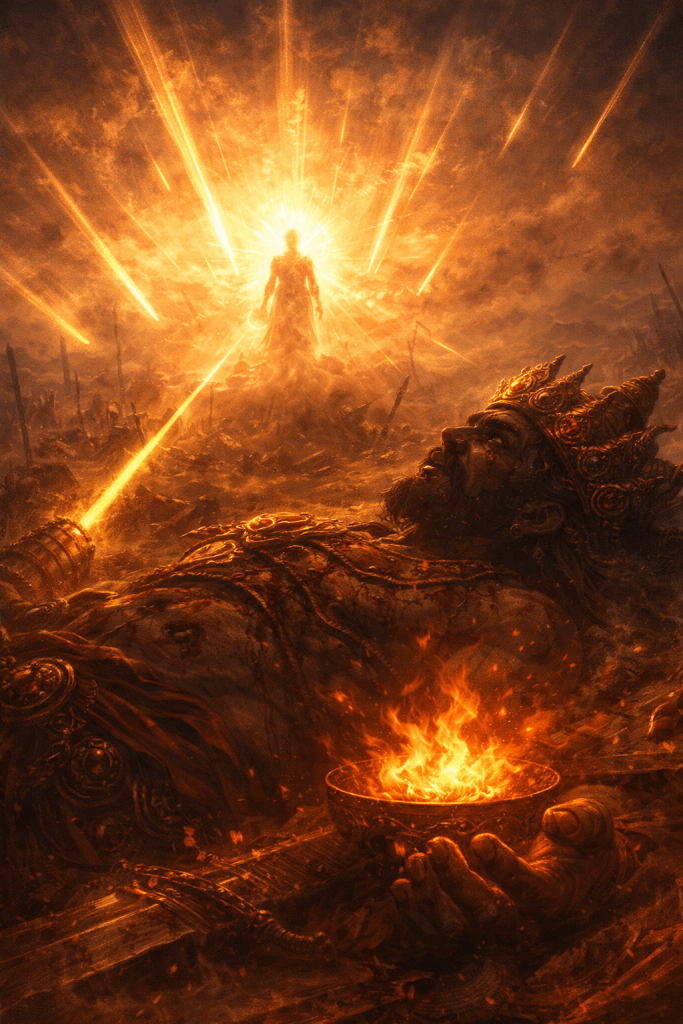
The noise of the world ends not with a bang, but with a breath.
For Ravana, the ten-headed cacophony of ambition had finally fallen silent. No more chariot wheels grinding against the dust of Dharma; no more notifications from the heavens of gods trembling at his name. There was only the heat of the Lankan sun and the shadow of a man standing over him.
Lakshmana. The brother who stayed. The shadow to a King of Light.
Ravana’s crown lay in the dirt, a discarded toy. He looked up, his voice no longer a roar, but a dry rustle of autumn leaves.
“I see the blindness now,” Ravana whispered. “I was the most educated man in the three worlds, yet I lived in a cellar of my own making. I mistook the reflection of my own golden walls for the sun.”
He coughed, a bitter sound that tasted of copper and regret. “I had warnings, Lakshmana. When Vali pinned me under his arm and carried me across the four oceans, I called it a fluke of strength. When Kartavirya Arjuna imprisoned me like a caged beast, I called it a lapse in strategy. I treated my failures as glitches in the system, rather than messages from the Source. I refused to learn until the lesson became lethal.”
In the language of the modern soul, Ravana was the ultimate high-performer who ignored the “burnout” and the “red flags.” He had the followers and the status, but he treated every setback as a “hater” to be ignored rather than a mirror to be looked into.
Lakshmana knelt. Not to finish the kill, but to hear the confession. “Waves carry your name to the shore, Lankesh,” Lakshmana replied softly, “but the ocean never belongs to the wave. You dominated the surface. You forgot the depth. And depth is the only thing that survives the storm.”
“My pride was lightning,” Ravana continued, his eyes glazing. “I thought the flash was the source of power. I won every argument, Lakshmana. I cancelled every critic. I dominated the algorithm of existence… and I lost the quiet.”
“The sky holds the storm,” Lakshmana said. “But the sky is never the storm. Silence is the only real sovereign. My brother does not speak because he is the silence.”
Then came the moment of the Great Pivot. Ravana didn’t look at the arrows in his chest as wounds. He looked at them as windows.
“I thought I was being destroyed,” Ravana gasped, a strange smile touching his lips. “But I was being dismantled. These arrows of Rama… they aren’t weapons. They are light breaking through the cracks of my ego. I didn’t fight a King of Ayodhya. I fought the Principle behind the man.”
He saw it then. Rama wasn’t just a warrior; Rama was Alignment. He was the gravity that holds planets in place. Trying to defeat Rama was like trying to outvote the sunrise.
“You did not see the man,” Lakshmana affirmed. “You saw the Light he carried. Brands fade, Ravana. Influencers rotate. But Integrity is the sun that remains when the stage lights go dark.”
Ravana lifted a trembling hand, pointing toward the horizon where the physical sun met the spiritual one. “My fall is no longer a defeat. It is a bowl of fire… offered to the Source.”
In that final vibration, Ravana ceased to be a villain. He became an offering. He realized that every win, every loss, and every heartbreak is just fuel for a larger consciousness.
Nārāyaṇāyeti Samarpayāmi.
 Arambhin
Leave a comment