
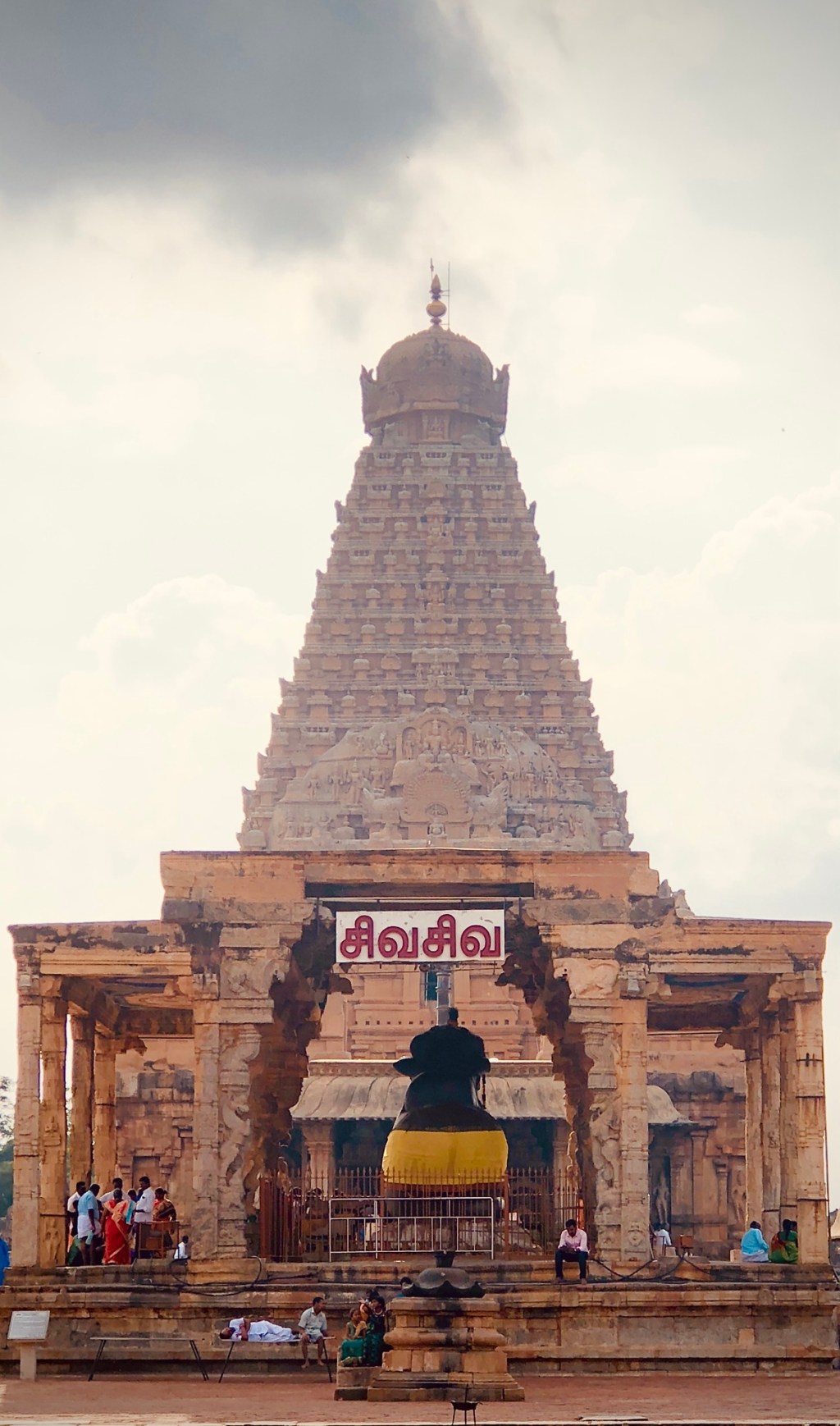
The late afternoon sun hung low over the Brihadeeswarar Temple in Thanjavur, casting long shadows across the vast courtyard. The ancient granite, etched with a thousand years of Chola craftsmanship, glowed like embers. At the heart of it all loomed the massive Nandi bull, Shiva’s sacred mount, hewn from a single colossal stone. Its surface, smoothed by generations of reverent hands and ritual oils, seemed to pulse with a quiet, unyielding life. Not a mere idol, but a sentinel—eyes fixed eternally on the temple’s inner sanctum, embodying the patient devotion of a true disciple.
Jack Harlan, a weathered Australian geologist who’d spent decades mapping the silent voids of the Outback, paused at the bull’s flank. His boots, caked with red earth from distant digs, scuffed softly against the stone floor. He removed his battered Akubra hat, revealing a sun-creased forehead dotted with freckles from too many harsh summers. Circling the statue slowly, he traced the air with a calloused finger, as if reading invisible strata. “Bloody hell,” he muttered, his voice a gravelly drawl laced with the ghosts of old mining camps. “This isn’t just rock. It’s… listening.” Hesitantly, he pressed his palm against the cool granite, feeling the day’s residual heat mingle with his own. He closed his eyes, and for a moment, the temple’s hush drowned out the phantom echoes of dynamite blasts from his past.
A few paces away, Elias Jones, a lanky Dutch photographer with a perpetual squint from peering through lenses, lowered his forgotten camera. His fingers, stained faintly with darkroom chemicals, twitched as he watched Jack. Elias had chased light across Europe—documenting the faded murals of Amsterdam canals and the stark geometries of windmills—but nothing quite like this. He’d come to India on a whim, fleeing a messy divorce that left him questioning every frame he’d captured. “It’s not posing for us,” he said quietly, his accent clipped and thoughtful, joining Jack without invitation. “It’s inviting us to see through its eyes. Toward whatever’s inside that sanctum.”
Jack opened his eyes, glancing at Elias with a wry nod. “Yeah, mate. Like a gatekeeper. You don’t rush past. You reckon with it first.” His hand lingered on the stone, as if drawing strength from its immovability—reminding him of the unyielding quartz veins he’d once prized open, only to find emptiness.
From the shadow of the bull’s immense form emerged an elderly Tamil man, his white veshti—a traditional draped cloth—swaying gently with his unhurried steps. He carried a small cloth bag slung over one shoulder, filled perhaps with offerings or tools for the temple’s upkeep. His face, lined like the temple’s weathered inscriptions, broke into a warm, knowing smile. Locals called him Periya Nandi—Big Nandi—for his lifelong devotion to tending the statue, polishing it daily with a mixture of sesame oil and devotion. “You sense it,” he said in accented English, his voice soft as temple bells at dusk. “Most hurry by, snapping pictures. But you… you meet him.” He gestured to the bull with a gnarled hand, adorned with a simple silver ring etched with a lingam symbol.
Elias tilted his head, curiosity piqued. “A statue as a disciple? Stone that… witnesses?”
Periya Nandi chuckled, a sound like dry leaves in a breeze. He reached into his bag, pulling out a small vial of oil, and began to anoint the bull’s hoof with deliberate strokes. “Not just stone, saab. Attention incarnate. Unwavering. He faces the lord Shiva, seeing the truth in every pilgrim’s heart. No distractions, no judgments—only presence.” Pausing, he glanced at the men’s pockets, where faint vibrations betrayed incoming notifications. “In your world, what watches like this? A machine in your hand? An endless scroll that knows your every whim?”
Jack shifted uncomfortably, pulling out his phone—a cracked screen glowing with unread alerts from mining reports and global news feeds. “It’s not waiting for a god,” he admitted, his tone edged with the fatigue of someone who’d seen corporations digitize sacred lands. “It crafts ’em on the fly. Gods of anger, want, panic. Pumps ‘em straight into your veins.” He thought of the Outback pipelines he’d mapped, now carrying data instead of ore—silent invasions that reshaped communities without a single explosion.
Elias nodded, his eyes distant, recalling nights spent doom-scrolling through filtered realities, each post a curated illusion that deepened his isolation. “And it sets the stage for them. Our wars aren’t on fields anymore. They’re in labs, in minds—biological tweaks, cognitive nudges. We’ve made conflict ambient, like background radiation.” He raised his camera instinctively but lowered it again, realizing no photo could capture the unease gnawing at him.
Periya Nandi finished his ritual, capping the vial. “Ah, the old epics spoke of dharma and adharma—balance and chaos—with clear battle lines. A conch sounded the start; prayers marked the end. You could step away, return here, face only this silent gaze.” He patted the bull gently, his touch reverent. “But your stage has no curtains, no exits. Crisis becomes the air you breathe. Life? Just code to rewrite, a body to optimize, a mind to harvest.”
As the sun dipped lower, painting the courtyard in deepening amber, Jack felt a rare vulnerability surface—a memory of his daughter, back in Sydney, lost to the same digital haze that promised connection but delivered isolation. “So the real sacrilege isn’t the fight,” he said slowly. “It’s forgetting there’s a sacred core to protect. We’ve turned everything into data points.”
Elias, emboldened, added, “Clinical. Administrative. No room for the awe this place demands.”
Periya Nandi stood, his eyes twinkling with quiet insight. “Then carve your own witness inside. A still point amid the storm. See the illusions for what they are—fleeting shadows on granite. Otherwise, you’ll dance in every shadow play they script, never knowing the light beyond.”
The three lingered as evening chants echoed from the sanctum. Jack pocketed his phone, silenced. Elias slung his camera over his shoulder, content for once without a shot. Periya Nandi vanished into the temple’s depths, leaving them with the bull’s steadfast company. In that shared silence, the stone seemed to breathe, reminding them that true witnessing began not with eyes, but with the pause that let the world reveal itself.
 Arambhin
Leave a comment