
Reclaiming Harmony: The Ghost Bird
The Urban Mirage: Arya’s Moment of Clarity
The ceiling fan sputtered to a halt with a defeated groan. One moment, Arya’s cramped flat in Chennai’s high-rise was a refuge from the 2025 summer swelter; the next, it was a humid oven, thick with the scent of sea salt and stale despair drifting in from Marina Beach.
Cursing under their breath, Arya pushed open the balcony door, the city’s roar—honking autos, distant temple bells, and the ceaseless churn of construction—crashing over them like a tidal wave. That’s when they saw it. A flicker of frantic movement against the gleaming IT tower next door. A house sparrow—disoriented, lost in the concrete maze—thumped against the glass. Then another. A tiny, feathered body spiraled down thirty stories, a dark speck against the hazy Coromandel sky.
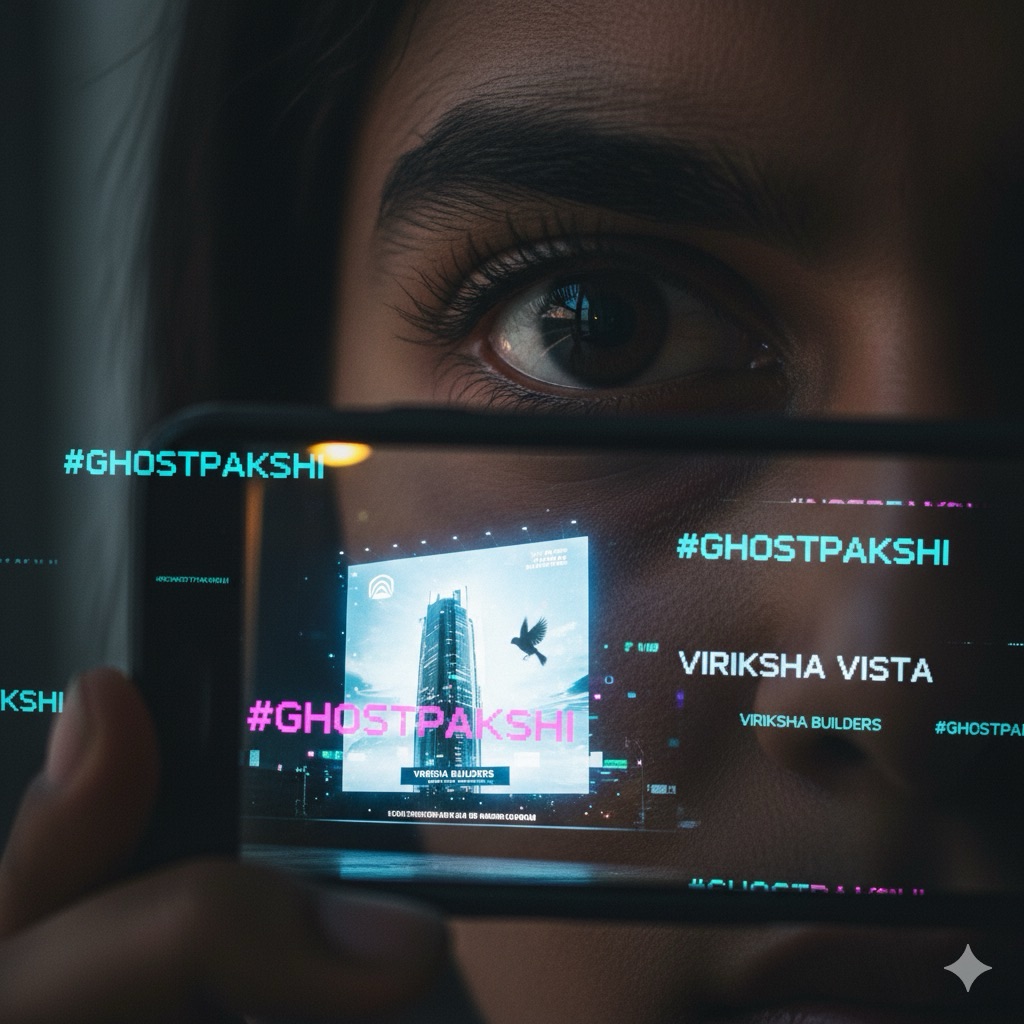
Instinct. Phone out. Record. The clip was raw: feathers scattering like wilted jasmine petals on the monsoon breeze. Later, Arya’s old marketing muscle memory took over. A somber Carnatic melody overlay, a stark caption: “This is what ‘development’ looks like.” The hashtag: #GhostPakshi. They posted it. By morning, it had 50,000 views on X, sparking threads about bird populations plummeting—over 200 species in steep decline over 25 years across India, with 60% of assessed species showing long-term drops.
A push notification sliced through the buzz: “Vriksha Builders Announces ‘Vriksha Vista’ – Sustainable Luxury Living.” The render showed a sleek monstrosity exactly where the old Pallikaranai marsh used to be.
We didn’t just build over nature, Arya thought, the cynicism they’d sold for years curdling in their gut like over-fermented dosa batter. We monetized its funeral.
News reports piled on: deforestation at alarming rates, with India losing over 150,000 hectares of natural forest in 2024 alone, much of it in the south to urban sprawl and agriculture. Colleagues vented in group chats: evictions for IT parks, lungs burning from Ennore pollution. It was the broader shift—a “Vaishya Yuga” mindset, where life boiled down to profit-and-loss, stripping away realities and piling up karmic debt through exploitation.
The Turning Point: The Commons
Enough. Arya found “The Commons”—a repurposed godown near Adyar, humming with a different kind of energy. Twenty people. One goal: live like the future matters, blending modern co-living with the communal spirit of a South Indian agraharam.
The adjustment was a shock to the system. Shared chores over filter coffee. Consensus decisions amid the aroma of sambar. But then there was Sampath, the retired engineer, a walking archive of corporate sins, now tending to the rooftop solar array like a temple priest. His hands, calloused from a life of building, were now gentle with neem saplings.
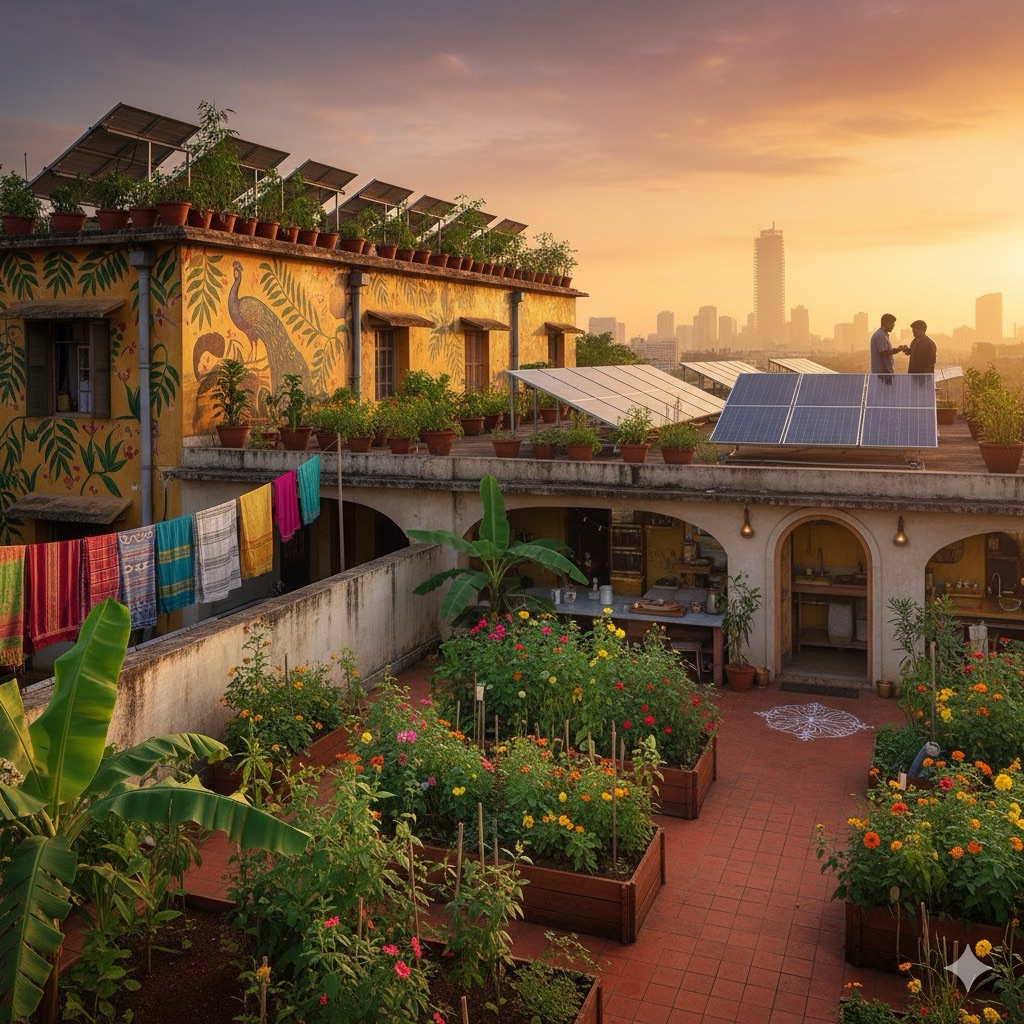
“These panels aren’t magic,” Sampath said, handing Arya a spade at sunset, the Bay of Bengal glinting in the distance. “They’re an apology. I spent my life building for the P&L statement—flyovers, malls. Don’t make my mistake.”
Arya stared at the glittering, indifferent skyline, dotted with coconut palms bending in the sea breeze. “I used to sell the lie for companies like Vriksha Builders.”
Sampath’s grin was all wrinkles and wisdom, like a village elder’s. “Good. Then you know how to uproot it.”
And they did. Arya’s marketing skills, once a weapon for greenwashing, were now a tool for truth. They ran workshops on rainwater harvesting, managed shared resources like a community Pongal potluck, and watched as the community garden—the defiant patch of laterite soil on the godown roof—became a battleground of real life. It drew back bees, koels, and a sense of purpose Arya had thought was extinct, with native plants like tulsi and butterflies fluttering in the humid air.
The Chennai Corporation Showdown
The corporation hall was a pressure cooker, fans whirring lazily overhead, the air thick with the scent of camphor from a nearby shrine. On one side, The Commons, smelling faintly of earth and unity. On the other, Vriksha Builders, a phalanx of crisp kurtas and data tablets.
Mr. Hariharan took the mic, his voice a calibrated instrument of calm, laced with a polished Chennai accent. “We offer progress. Jobs. Revenue. A digitally-optimized green experience.” A slick render bloomed on screen—virtual coconut groves, laughing stock-photo families in veshtis.
Arya’s palms were wet, slick as a monsoon street. Their prepared speech felt like ash. Then, a quick, solid nod from Sampath.
They stepped up, and the notes were forgotten.
“A digitally-optimized roof,” Arya began, the words finding their edge amid the murmurs. “Can it tell a common jezebel from a crimson rose? The kids in our garden can.”
A ripple of laughter went through the small crowd, echoing like temple festivities. Hariharan’s polished smile tightened.
“Our garden isn’t a rendering,” Arya said, holding up their tablet like a shield. “It’s data. Soil. A 150% spike in native pollinators. We don’t offset carbon on a spreadsheet. We lock it away in the ground. With our hands.”
Hariharan pounced. “Sentiment is free. Our project pays the bills. What’s the price of a sparrow, Arya?”
“Everything.” The single word hung in the air, a final challenge, resonating like a bhajan. “You see a spreadsheet. We see a home. You talk about ‘green features.’ We live them. Our energy use is down forty percent. Not with expensive gadgets, but because we share—like a joint family. Something your two-crore ‘eco-flats’ can’t do.”
Arya turned to the corporation, voice dropping to a whisper that carried to the back of the room, over the distant honk of an MTC bus. “Vriksha Builders is selling you a filtered version of sustainability. We’re offering you the unedited truth—mangroves reclaimed, air breathable. The question isn’t if you can save our garden. It’s if this city can survive without it.”
The silence that followed was broken by Councillor Revathi. “My grandson’s asthma gets worse every year from the traffic fumes. Your garden… it’s real lung space.” It was the karmic blow—one person’s pain, rippling into collective action, as timeless as the Thirukkural.
The Commons waited, the only sound the nervous rustling of mynas in the new neem outside the hall’s windows, as the Commissioner raised the gavel.
The Resolution & Path Forward
The gavel fell. The Commons held. Vriksha Builders was denied the permit.
The victory wasn’t just about saving one godown. It was a blueprint. Inspired by the win and the roaring #GhostPakshi campaign, similar collectives—tool-sharing sangams, terrace farms, energy-sharing kootus—sprouted across Chennai like monsoon wildflowers. Arya, the reformed marketer, became a connector, a weaver of these new networks, blending app-driven efficiency with age-old communal wisdom.
This is the new calculus: When we share resources, we slash our footprints. When we share lives, we build unbreakable support, like a South Indian joint family weathering storms. When we pool our money, we can afford the future. It’s not a sacrifice; it’s an upgrade to a life that’s richer, more connected, and profoundly real—infused with the rhythms of kolam patterns at dawn and evening aartis.
This story is 2025’s choice: double down on the transactional world that’s failing us, or build a new one, together, honoring the land from Kanyakumari to the Ghats. The tools are there. The need is urgent.
What’s your first move? Plant a sapling in your courtyard? Start a neighborhood compost kootu? The shift starts the moment you decide to share instead of just consume.
 Arambhin
Leave a comment