

On the balmy twilight of September 7, 2025, I found myself standing at the threshold of two stages: the heavens above and the tennis court beamed through my screen. It was the longest total lunar eclipse since 2022, and I couldn’t resist framing the night as a personal epic—where Rahu’s shadowy chase met Carlos Alcaraz’s baseline fire.
🌑 The Mythic Prelude: Rahu’s Vengeful Swallow
As the moon rose, I couldn’t help but recall the story I grew up hearing: Rahu and Ketu, severed demons born from the churning of the cosmic ocean, forever chasing the sun and moon in revenge. Tonight Rahu had caught the moon again, swallowing it into shadow.
I thought of the way my grandmother would hush the kitchen during an eclipse, insisting food turned “impure” until the shadow passed. Back then it felt like superstition. But as the silvery orb turned rust red, I realized how powerful those stories were. They democratized astronomy. Even a farmer who’d never seen a telescope could feel the cosmic drama in Rahu’s grasp.

🔬 The Scientific Shadow: Subtle Rhythms and Tropical Safeguards
Now, science adds another layer. Watching the eclipse creep across the lunar surface, I thought about the subtle rhythms it disturbs. The body’s circadian clock falters under sudden darkness. Ayurveda calls it the dimming of agni, the digestive fire—explaining why heavy meals feel wrong. Fasting, I realized, was less about fear and more about aligning with this disruption.
Living in India’s tropical climate, I could almost imagine how vulnerable food once was. No refrigeration, high humidity, and an eclipse stripping away sunlight’s antibacterial shield. Declaring food “impure” was a clever safeguard. Stories carried the rule, science explains it now.
📸 The Human Lens: Cloudy Captures and Courtly Triumphs
Of course, I wasn’t content with just reflection. I had my Nikon D850 in hand, a 500mm lens trained on the moon. Clouds teased me all night, as if Rahu had sent his own misty army. Still, I managed to catch the partial bite, the full copper glow, and the silver return. Handheld shots, raw and imperfect, but to me they carried the weight of the night.
Meanwhile, on my screen, Arthur Ashe Stadium was staging its own cosmic battle: Alcaraz vs. Sinner in the US Open final. My heart split its loyalties—half on the blood moon, half on the Spanish prodigy I’d been rooting for. Alcaraz came out blazing: 6-2. Sinner bit back 6-3. Alcaraz surged 6-1, then sealed the match in four sets: 6-2, 3-6, 6-1, 6-2.
As Rahu’s shadow peaked, Alcaraz raised his game. By the time the moon began to glow again, he was lifting the trophy. One comeback in the sky, another on the court.
✨ Epilogue: Stories That Bind the Spheres
When the eclipse ended in the early hours of September 8, I felt oddly full despite fasting. Myth had given me a story, science had given me explanation, and Alcaraz had given me joy. My cloudy photos became keepsakes—not just of the moon, but of a night where tennis and cosmos played in parallel.
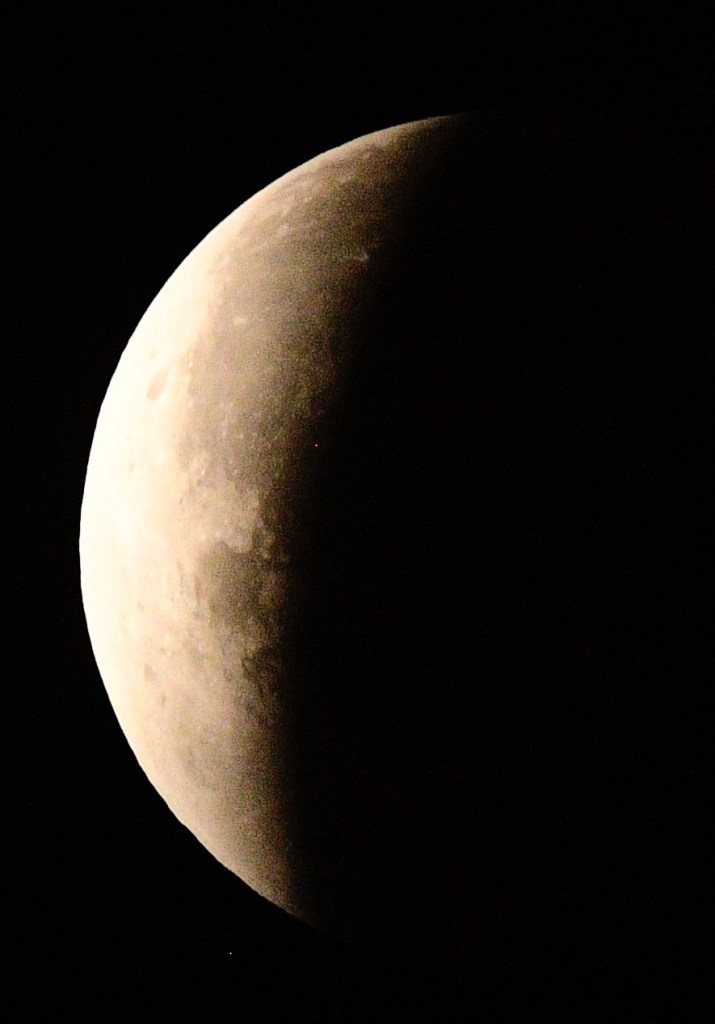
In that moment, I realized why fasting, myth, and storytelling survive: they make us pause. They make us notice. They let us live not just under the stars but with them.
The next eclipse is due in March 2026. I’ll be there—tripod ready this time—waiting for Rahu’s next chase, and perhaps another court-side echo on Earth. 🌑🎾✨
 Arambhin
Leave a comment