
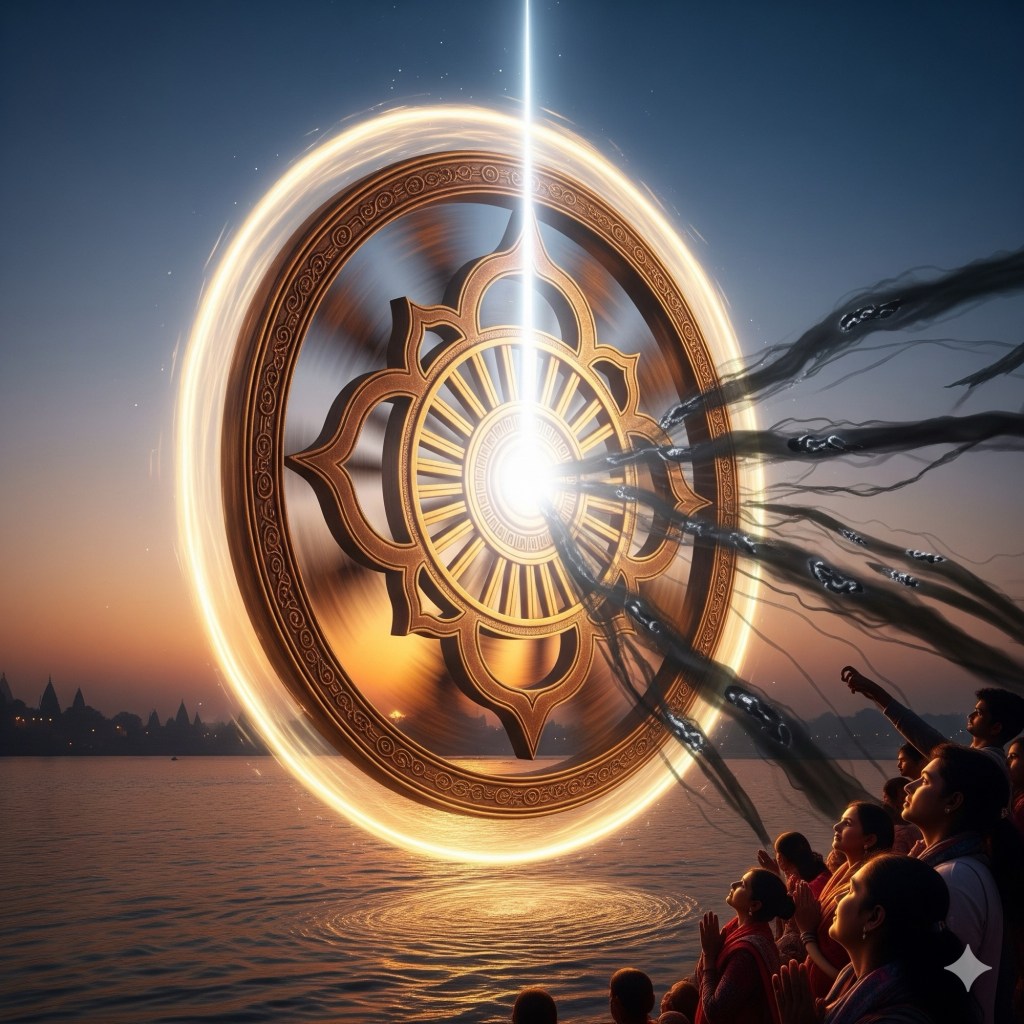
(Scene: The conversation on the Ganges’ banks lingers into the twilight of September 7, 2025. The Maha Kumbh’s echoes have faded, but the group’s curiosity burns brighter. Rohan, Priya, and Arjun, now joined by a wandering philosopher named Meera—a young woman with a laptop full of ancient texts—press the Swami further. The air cools, diyas flicker on the water, symbolizing the eternal flame. The Swami, sensing the deepening inquiry, nods as if the river itself has prompted the next revelation. This dialogue unfolds like a Vachana poem—rhythmic, probing—blending storytelling with the subtle mechanics of endurance.)
Meera: (unfurling a digital scroll on her tablet, her voice thoughtful) Swami ji, your tales of the Vyūham have me hooked, but let’s dig deeper into how it truly endures. I’ve been reading about Vachana—the sacred sayings of the Sharanas, those 12th-century Bhakti poets like Basavanna who poured their souls into verse against oppression. And Vichara, the relentless self-inquiry of Advaita, like Ramana Maharshi’s “Who am I?” It feels like these are the engines. The Vyūham endures by continuing Vachana and Vichara, rolling the chakras as though they are self-propelled. No external force needed; it’s an inner momentum. Am I onto something? In this fast world, how does that keep the whole ecosystem spinning, reviving Dharma time and again?
Rohan: (leaning forward, his smartwatch forgotten) Yeah, self-propelled chakras? Sounds like perpetual motion for the soul. Apps need constant updates or they crash, but this… Vachana as code, Vichara as debugging? Tie it back to the layers—how does it counter the slow poison we talked about?
Priya: (jotting notes furiously) And make it a story, Swami ji. We’ve had invasions, colonies, modern dilutions. Show us how these practices keep the wheel turning, especially now in 2025, with all the noise about cultural erasure. 0 People online are debating if Sanatana’s resilience is fading or just evolving—Vachana forums buzzing with fresh interpretations.
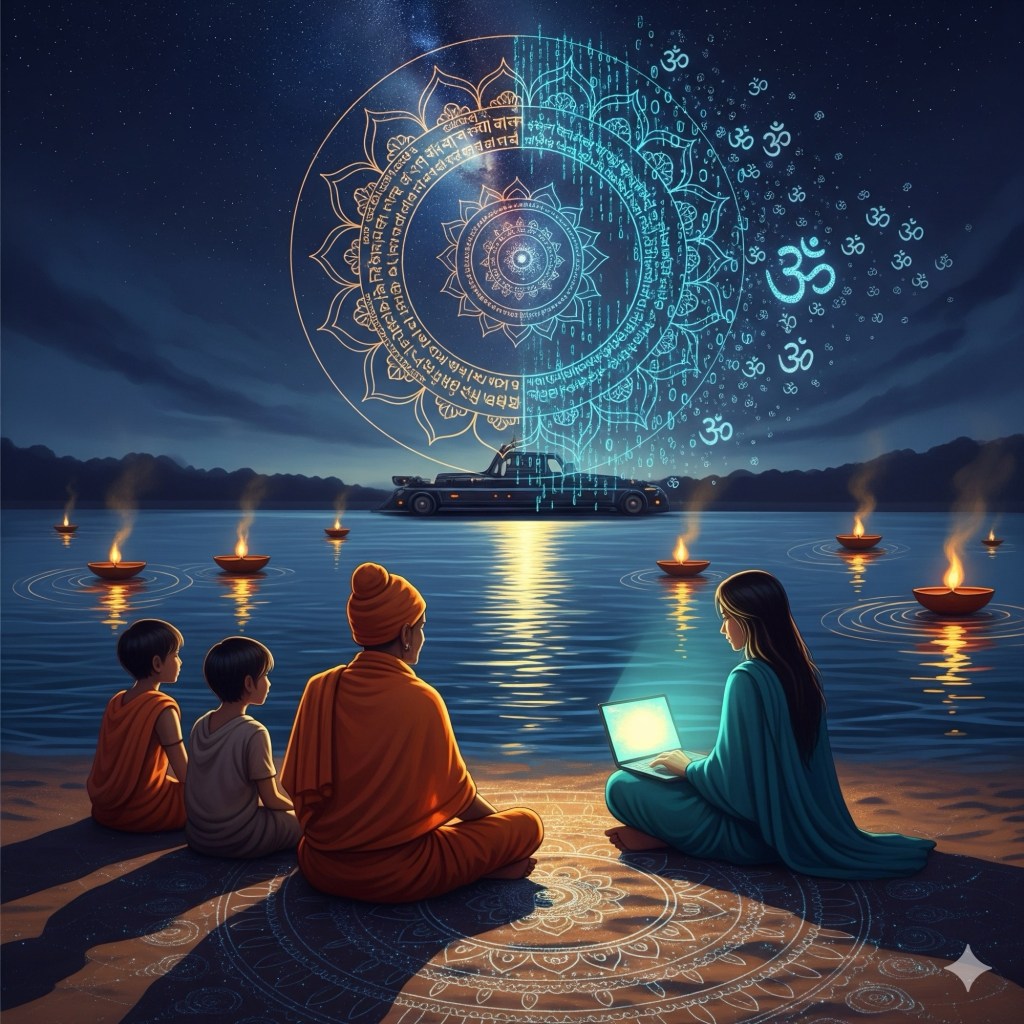
Arjun: (grinning) Exactly! Like, in the epics, the chakra Vyūham was a formation that moved on its own, trapping enemies. Is Vichara the inquiry that navigates it, and Vachana the chants that power it?
Swami Vivekananda Das: (eyes twinkling like stars emerging over the Ganges, his tone weaving philosophy into narrative) Ah, Meera beta, you have pierced the veil with wisdom beyond your years. Yes, the Vyūham endures precisely through this divine duo: Vachana, the spoken word of truth—those potent, poetic declarations from the hearts of saints—and Vichara, the mirror of inquiry that turns the gaze inward. Together, they roll the chakras—those layered wheels of the formation—not by brute force, but as self-propelled spirals of energy, drawing from the infinite source of Brahman. No batteries required; it’s the prana of existence itself. Let me spin this into a tale, a conversation across eras, where heroes and shadows clash, and the wheel never stops. Listen, as the river bears witness.
Envision the Vyūham not as static armor, but a living mandala, its petals unfurling eternally. At the core, Advaita pulses, but what propels it? Vachana and Vichara—the breath and the beat. In ancient times, as the first invaders’ shadows loomed—Alexander’s Greeks in 326 BCE—the sages didn’t just defend; they inquired. Vichara: “Who is the true enemy? The body or the illusion of separation?” This reflection dissolved fear, turning conquest into curiosity. The outer layer absorbed the Yavanas, but Vachana sealed it—Vedic hymns evolving into syncretic songs, rolling the chakra forward. Self-propelled, for the word once spoken echoes forever, seeding revival in every heart.
Meera: But during the fiercer storms? Like the medieval raids—how did it keep spinning without breaking?
Swami: Ah, the crescent’s sword falls heavy. Mahmud of Ghazni’s raids on Somnath, 1025 CE—idols shattered, gold plundered. The poison of iconoclasm seeps, threatening the decentralized practices. Yet, enter the Sharanas of the 12th century, in the Deccan storms of Kalachuri and Chalukya rule. Basavanna, Akka Mahadevi—they birthed Vachana Sahitya, those fiery poems decrying caste, corruption, and blind ritual. “The rich will make temples for Siva. What shall the poor do?” Basavanna thundered, a Vachana that democratized devotion, rolling the second layer’s chakra against tyranny. No central authority? Vachana became the authority—oral, accessible, self-spreading like wildfire in villages. And Vichara? It was the inner forge: Saints inquired, “Is God in stone or in service?” This propelled the Bhakti wave, internalizing faith beyond desecrated temples. Aurangzeb’s fatwas in the 17th century? Jizya bleeding the land? Vachana echoed in hidden anubhav mantapas, inquiry in secret satsangs. The chakras rolled on, self-propelled, arousing valor—millions converted by force, yet the ecosystem regenerated, roots untouched.
Priya: (intrigued) And the British mind-games? That slow poison of doubt—education twisting scriptures. How did Vachana and Vichara counter that?
Swami: The viper strikes slyly, 19th century. Macaulay’s schools poison with “effete” labels, Aryan myths fracturing identity. But the wheel turns inward. Swami Vivekananda himself embodied this—his Vachana-like speeches at Chicago, 1893: “Sisters and brothers of America,” a rallying cry blending East and West. Inquiry fueled it: His Vichara on Vedanta’s universality dismantled colonial superiority. “Arise, awake!”—echoing ancient Upanishads, propelling the Renaissance. Sri Aurobindo inquired deeper: “What is India without her soul?” His writings, a modern Vachana, rolled the philosophical core against partition’s wounds in 1947. The slow poison of famines and conversions? Countered by self-inquiry in ashrams, Vachana in freedom songs. Even today, in 2025, as urban poisons dilute—social media mocking rituals, conversions targeting tribals—Vichara revives through apps like yours, Rohan, hosting Ramana’s teachings. Vachana flows in podcasts, viral threads debating “Sanatana under siege,” turning doubt into discourse. 1 The chakras self-propel: Inquiry questions the illusion, word ignites the fire.
Rohan: (nodding slowly) So, it’s like open-source code—Vachana shares the blueprint, Vichara evolves it. No obsolescence because it’s user-generated, eternal updates from within. But in our tech world, does it still roll against AI dilutions or globalism?
Swami: Precisely, my tech-savvy friend. Modernity’s poisons—algorithms prioritizing fleeting trends, cultural amnesia in curricula—are but illusions. Vichara cuts through: “Who am I beyond the screen?” As Meera says, the Vyūham endures by continuing these practices. In Lingayat halls, Vachanas are recited daily, rolling the third layer’s stories afresh. Globally, diaspora yogis inquire into chakras—not just energy centers, but the Vyūham’s wheels—self-propelling through meditation apps that blend ancient and new. Controversies like the 2024-2025 debates on “eradicating Sanatana” spark Vachana responses: Poets, influencers craft modern verses, inquiry forums dissect threats. 3 It’s self-sustaining because it’s rooted in Atman—the self. Invaders came with swords; today, with data. But the chakra spins: Different forms, one truth. Revival? Not revival—eternal motion.

Arjun: (awestruck) Wow, so the Vyūham’s not just defensive; it’s alive, propelled by our own words and questions.
Meera: (smiling) And that’s why it’s the future—self-propelled, unstoppable.
Swami: (gesturing to the flowing Ganges) Indeed. Vachana speaks, Vichara seeks, chakras roll. Join the wheel, seekers. The Vyūham awaits your turn. Om Shanti.
(The group falls silent, the river’s current mirroring the inner spin. Stars wheel overhead, a cosmic Vyūham in motion. The story pauses, but the dialogue of eternity continues.)
 Arambhin
Leave a comment